Best 5-Reel Slots at UK-Licensed Online Casinos in
 Available in GB
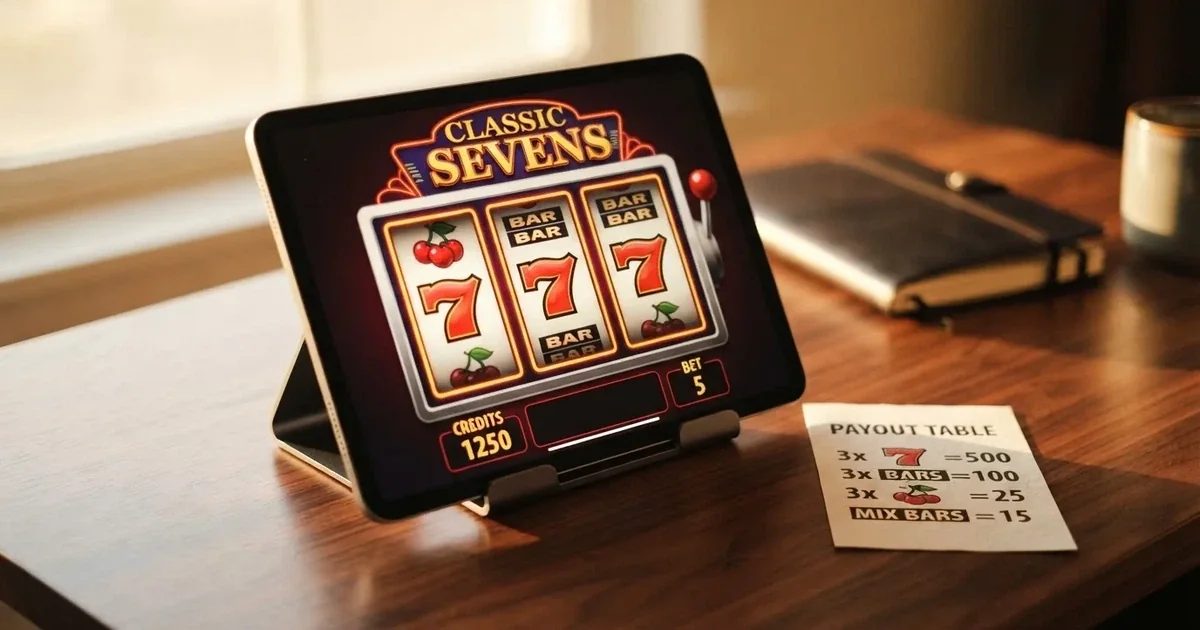
A five-reel slot is the engine room of any modern UK casino lobby, and it is also the format that newer players find hardest to read. Three reels are legible at a glance: one payline down the middle, three symbols in a row, a clear win or nothing. Five reels break that simplicity on purpose — extra reels mean extra symbols in any winning combination, and almost every modern title adds a fixed set of paylines on top so wins can land in shapes the player has to consult the paytable to recognise. The promise is more frequent wins in more patterns; the price is a paytable that has to be read before the spin button is hit.

This page is written for a reader who wants to know which five-reel games are worth the time at a UK-licensed site and what the licence actually buys. Every brand named below appears on the Gambling Commission’s public register, every figure comes from a named source, and the wagering cap that took effect on 19 December 2025 is applied to the bonus section rather than left as a footnote.
Data current as of 23 September 2026 and cross-checked against the Gambling Commission’s public register of gambling businesses.
Table of Contents
- How a five-reel slot actually works
- Reading the UK licence: who is on the register, and what that proves
- UK slot rules every player meets before the first spin
- Bonus features on five-reel slots, and the wagering that comes with them
- Comparing ten UK-licensed casinos that carry five-reel slots
- Reading the paytable before you stake
- Choosing a game at a licensed site
- How long it takes to clear a free-spin bonus at a UK-licensed site
- Verdict
- Frequently asked questions
How a five-reel slot actually works
The five-reel layout is a 1980s answer to a problem the original three-reel Liberty Bell never had. Charles Fey built the first automatic slot machine in San Francisco with three reels bearing horseshoes, diamonds, spades, hearts and a bell symbol; aligning three bells paid ten nickels, or fifty cents. Before Fey, Sittman and Pitt of Brooklyn had produced a five-drum poker-based machine in 1893, but it carried fifty card faces across five drums and made no automatic payout, so it sits closer to a slot’s prehistory than to its lineage. Herbert Mills produced the first copy of the Liberty Bell in 1907, and the three-reel format held the floor for nearly eighty years. Norwegian mathematician Inge Telnaes patented the use of a random number generator to select reel-stop positions in 1984, which let manufacturers weight symbol probabilities independently of physical reel frequency — the technical foundation that made a five-reel layout commercially viable.

Paylines and the patterns a player has to read
A modern five-reel slot carries a fixed number of paylines drawn across a five-row-by-three-column symbol grid: the reels spin vertically while the paylines run across them in horizontal, diagonal and zig-zag shapes. The lowest-payline count seen in UK lobbies sits around nine or ten; the highest, in Megaways titles, runs into the tens of thousands by varying the symbol height of each reel on every spin. Between those extremes, a typical five-reel slot at a UK-licensed site runs twenty to forty paylines, with most paylines reading from left to right and only the leftmost reel needing a matching symbol to register a win. The paytable — usually a button marked “i” or “?” beside the spin control — lists every line and every payout, and is the document a player reads before staking anything.
The win is computed against the line stake, not the total spin cost. A 20p spin on a 20-line game is 1p per line; the payout chart quotes coin wins, and the player multiplies those by the line stake to get the sterling return. Hitting a line that pays 250 coins on a 1p line stake returns £2.50. This is the convention every five-reel slot at a UK-licensed site follows, and it is the most common source of confusion when a player moves from three-reel games where one credit equals one coin.
Volatility and what it means for a session
Slot volatility describes a game’s risk profile: a low-volatility slot pays smaller wins more regularly, a high-volatility slot pays fewer but bigger wins. A low-volatility five-reel title tends to keep a session balance ticking over with frequent small returns and the occasional feature-trigger; a high-volatility title can eat a deposit in long dry stretches before a single bonus round pays out the majority of the session’s return. Neither profile is “better” than the other — a player who wants a long, low-cost session picks low volatility, and a player who is buying a chance at a feature round’s headline payout picks high volatility. The paytable does not state volatility directly; the only way to gauge it before staking is to read independent reviews or to play the demo, both of which the no-registration versions of these games support.
The theoretical return and what UK operators have to do about it
Slot machines are programmed to a theoretical return-to-player percentage set by the operator, and jurisdictions set differing minimums — Nevada’s floor sits at 75 per cent, New Jersey’s at 83 per cent. The UK does not impose a single RTP floor in the same way, but the Gambling Commission requires operators to measure the ongoing performance of games such as online slots against the advertised RTP figure and to raise alerts when actual performance falls outside the acceptable range, and to submit a key event when a confirmed RTP error occurs. The point of those rules is that the published RTP — typically 94 to 97 per cent on five-reel slots at UK-licensed sites — is the figure a game is meant to deliver across a large number of spins, and a site that diverges from it is failing in a way the regulator can audit. The audit is what makes a Commission-licensed site’s published RTP worth taking seriously; an offshore site’s published figure carries no comparable backstop.
Reading the UK licence: who is on the register, and what that proves
The Gambling Commission’s public register of gambling businesses is the test of whether a brand holds a UK licence. On 18 September 2026 the register listed 139 businesses holding an active remote casino operating licence, and the register’s domain list held 1,065 active and 361 white-label domain entries — a white-label site trades under another company’s licence, so Virgin Games appears on the same licence as Jackpotjoy because Gamesys Operations Limited operates both. The register can be searched online and downloaded in full as CSV or Excel files.

A remote casino licence number on the register has the form account-R-number-suffix, where the leading six digits repeat the licence holder’s account number and the “R” marks a remote, online licence. Reading 039225-R-319373-015: account 039225, remote licence, with the suffix showing the specific licence condition. The format is what a player checks against the footer of a casino’s homepage; the licence number printed there should match a row on the register, and the listed domain on that row should match the URL the player typed.
Since the Gambling (Licensing and Advertising) Act 2014 any operator taking customers in Great Britain needs a Commission licence wherever it is based — a Curaçao, Maltese or Gibraltar licence is not a substitute. The Act covers Great Britain (England, Scotland and Wales), not Northern Ireland, which sits under different legislation. Online casino is licensable, and providing gambling to people in Great Britain without a licence is an offence under section 33 of the Gambling Act 2005. The Commission disrupts illegal sites through cease-and-desist notices, search-engine delisting and payment and hosting referrals, but it has no ISP-blocking power, so unlicensed sites continue to appear in search results and can be reached by anyone who types the URL.
What a Commission licence buys the player, in concrete terms: a Commission complaints route, approved alternative dispute resolution, the mandatory GAMSTOP self-exclusion scheme, and the financial vulnerability and age-verification checks set out below. None of these apply to an offshore site. The Commission has no power to help a player recover losses from an unlicensed operator, because no licensed operator exists to complain about.
UK slot rules every player meets before the first spin
The Gambling Act 2005 categorises gaming machines from A to D by stake and prize limits, with Category A machines remaining unlawful. The category that matters for online play is the technical standards regime that the Commission applies to remote operators: the Remote Technical Standards document and the Licence Conditions and Codes of Practice (LCCP) set out the design rules a slot has to meet, and the social responsibility code sets out the player-protection rules an operator has to apply. The headline limits below are the ones a player meets in the first session, not the ones buried in the small print.
Online slots carry a maximum stake per game cycle — £5 for players aged 25 and over from 9 April 2025 and £2 for 18 to 24-year-olds from 21 May 2025. The Government statement that accompanied the lower limit cited the highest average problem gambling score among 18 to 24-year-olds alongside lower disposable income and ongoing neurological development as reasons for the lower stake cap. A game cycle is one spin at one stake: the per-spin ceiling is not a per-session ceiling and is not a per-deposit ceiling. The Gambling Commission also banned online slot spin speeds faster than 2.5 seconds, setting 2.5 seconds as the minimum time a slot spin must take, and introduced a permanent ban on auto-play after research indicated the feature caused players to lose track of their gambling activity. A licensed slot today requires the player to press the spin button for every cycle, which the Commission’s research treated as a way to keep a player’s finger on the decision.
There is no state-set deposit or loss ceiling, but operators must prompt a customer to set a financial limit before the first deposit, with that requirement in force from 31 October 2025. Reverse withdrawals — the practice of letting a consumer re-gamble funds they had already requested to withdraw — were banned at the same deadline. UK gambling operators had until 31 October 2021 to fully implement that ban. Credit cards are banned for gambling since 14 April 2020, including credit cards routed through e-wallets, so a deposit from a UK-licensed site can never run through a credit balance.
Financial vulnerability checks run at £150 net deposits in a rolling 30 days, in force from 28 February 2025, and use publicly available data only; the wider financial risk assessments are announced but not yet in force. The check is a soft prompt at the threshold and a harder assessment above it, and the operator decides what to do with the result. What the player sees, in practice, is a deposit form that asks for confirmation when the rolling figure clears £150 and a more involved check when the Commission raises the threshold or the operator’s own internal limits kick in.
Identity verification has to happen before the first deposit or any play — name, address and date of birth are confirmed against public data, in force since 7 May 2019. The minimum age is 18. Anonymous play is not possible at a licensed site, and the absence of an identity check is itself a signal that the site is not on the register.
GAMSTOP, deposit limits and the support behind them
GAMSTOP, the national online self-exclusion scheme, is a mandatory condition of every online licence since 31 March 2020. A self-exclusion can run for six months, one year or five years and cannot be cancelled early, so a player who signs up to the longest period is locked out of every Commission-licensed operator for that whole window. The scheme is the single most effective tool a player with a gambling problem has at a UK-licensed site, and the operator that lets a self-excluded customer open a new account is failing the licence condition in a way the regulator acts on.
Deposit limits are set at the site level rather than at the state level: the operator prompts the customer to set one before the first deposit, and the customer can set daily, weekly or monthly limits through the responsible-gaming page once the account is open. The Commission does not impose a ceiling, but every licensed operator has to offer the controls, and the customer’s choice binds the operator until the cooling-off period for raising the limit expires. The National Gambling Helpline (run by GamCare) and GambleAware sit behind those tools for any player who needs them.
A crash-style game like Aviator — developed by Spribe, a games studio founded in 2018, and released in 2019 — is a useful contrast rather than a five-reel slot. A multiplier curve rises from 1.00x until the round randomly crashes, and the player must cash out before the crash to win the stake multiplied by the current value. Spribe’s Aviator has reported more than 42 million active users and processes around 350,000 bets per minute across more than 5,000 operators worldwide. The game’s stake limits and spin-speed rules are the same as those on a five-reel slot — the per-spin ceiling of £2 or £5 applies regardless of format — but the strategic shape is different, and the crash game is a separate shelf on most UK lobbies.
Bonus features on five-reel slots, and the wagering that comes with them
The “bonus feature” on a five-reel slot is the round that sits behind the base game: free spins, pick-a-prize mini-games, expanding wilds, cascading reels, multipliers attached to certain symbols. A typical five-reel title will carry two or three feature triggers — three or more scatter symbols anywhere on the reels usually start the free-spins round, a bonus symbol on a designated reel may open a pick game, and a wild symbol that lands on the centre reel can expand to cover the whole reel and re-trigger combinations that would otherwise miss. These mechanics are why the five-reel format won the floor: the base game on its own is a 96 per cent return engine with low variance, and the feature round is where the headline payouts live.
The link between in-game features and promotional offers is where the player has to read the small print. A promotion that gives 50 free spins on a five-reel slot will attach a wagering requirement to the resulting winnings, and that requirement is capped at 10x since 19 December 2025. The cap is a hard ceiling on the multiplier the operator can impose — a 10x requirement on £10 of winnings means the player has to stake £100 of their own money before the £10 clears to withdrawable cash — and it sits alongside the ban on mixed-product bonuses, which removes the “bet on sport, get casino spins” structure that used to let operators impose higher effective wagering on the casino side.
How the wagering band looks for a typical free-spin offer
The arithmetic on a free-spin offer is the place the marketing copy and the player’s wallet part company. A typical five-reel slot at a UK-licensed site runs at roughly 96 per cent RTP, and the Commission’s 2.5-second minimum spin speed means a single spin cycle takes at least 2.5 seconds of the player’s time. Take £10 of bonus-derived winnings, multiply by the 10x cap, and the required turnover is £100. At a £1 line stake across 20 paylines — a £20 spin — that gives five spins; at a £0.20 spin on a 20-line game, it gives 25 spins; at a £0.10 spin on a 20-line game, 50 spins. The faster the player clears the wagering, the more of the £100 sits as stake in fewer cycles and the more the variance of the slot dominates the result.
The realistic session length comes out at a band rather than a single figure, because the per-spin stake is the player’s choice within the £2 or £5 ceiling. At a 2.5-second minimum spin and the £0.10 spin on 20 lines (£2 per cycle) — which is below both stake limits and is therefore available to all players regardless of age — 50 spins take 125 seconds, or just over two minutes. At a £0.50 spin on 20 lines (£10 per cycle, below the over-25 ceiling of £5 only if the cycle stake is counted as the per-spin bet rather than as a per-line stake), 20 spins take 50 seconds. At a £1 spin on 20 lines (£20 per cycle), ten spins take 25 seconds. The wagering window is fast in any configuration, but the player who drops the stake to keep variance under control is also the player whose expected return per spin is lower.
The expected loss on the wagering itself is the figure that gives the bonus its real cost. At 96 per cent RTP and £100 turnover, the player gives back £4 of the £100 on average before the £10 of bonus winnings clears — the net cost is the £4, not the £10, because the £10 is the figure the wagering protects. Below the £2 ceiling for 18 to 24-year-olds, the wagering band narrows but the same arithmetic applies: a smaller turnover requirement against a smaller win gives a smaller expected loss in cash terms, with the RTP still doing the work.
What to read in the bonus terms
Three clauses in a five-reel slot bonus do most of the damage when a player skips them. First, the wagering multiple: the 10x cap means no licensed site can ask for more than ten times the bonus amount, but the operator can ask for the full ten times on a small bonus and the cap is silent on whether the deposit is included. Second, the maximum conversion cap: a free-spin offer that converts £10 of winnings to cash after wagering is a different offer from one that lets the player withdraw £100 of winnings after the same wagering, and the latter is rare at UK-licensed sites. Third, the per-spin stake during wagering: an operator that forces a £2-per-spin stake during the bonus period is forcing variance the player did not choose, and that constraint is the single biggest swing factor in the expected loss above.
The no-data marker in any of those three clauses is itself a signal. A promotion page that names the wagering multiple but not the per-spin stake is asking the player to take the stake on faith; a page that names both but not the conversion cap is asking the player to assume the worst. The bet is the player’s to make either way, but it should be made with the gap visible.
Comparing ten UK-licensed casinos that carry five-reel slots
The ten brands below are taken from the Gambling Commission’s public register: each appears against the licence account that runs it, with the remote casino operating licence number. Several brands share one licensee, and they are not independent operators for that reason: Ladbrokes sits under LC International Limited, Jackpotjoy and Virgin Games both sit under Gamesys Operations Limited. Every GB-licensed online operator must take part in GAMSTOP, so the responsible-gaming tools described in the section above apply to every row in the table. The table covers the licence holder, the GB remote casino licence number, the domain status on the register and whether the operator offers the five-reel slot subject specifically; the last column is empty for every row because the public register does not record game-by-game coverage, and an empty cell there is the honest answer rather than an absence of fit.
| Brand | Licence holder and GB remote casino licence | Domain status on the register | Subject support |
|---|---|---|---|
| Betfred | Petfre (Gibraltar) Limited — 039544-R-319290-010 | Active | — |
| Jackpotjoy | Gamesys Operations Limited — 038905-R-319430-022 | Active | — |
| William Hill | WHG (International) Limited — 039225-R-319373-015 | Active | — |
| kwiff | Eaton Gate Gaming Limited — 044448-R-323408-017 | Active | — |
| PokerStars | Stars Interactive Limited — 039108-R-319334-026 | Active | — |
| Ladbrokes | LC International Limited — 054743-R-330863-014 | Active | — |
| Paddy Power | PPB Games Limited — 039411-R-319335-010 | Active | — |
| Unibet | Platinum Gaming Limited — 045322-R-324275-019 | Active | — |
| Virgin Games | Gamesys Operations Limited — 038905-R-319430-022 | White-label | — |
| Casumo | Recro Limited — 061549-R-336718-002 | Active | — |
The licence numbers all share the same shape: a six-digit account code, an “R” marking the licence as remote, a six-digit licence code, and a two-digit suffix. The format is what the player checks against the footer of the brand’s homepage. The “active” status means the domain is listed as currently trading against that licence; “white-label” means the domain trades under another company’s licence, which is what makes Virgin Games sit in the same row as Jackpotjoy on the licence holder column.
Betfred
Betfred’s licence is held by Petfre (Gibraltar) Limited under account 39544, with the remote casino operating licence 039544-R-319290-010 and Betfred.com listed as an active domain on the public register. The bookmaker heritage shows in the depth of the sports side, but the casino tab carries a full five-reel slot catalogue and the standard GAMSTOP integration every Commission-licensed operator runs. Petfre is the Gibraltar-facing entity, and Gibraltar is one of the jurisdictions whose licence is not a substitute for a Commission licence under the 2014 Act — the Betfred offering the player reaches at Betfred.com is the Commission-licensed product, not a Gibraltar-licensed mirror.
Jackpotjoy
Jackpotjoy’s licence is held by Gamesys Operations Limited under account 38905, with the remote casino operating licence 038905-R-319430-022 and Jackpotjoy.com listed as an active domain. The brand carries the bingo-leaning catalogue Gamesys is known for alongside the five-reel slot range, and the licence has been live long enough that the brand has had multiple renewals — the suffix on the licence number reflects the current grant rather than the original. Players who recognise the brand from its bingo marketing will find the slot lobby laid out as a separate vertical rather than folded into the bingo lobby.
William Hill
William Hill’s licence is held by WHG (International) Limited under account 39225, with the remote casino operating licence 039225-R-319373-015 and William Hill listed as an active domain. The high-street bookmaker lineage puts WHG among the longer-established Commission licensees, and the casino tab is a separate product from the sportsbook on the same account. The 888 migration that completed in recent years left the casino side carrying 888’s slot catalogue under the William Hill brand; that catalogue is broader than the legacy William Hill casino was, and the five-reel slots cover most of the major studios.
kwiff
kwiff’s licence is held by Eaton Gate Gaming Limited under account 44448, with the remote casino operating licence 044448-R-323408-017 and Kwiff.com listed as an active domain. The brand is among the more recent entrants to the Commission register, and its “supercharged” odds mechanic — random odds boosts on sports bets — does not extend to the casino tab, where kwiff offers a more conventional five-reel slot range. The smaller catalogue relative to the heritage brands is the trade-off for the more recent licence and the tighter focus.
PokerStars
PokerStars’ UK licence is held by Stars Interactive Limited under account 39108, with the remote casino operating licence 039108-R-319334-026 and Pokerstars.uk listed as an active domain. The .uk rather than .com domain reflects the post-2014 separation of UK-facing operations from the international Stars product, and the casino tab sits alongside the poker room that gives the brand its name. The five-reel slot range is broader than the poker-centric branding suggests, and the licence is held in the UK by Stars Interactive rather than by the international parent.
Ladbrokes
Ladbrokes’ licence is held by LC International Limited under account 54743, with the remote casino operating licence 054743-R-330863-014 and Ladbrokes.com listed as an active domain. LC International also holds the licences for Coral and Gala Bingo, and the three brands share a parent — Ladbrokes Coral Group — which is why the same licence number does not appear for all three on the register. The five-reel slot catalogue on Ladbrokes runs across the major studios and is updated on the same cadence as the sportsbook.
Paddy Power
Paddy Power’s licence is held by PPB Games Limited under account 39411, with the remote casino operating licence 039411-R-319335-010 and Paddy Power listed as an active domain. PPB Games is the Paddy Power Betfair entity created after the 2016 merger, and the licence has the same shape as the Ladbrokes one — a six-digit account code, the “R” for remote, and the suffix reflecting the current grant. The casino tab is a smaller piece of the Paddy Power business than the sportsbook, but it carries the major five-reel slot studios.
Unibet
Unibet’s licence is held by Platinum Gaming Limited under account 45322, with the remote casino operating licence 045322-R-324275-019 and unibet.co.uk listed as an active domain. The Kindred Group structure puts Platinum Gaming as the UK-facing entity, with the .co.uk domain marking the UK separation. Unibet’s casino tab is one of the more developed on the list, with a five-reel slot catalogue that runs into the high hundreds and a separate sportsbook on the same licence.
Virgin Games
Virgin Games’ licence is held by Gamesys Operations Limited under account 38905, with the remote casino operating licence 038905-R-319430-022 and Virgin Games listed as a white-label domain. The white-label status means Virgin Games trades under Gamesys’ licence rather than holding its own, and the casino product is effectively the Gamesys catalogue branded for Virgin — the same catalogue that sits behind Jackpotjoy. Players who hold an account on one can use the responsible-gaming tools on the other, because both sit on the same licence.
Casumo
Casumo’s licence is held by Recro Limited under account 61549, with the remote casino operating licence 061549-R-336718-002 and Casumo.com listed as an active domain. Recro is the most recent of the ten licence holders on this page, and the higher account number reflects a licence granted well after the older brands on the register. The five-reel slot catalogue is broad, and the gamified progression system that gave Casumo its early reputation sits on top of a conventional slot lobby.
Reading the paytable before you stake
The paytable is the document a five-reel slot presents in place of a rules sheet, and reading it is what separates a session that costs what the player expected from one that does not. Three blocks matter. The symbol block lists every symbol on the reel and its payout for the longest combination — usually five of a kind — at the maximum line stake. The payline block diagrams every line the game pays on, with the count ranging from nine to forty on a standard five-reel slot and far higher on Megaways titles. The feature block lists every scatter, wild and bonus trigger, the combination that activates each, and the payout the feature awards on its own; the feature payout is usually expressed as a multiplier of the line stake or as a fixed number of free spins at a stated value.
Two numbers from the paytable deserve more attention than they usually get. The first is the lowest-paying symbol’s payout for a three-of-a-kind combination at the maximum line stake — a 5-coin payout on a 100-coin-per-line maximum means a £5 win on a £1 line stake for a three-symbol hit, which is the floor of the base game. The second is the highest-paying symbol’s payout for a five-of-a-kind combination — a 1,000-coin payout at the same maximum means a £1,000 win on a £1 line stake for a five-symbol hit, which is the ceiling of the base game. The ratio between those two numbers is a rough proxy for volatility: a slot with a low floor and a very high ceiling tends to spend more of its return in rare big wins, and a slot with a higher floor and a lower ceiling spreads its return more evenly. Neither ratio is published as a volatility number, but the paytable carries the inputs the player needs to make the call.
The free-spins block is where the marketing copy and the paytable part company. A free-spin offer that gives 100 free spins at 1p each on a £1 max-win slot is a fundamentally different offer from one that gives 20 free spins at 10p each on the same slot — the first caps the maximum winnings at £1 and the second at £10, and the wagering requirement on the first is applied to whatever the player wins up to that £1. The paytable does not state the cap; the promotion page does, and the cap is the figure the player reads first.
Choosing a game at a licensed site
The choice that faces a player walking into a UK-licensed casino lobby is not “which operator” but “which game”, and the question the operator cannot answer is which game suits the budget the player is sitting on. The honest answer is to split the choice into three decisions and take them in order.
First, the format. A standard five-reel slot with 20 to 40 paylines is the right starting point for a player who has not played a five-reel game before — the paytable is short, the volatility is readable, and the bonus round is usually a free-spins feature with a fixed number of spins. A Megaways title, where each reel varies its symbol height on every spin, raises the payline count into the tens of thousands and the variance with it; the headline payouts are bigger, but the dry stretches between them are longer. A player with a small bankroll is better served by the standard layout, and the Megaways titles suit a player buying a chance at a single feature round rather than a long session.
Second, the volatility. A low-volatility slot keeps the session balance ticking over with frequent small wins and the occasional feature trigger, and is the right choice for a player who wants a long, low-cost session. A high-volatility slot eats the deposit in long dry stretches and pays back in fewer but larger hits, and suits a player who is willing to lose the session stake in exchange for a shot at the headline payout. The paytable does not state volatility, but the symbol payouts and the feature structure are the inputs — a low floor and a very high ceiling imply higher volatility, a higher floor and a lower ceiling imply lower volatility.
Third, the bonus. A promotion that gives free spins carries a wagering requirement capped at 10x since 19 December 2025, and the conversion cap is the figure the player reads first. A free-spin offer with a low wagering multiple and a reasonable conversion cap is a different deal from one with the same multiple and a tight cap, and the gap between the two is the difference between a bonus that pays out and one that converts to a few pounds of withdrawable cash.
The operator choice follows from those three decisions rather than preceding them. Every brand on the table above offers the responsible-gaming tools set out earlier in this page, every one of them is on the Gambling Commission’s register, and every one of them takes part in GAMSTOP. The differentiator is the catalogue — which studios the brand carries, how often the lobby is refreshed, and how the slot range sits alongside the rest of the product — and the catalogue is what the player browses in demo mode before staking anything. The no-registration demo versions are the answer to the question of whether the game is worth the session, and they are the format every Commission-licensed operator has to offer under the social responsibility code.
How long it takes to clear a free-spin bonus at a UK-licensed site
The wagering band on a free-spin offer is the figure a player needs to clear the bonus, and the time it takes depends on the per-spin stake the player chooses within the £2 or £5 ceiling. The arithmetic below takes £10 of bonus-derived winnings, the 10x wagering cap in force since 19 December 2025, a 96 per cent RTP five-reel slot, and the 2.5-second minimum spin speed the Gambling Commission requires.
Required turnover: £10 of winnings × 10x = £100. At a £0.10 line stake on 20 paylines, a single spin costs £2 in total and the £100 turnover is reached in 50 spins; at the 2.5-second minimum, 50 spins take 125 seconds, or just over two minutes. At a £0.50 line stake on 20 paylines, a single spin costs £10 and the £100 turnover is reached in 10 spins, taking 25 seconds at the minimum. At a £1 line stake on 20 paylines, a single spin costs £20 and the £100 turnover is reached in five spins, taking 12.5 seconds.
The expected loss on the wagering comes out at £4 at 96 per cent RTP on £100 of turnover — £100 × (1 − 0.96) — which is the bonus’s real cost against the £10 of winnings it protects. The player who drops the stake to keep variance under control is also the player who spends more of the £100 turnover in fewer cycles, because the lower stake gives a smaller absolute return per spin and the variance of a single spin dominates the session. The player who raises the stake to clear the wagering faster is also the player who risks a single high-volatility outcome wiping out most of the bonus before the wagering clears.
The wagering band is therefore a time band rather than a fixed duration: somewhere between 12.5 seconds at the highest stake and 125 seconds at the lowest, with the player choosing where on that band to sit. The shorter the band, the less the variance has time to bite; the longer the band, the more the player’s choice of stake determines the outcome. Below the £2 ceiling for 18 to 24-year-olds, the same arithmetic applies at a smaller scale, because the per-spin ceiling is a stake ceiling rather than a turnover ceiling and the wagering requirement is met in fewer cycles against the same £100 turnover.
Verdict
A five-reel slot is the right game for a player who wants more paylines, more feature triggers and more variety than a three-reel classic, and the UK licence is the reason that game sits inside a regulatory frame the player can act on. The licence buys identity verification, GAMSTOP, the £2 or £5 per-spin ceiling, the 2.5-second minimum spin, the auto-play ban, and the 10x wagering cap, and those rules apply to every brand on the table above. The paytable buys the rest: the symbol payouts, the payline count, the feature structure and the volatility profile the player reads before staking. The bonus is where the two intersect, and the wagering band — somewhere between 12.5 and 125 seconds on a £10 free-spin offer at a 96 per cent RTP slot — is the figure that tells the player how long the bonus takes to clear and what it costs on average.
The honest version of the choice is that the format matters less than the budget. A player with a small bankroll picks a standard five-reel slot with a low-volatility profile and a £0.10 line stake; a player buying a shot at a feature round picks a higher-volatility title at a higher line stake. The operator choice follows from the catalogue, and every Commission-licensed operator above carries the responsible-gaming tools the player needs if the session goes wrong.
Frequently asked questions
Can I try 5-reel slots for free without registering an account?
Yes. Every UK-licensed casino on the public register offers demo versions of its five-reel slot catalogue, and the demo mode does not require an account or a deposit. The demo uses the same random number generator and the same RTP figure as the real-money game, so the experience reflects what the player would get at stake. The demo cannot pay out real money, and any switch to real-money play requires the identity verification every licensed site has to carry out.
What bonus features are common on 5-reel slots?
The standard five-reel slot at a UK-licensed site carries two or three feature triggers. Free spins are the most common — three or more scatter symbols anywhere on the reels usually start a fixed number of free spins at the stake that triggered them. Pick-a-prize mini-games open on a designated bonus symbol and let the player choose from a set of hidden prizes. Expanding wilds cover a whole reel when they land on a designated position and re-trigger combinations that would otherwise miss. Cascading reels remove winning symbols after a payout and drop new ones into their place, allowing consecutive wins on a single paid spin.
Are there 5-reel slots available with no deposit required to try?
Yes. The no-registration demo versions are the closest a player gets to a no-deposit trial at a UK-licensed site, and the demo does not require a deposit, an account or an identity check. The demo cannot pay out real money, and any move to real-money play requires a deposit and the identity verification set out in the section on UK slot rules above. Free-spin promotions at licensed sites are also no-deposit in the sense that the spins are awarded on registration, but the resulting winnings are subject to the 10x wagering cap in force since 19 December 2025.
How many paylines does a typical 5-reel slot have?
A typical five-reel slot at a UK-licensed site runs twenty to forty paylines, drawn across a five-row-by-three-column symbol grid. Megaways titles run much higher — into the tens of thousands — by varying the symbol height of each reel on every spin, and the headline number on a Megaways game is the maximum paylines on a single spin rather than the count on a typical spin. The payline count is listed in the paytable, and the win is computed against the line stake rather than the total spin cost.
How is a 5-reel slot different from a 3-reel slot in gameplay?
A three-reel slot usually runs a single payline down the centre of the symbol grid and pays out on three matching symbols in a row. A five-reel slot adds two more reels and a fixed set of paylines drawn across the wider grid, with wins reading from left to right and only the leftmost reel needing a matching symbol to register. The five-reel layout also supports more feature triggers — free spins, pick games, expanding wilds — because the wider grid gives the design room for the symbols that activate them. The result is a game with more paylines, more bonus features and a more varied symbol set than the three-reel format, at the cost of a paytable the player has to read.
Must a site be Gambling Commission-licensed to offer real-money 5-reel slots to UK players?
Yes. Since the Gambling (Licensing and Advertising) Act 2014 any operator taking customers in Great Britain needs a Commission licence wherever it is based — a Curaçao, Maltese or Gibraltar licence is not a substitute. The Commission’s public register is the test of whether a brand holds a licence: 139 businesses held an active remote casino operating licence on 18 September 2026, and the register’s domain list held 1,065 active and 361 white-label domain entries. Providing gambling to people in Great Britain without a licence is an offence under section 33 of the Gambling Act 2005, and the player at an unlicensed site loses the Commission’s complaints route, the GAMSTOP integration, and the responsible-gaming tools the licensed operators have to offer.
Written by the editors at casinoprovidersuk.