
A £10 minimum deposit casino in the UK: what the threshold really buys you
 Available in GB
A £10 stake sits in an awkward spot. It is too small to be a casual impulse — the player has decided to fund an account — and too small to be the kind of deposit that unlocks the headline offers the larger brands advertise. That is exactly why the threshold matters: it tells you who is genuinely configured for everyday play and who has simply chosen a number low enough to look welcoming. The more interesting question, and the one this page answers, is what sits behind that figure once the cashier screen closes. Is the operator licensed by the Gambling Commission? Does it take part in GAMSTOP? How quickly will the £10 leave the bank and how quickly will any winnings come back? And, when the bonus terms kick in, what does the new 10x wagering cap actually mean for the maths of clearing one?
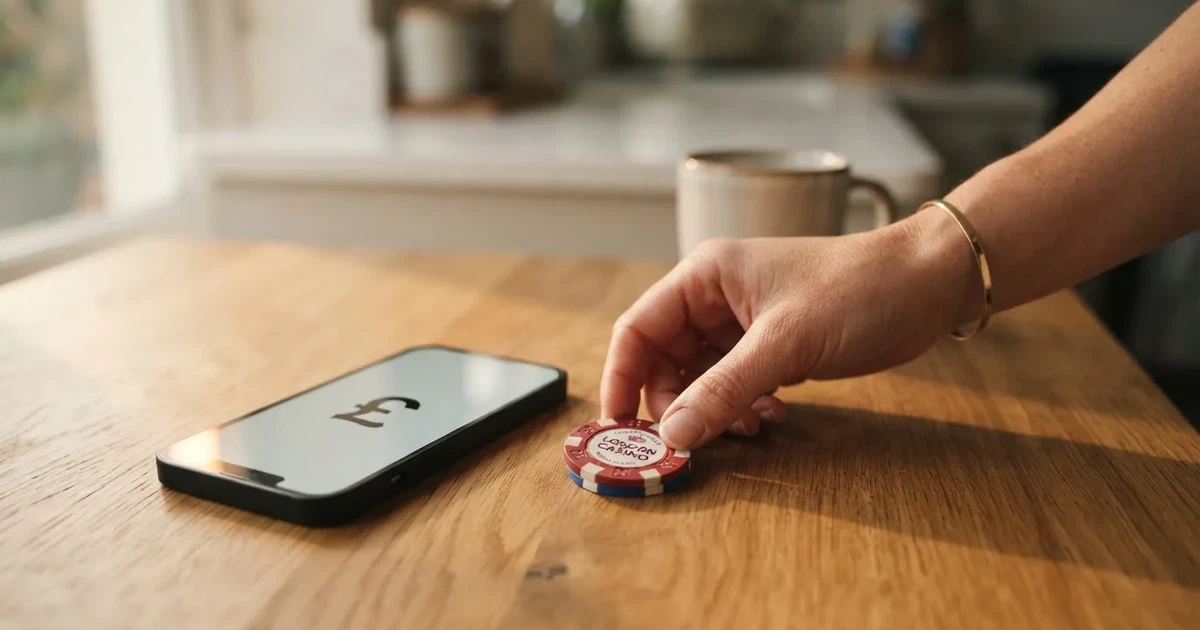
This page is current as of 23 September 2026 and was checked against the Gambling Commission’s public register of gambling businesses.
Table of Contents
- The £10 floor against the wider UK licensed market
- Why the Gambling Commission licence is the only test that matters
- GAMSTOP, deposit limits and what a £10 stake runs into
- How a £10 deposit moves, and how the winnings come back
- The 10x wagering cap and what it does to a £10 bonus
- How the £10 minimum deposit brands compare
- What the £10 stake actually costs the player
- Reading a £10-deposit offer without the marketing
- Where the £10 floor meets the offshore offer
- Picking a £10 minimum deposit site for a specific reader
- What changes if the operator is not on this list
- What the £10 deposit casino looks like in 2026
- Frequently asked questions about £10 minimum deposit casinos in the UK
The £10 floor against the wider UK licensed market
A £10 minimum deposit is a commercial setting on the cashier screen, not a regulatory one. The Gambling Commission does not prescribe what an operator must accept as a minimum stake — it sets maximum stakes on slot games (£5 per game cycle for players 25 and over, £2 for 18 to 24) and a maximum wagering requirement on bonuses (10x, since 19 December 2025), but it does not draw a floor. So the question of whether £10 is “low” can only be answered by looking at where the rest of the licensed market has settled. On 18 September 2026 the Commission’s public register listed 139 businesses holding an active remote casino operating licence, against 1065 active and 361 white-label domain entries — so the number of casino websites a UK player can actually reach is several times the number of distinct licence holders, and any one minimum figure can apply to dozens of fronts.

What £10 tells you, read against that background, is the operator’s read of its own market. A £10 floor is not aimed at the high-stake player, who would find the per-game £5 slot cap constraining well before the deposit ceiling did; it is aimed at the casual or returning player who wants a real session without funding the operator’s welcome package. Most major UK-facing brands sit in the £5 to £10 range; a handful go lower (£1 or £5 with Pay by Mobile) and a small premium tier pushes higher (£20 or £25, often to qualify for a fuller welcome package). The £10 tier is the broad centre of the licensed market, not a discount.
Two consequences follow. First, a £10 minimum tells you almost nothing about the operator’s safety or its standing with the regulator — the test for that is the licence number on the register, not the deposit box. Second, because the threshold is so common, the real differentiation is on what happens once the £10 is in: the games, the bonus mechanics, the withdrawal queue and the responsible-gambling friction that licensed operators are required to apply. The rest of this page works through those one at a time.
Why the Gambling Commission licence is the only test that matters
A £10 minimum deposit casino in the UK, by definition, takes UK customers. The only legal way to take UK customers over the internet is to hold a remote operating licence from the Gambling Commission, regardless of where the operator itself is incorporated. Since the Gambling (Licensing and Advertising) Act 2014, a Gibraltar, Malta or Curaçao licence alone is not sufficient for the GB market. The Commission’s public register is the test: a brand either appears on it under an active account with a remote casino operating licence number, or it is not lawfully taking GB players, whatever its marketing says.

The licence number format makes verification mechanical. Every remote casino operating licence number on the register has the form account-R-number-suffix, where the leading six digits repeat the licence holder’s account number and the R marks the licence as remote. A current example is 055149-R-331499-004, held by Hillside (UK Gaming) ENC under account 55149 and listed against the domain Bet365.com as active. The format is uniform across the register, which is what lets a player (or a journalist, or a comparison site) verify a brand in a few clicks rather than rely on a footer claim.
What the licence actually buys the player is a specific bundle of rights and a specific set of friction. The rights: access to the Commission’s complaints and ADR route if a dispute cannot be resolved with the operator directly, and the protection of the LCCP social responsibility code. The friction: identity verification before the first deposit or any play (name, address, date of birth, in force since 7 May 2019); mandatory participation in GAMSTOP; financial vulnerability checks at £150 in net deposits across a rolling 30 days, using public data; a prompt to set a financial limit before the first deposit; a ban on credit cards for gambling, even where the card is loaded into an e-wallet; and the slot-level stake and pacing rules that apply across the site. None of this is optional, and a site that offers to skip any of it is, by definition, not running on a Commission licence.
The hard edge sits offshore. Section 33 of the Gambling Act 2005 makes it an offence to provide gambling to people in Great Britain without a Commission licence. The Commission’s disruption powers (cease-and-desist, search-engine delisting, payment and hosting referrals) bite at the operator, not the player — no penalty lands on the individual — but the player who uses an unlicensed site loses the protections that come with the licence: no GAMSTOP coverage, no ADR route, no approved dispute resolution, no LCCP backstop. On a £10 deposit that distinction is not theoretical. If the unlicensed site refuses to pay out, the player has nowhere to take the complaint that the regulator would recognise.
GAMSTOP, deposit limits and what a £10 stake runs into
Every GB-licensed online casino must take part in GAMSTOP, the national online self-exclusion scheme. Self-exclusion is offered in fixed periods of six months, one year or five years, and once registered the period cannot be cancelled early — that is the point of the scheme, and it is the reason a £10 deposit at a licensed site is not available to a self-excluded player. Where GAMSTOP applies, the cashier screen will not load. Where it does not, the operator is not on a Commission licence for the GB market, and the player is in the offshore position described above. There is no third category.
Below the GAMSTOP line, the £10 deposit sits inside a thicker set of guardrails than most players notice. The operator must prompt the customer to set a financial limit before the first deposit — in force from 31 October 2025 — and the prompt is mandatory, not advisory. If the player chooses to set no limit, the choice is recorded and the prompt is repeated; the operator cannot simply skip it. A £150 net deposit threshold over a rolling 30 days triggers a financial vulnerability check using publicly available data — in force from 28 February 2025 — and the broader financial risk assessment framework that the Commission has consulted on has not yet been brought into force. The £10 deposit on its own does not trigger a check; building up to it across a busy week can.
The slot-side limits hit the £10 stake from the other end. Online slots in Great Britain are subject to a maximum stake per game cycle — £5 for players 25 and over, in force from 9 April 2025, and £2 for players aged 18 to 24, in force from 21 May 2025. Auto-play is banned (since 31 October 2021), a single spin may not complete in under 2.5 seconds, and “losses disguised as wins” — the celebratory animation on a net loss — are prohibited. A £10 deposit at the licensed end of the market therefore funds, at most, two game cycles for an older player and five for a younger one, before any spin lands. That is by design.
The ban on credit cards for gambling, in force since 14 April 2020, applies whatever the deposit size. The Commission’s reasoning at the time rested on a survey finding that 22% of online gamblers using credit cards to fund play were classed as problem gamblers, and that around 800,000 UK consumers had used credit cards to gamble in 2018. The ban covers cards routed through e-wallets as well as direct card deposits — a £10 top-up on a credit-funded PayPal balance is still a credit-card transaction in the regulator’s eyes. Debit cards, bank transfers and properly funded e-wallets are unaffected, and Pay by Mobile is treated separately (it is a phone-billed deposit, not a credit advance, where the operator supports it).
How a £10 deposit moves, and how the winnings come back
A £10 deposit is small enough that the payment method matters more than the figure. Three channels cover almost the whole UK market at this stake: debit cards (Visa and Mastercard, with Apple Pay and Google Pay sitting on top of those cards), bank transfer through the Faster Payments Service, and e-wallets (PayPal, Skrill, Neteller, with AstroPay and a handful of others appearing at some brands). Pay by Mobile — billing the deposit to the player’s mobile phone bill — is the outlier, sometimes accepted at £1 or £3 but typically capped well below £10, and rarely available on withdrawals.
The Faster Payments Service is the rail most UK withdrawals actually run on. It launched in 2008, runs 24 hours a day seven days a week through Pay.UK, and the Bank of England oversees safety and final settlement. Most Faster Payments arrive instantly or within a couple of minutes, with the scheme allowing up to two hours in occasional edge cases. The scheme limit per transaction is £1,000,000, but individual banks impose their own lower limits on customer transfers, which is why a £10 deposit or a £10 withdrawal is never going to be the binding constraint — the bank’s own ceiling sits far above this stake. A withdrawal back to a UK bank account from a licensed casino almost always lands the same day the casino releases it; whether the casino releases it on the day the player requests it is the variable.
Debit cards and Apple Pay or Google Pay sit alongside Faster Payments for most UK-facing brands. The rails are different — card schemes settle in batches rather than continuously — but at the £10 to a few hundred pounds range the practical experience is similar: most withdrawals land the same day once approved, occasionally the next business day where the operator runs a pending-period queue. The card data itself sits behind tokenisation at the wallet layer; Apple Pay, for instance, replaces the card number with a device-specific tokenised Device Primary Account Number and generates a dynamic security code per transaction, so the casino never sees the underlying card number when the player pays through the wallet. Apple Pay launched on 20 October 2014, supported UK cards from 14 July 2015, and the operator side (the casino’s acquirer) treats wallet and card deposits on the same risk basis.
E-wallets are a different shape. The £10 deposit is fast — the wallet pays the casino on the player’s instruction — and the casino typically pays winnings back to the same wallet rather than to a bank account. That keeps the withdrawal inside the e-wallet’s own closed loop, which is part of why wallet withdrawals are often the quickest the casino offers, but it also adds a step on the player’s side (transferring from the wallet to a bank account, which on PayPal and Skrill is usually free for UK bank withdrawals and arrives the same day). The constraint at the £10 level is not the rail; it is the operator’s internal pending period. Most licensed UK brands have reduced that pending period to zero or near zero, but a small number still hold withdrawals for 12 to 24 hours as a fraud-check buffer. The deposit moves in seconds; the withdrawal is only as fast as the operator lets it be.
Three cautions belong with this picture. First, a withdrawal back to a method other than the one used to deposit can be declined under anti-money-laundering rules — the operator wants to send the money back along the rail it arrived on, and a debit card deposit typically requires a debit card withdrawal. Second, the operator’s identity and affordability checks must complete before the first withdrawal is released, and on a brand-new £10 deposit those checks can take 24 to 72 hours while the operator waits on a credit-reference database or a document upload. Third, the bonus terms can extend the timeline materially — see the calculation below — because wagering requirements delay the moment the withdrawal button becomes available at all.
The 10x wagering cap and what it does to a £10 bonus
The single most consequential rule change for £10-deposit players in this cycle is the 10x wagering cap, in force since 19 December 2025. The cap applies to the wagering requirement attached to a casino bonus: the player must wager no more than 10 times the bonus amount before winnings become withdrawable. The cap also closes off mixed-product bonuses — “bet on sport, get casino spins” — which were a way for operators to attach slot-style wagering to a sportsbook offer. The point of the cap is to bring the bonus mechanic closer to a price rather than a multiplier chase.
For a £10 deposit that unlocks, say, a £10 bonus, the arithmetic is straightforward. Required turnover is bonus × wagering factor, so £10 × 10 = £100 of wagering through the bonus before any winnings convert to cash. At a £1 spin — a stake well below the £5 per-cycle cap — that is 100 spins. At a 5-second interval per spin — close to the 2.5-second minimum, accounting for the screen load and the button press — that is 500 seconds of play, or about 8 minutes of continuous spinning. At the £2 young-player cap, the same bonus takes 50 spins at a time; at the £5 older-player cap, 20 spins. The bonus clears in a single sitting for any stake the slot rules permit.
The bigger picture is what the cap does to the bonus offer as a category. Before 19 December 2025, wagering multiples of 30x, 40x or higher were routine on casino welcome packages, and the practical effect was that a £10 bonus could require £300 or £400 of wagering before any winnings converted — a tall order at £1 a spin and several hours of play. The 10x cap reduces that to a single sitting for most players, which in turn changes what a £10 bonus is worth: it is closer to a free trial than to a profit opportunity, and the headline-grabbing welcome packages of the past are now narrower and shorter. Mixed-product bonuses, which stitched a sportsbook free bet to a casino bonus with a single combined wagering requirement, are gone.
The expected cost to the player is the other half of the picture. Assuming a 96% return-to-player on a typical slot — within the 94% to 97% band that licensed UK slots cluster in — the expected loss on £100 of wagering is £100 × (1 − 0.96) = £4. That is the price of clearing the £10 bonus: £4 out of pocket on average, with the £10 bonus itself available as withdrawable cash or further play once wagering completes. The figure scales linearly with the bonus size — a £50 bonus at 10x wagering requires £500 of turnover and an expected loss of £20 at 96% RTP — and it assumes only the bonus amount is wagered, not the original deposit. Once the deposit itself is also subject to wagering, the turnover doubles and the expected loss doubles with it.
The point of running the numbers is to puncture the marketing word. The “bonus” is, statistically, a discounted trial rather than a profit. The 10x cap makes the discount generous; it does not make the offer a way to make money. A player who treats a £10 bonus as ten minutes of paid-for entertainment rather than as a route to a payout is closer to the maths the rule was designed around.
How the £10 minimum deposit brands compare
The table below covers the ten Gambling Commission-licensed brands that take a £10 minimum deposit in the UK market, drawn from the public register and ordered by their appearance there. The licence holder and licence number sit beside each domain so a player can verify the registration without leaving the article; the subject-support column is the operational signal — whether the brand is set up around a £10 minimum deposit, runs mixed-product mechanics, or is configured for a different stake band. The data is the register’s, not the brands’ marketing.
| Brand | Licence holder and GB remote casino licence | Domain status on the register | Subject support |
|---|---|---|---|
| PokerStars | Stars Interactive Limited, 039108-R-319334-026 | Active (Pokerstars.uk) | listings-only (sources) |
| Betfred | Petfre (Gibraltar) Limited, 039544-R-319290-010 | Active (Betfred.com) | listings-only (sources) |
| Betfair | PPB Games Limited, 039411-R-319335-010 | Active (Betfair.com) | listings-only (sources) |
| bet365 | Hillside (UK Gaming) ENC, 055149-R-331499-004 | Active (Bet365.com) | listings-only (sources) |
| Unibet | Platinum Gaming Limited, 045322-R-324275-019 | Active (unibet.co.uk) | listings-only (sources) |
| Coral | LC International Limited, 054743-R-330863-014 | Active (coral.co.uk) | listings-only (sources) |
| Casumo | Recro Limited, 061549-R-336718-002 | Active (Casumo.com) | listings-only (sources) |
| 888casino | 888 UK Limited, 039028-R-319297-014 | Active (888casino) | listings-only (sources) |
| kwiff | Eaton Gate Gaming Limited, 044448-R-323408-017 | Active (Kwiff.com) | listings-only (sources) |
| Midnite | Dribble Media Limited, 042647-R-321653-022 | Active (Midnite.com) | listings-only (sources) |
Two structural features of this set are worth flagging. First, the licence holder is not always the brand a player sees on the homepage. Coral, Gala Bingo and Ladbrokes all sit under LC International Limited (account 54743), which is why a single licence number can stand behind several well-known fronts. The register lists the domain against the account that runs it, so the player verifies the brand by domain and the licence holder by number, not by assuming the brand name in the marketing footer is the company name on the register. Second, several of the brands on this list are configured primarily as sportsbooks — Betfair, Betfred, Coral — with a casino product bolted on rather than the other way around. That affects the welcome package shape, the slot catalogue and the in-play experience, but it does not affect the regulatory position. A £10 deposit on Betfair sits inside the same GAMSTOP, the same affordability checks and the same 10x wagering cap as a £10 deposit on a casino-led brand.
What the table deliberately leaves empty is the operator-by-operator bonus terms. The 10x cap sets the ceiling for all of them; below the ceiling, each brand sets its own game-weighting (slots typically 100%, table games often 10% or zero), its own game restrictions (some slots excluded from bonus play), its own maximum bet per spin during wagering (usually £5, the slot cap), and its own expiry window (often 7 to 30 days). The variation is wide enough that any one figure in this table would be misleading, and any reader chasing the welcome offer should read the brand’s own bonus terms rather than rely on a comparison line. The licence row, by contrast, is fixed: the register number does not change between welcome packages.
PokerStars
Stars Interactive Limited runs Pokerstars.uk under account 39108 with the remote casino operating licence 039108-R-319334-026, the licence number that any age-verification or complaints check begins from. The brand’s centre of gravity is poker, with the casino product positioned as a complement rather than the headline; a £10 minimum deposit places the player inside the casino cashier without unlocking the full poker ecosystem (which has its own deposit routes). GAMSTOP applies in full because the casino licence is in force; the same identity checks that gate the poker client apply to the casino, and there is no shortcut around them at the cashier screen.
The brand suits a player who already has a PokerStars account and wants to use the casino lobby without opening a second wallet. The brand is a stretch for a player whose primary interest is the casino product alone — there is nothing wrong with the casino, but the casino is not what the operator leads with.
Betfred
Petfre (Gibraltar) Limited operates Betfred.com under account 39544 with the licence 039544-R-319290-010; the Gibraltar incorporation is incidental to the GB licence, which is what the Commission enforces against for UK players. Betfred is configured around a high-street bookmaker identity, with a casino product that has grown into a serious slots and live-dealer lobby over the last few years. A £10 minimum deposit sits at the low end of what Betfred accepts; the operator’s natural stake tier is slightly higher, and the welcome offer (where the player chooses to take one) reflects that positioning.
A player who values the bookmaker heritage and wants the casino as a side product will find Betfred well-resourced. A player who wants a casino-led experience with the deposit threshold as the headline will find the brand over-spec’d for the £10 stake.
Betfair
PPB Games Limited operates Betfair.com under account 39411 with the licence 039411-R-319335-010. Betfair’s identity is the exchange, with a fixed-odds sportsbook and a casino product sitting on the same wallet. A £10 minimum deposit is at the floor of what the casino accepts; the exchange itself does not have a £10 minimum in the same sense (stake sizes are set by the market), and the casino product inherits the standard licensed-UK settings — GAMSTOP, identity checks, the £5 slot cap.
The brand suits a player who already uses the exchange and wants the casino as a side product on the same account. Someone purely seeking a dedicated casino platform would find the brand ill-suited to that preference.
bet365
Hillside (UK Gaming) ENC operates Bet365.com under account 55149 with the licence 055149-R-331499-004 — the licence number the image caption at the top of this page was drawn from, current as of 18 September 2026. The brand is the largest single GB-licensed operator by domain footprint and runs one of the deepest casino lobbies in the licensed market. A £10 minimum deposit is the standard entry stake; the casino product is the headline rather than a side, and the slot catalogue, the live-dealer floor and the in-play product are all at full scale at this threshold.
A £10 player who wants the full licensed-UK casino experience — the widest game choice, the deepest live product, the most-resourced platform — will find bet365 configured exactly for them. The scale is the brand’s selling point and its drawback: customer support queues are longer than smaller brands, and bonus mechanics on a casino this size tend to be standardised rather than bespoke.
Unibet
Platinum Gaming Limited operates unibet.co.uk under account 45322 with the licence 045322-R-324275-019. Unibet runs as a multi-product international brand with a strong sportsbook and a fully developed casino on the same wallet, and the £10 minimum deposit sits at the standard entry tier. The brand’s identity is the Nordic-facing bookmaker that grew into a European casino operator; the UK product inherits the broader platform’s slot catalogue and live-dealer depth without being tailored to a UK-only audience.
A player who likes a pan-European casino brand with a deep slot catalogue will find Unibet a natural fit. A player who wants a UK-tailored casino product with British-style table games and UK-specific promos will find the brand generic at the edges.
Coral
LC International Limited operates coral.co.uk under account 54743 with the licence 054743-R-330863-014, the same licence that sits behind Ladbrokes and Gala Bingo on the Commission’s register. Coral is a UK high-street name with a casino product that has been online for two decades; the £10 minimum deposit is standard, the casino product is well-developed, and the brand’s strength is the cross-product wallet — a player can move between sports, casino and bingo without a second account.
A player who values a UK high-street brand with a multi-product wallet will find Coral fits. Those looking for an independent casino-only experience may prefer a brand specifically architected around that focus rather than this high-street crossover.
Casumo
Recro Limited operates Casumo.com under account 61549 with the licence 061549-R-336718-002. Casumo is a casino-led brand with a gamified loyalty structure and a slot catalogue that has historically leaned toward independent and lower-volatility titles; the £10 minimum deposit is standard, and the casino is the entire product rather than a side. The brand sits at the modern end of the licensed UK market — newer licence, casino-only — and is set up around slot play rather than sportsbook crossover.
A casino-only player who likes a gamified loyalty structure and an independent slot catalogue will find Casumo configured around them. A player who wants the breadth of a sportsbook-and-casino hybrid will find the brand narrower than the larger multi-product operators.
888casino
888 UK Limited operates 888casino under account 39028 with the licence 039028-R-319297-014. 888casino is one of the longest-running casino brands in the licensed UK market, with a deep slot catalogue, a proprietary live-dealer product and a casino-only positioning; the £10 minimum deposit is standard, and the casino is the brand’s centre of gravity. The 888 group runs sister brands (poker, sport) on adjacent licences, but 888casino itself is a casino-only front.
A player who wants a long-established casino-only brand with proprietary live-dealer tables will find 888casino well-suited. A player who wants sportsbook crossover on the same wallet would need a sister brand rather than 888casino itself.
kwiff
Eaton Gate Gaming Limited operates Kwiff.com under account 44448 with the licence 044448-R-323408-017. Kwiff is a newer GB-licensed brand that has built its identity around “surprise” pricing — boosted odds and randomised enhancements on sports — with a casino product attached. The £10 minimum deposit is at the standard end of what the brand accepts, and the casino product is positioned as a complement to the sportsbook rather than the headline.
A player drawn to kwiff for the surprise-pricing sports product will find the casino a useful side. Dedicated casino players are likely to find the brand’s primary focus on sports makes it a less natural fit for their interests.
Midnite
Dribble Media Limited operates Midnite.com under account 42647 with the licence 042647-R-321653-022. Midnite is the newest brand in this set, a UK-facing casino and sportsbook that launched into the licensed market in the last few years. The £10 minimum deposit is standard; the casino and sportsbook sit on the same wallet, with esports as a distinctive third leg. The brand is small relative to the established players above but fully licensed and fully subject to GAMSTOP and the LCCP.
A player who wants a newer UK-facing brand with a casino-sportsbook-esports shape will find Midnite fits the niche. A player who wants the deepest game catalogue or the largest live-dealer floor will find the brand under-resourced compared with bet365 or 888casino.
What the £10 stake actually costs the player
The cost side of a £10 deposit is where this page earns its keep. A £10 deposit funds a session at a stake the player controls, not a stake the operator controls — the £5 (or £2 for 18 to 24) slot cap is the ceiling, not the floor, and the player who chooses a £0.10 or £0.20 spin can stretch the £10 across a much longer session than a player at the cap. The arithmetic is mechanical: spins available = deposit ÷ stake per spin, with the 2.5-second minimum spin time as a lower bound on session length. At £0.10 a spin, a £10 deposit funds 100 spins, and at the 2.5-second floor that is 250 seconds, or just over four minutes of continuous play. At £1 a spin, ten spins at 25 seconds. At £5 a spin, two spins at 12.5 seconds.
The session length is independent of the bonus mechanics. A player who deposits £10 and takes a £10 bonus with 10x wagering is committing to £100 of wagering — see the calculation section above — at whatever stake they choose within the cap. At £1 a spin that is 100 spins or about 8 minutes at the floor; at £0.20 a spin that is 500 spins or about 21 minutes; at £0.10 a spin that is 1000 spins or about 42 minutes. The bonus does not extend the session; the stake does. The bonus extends the requirement.
The expected loss scales with the turnover, not with the deposit. A player who deposits £10, plays it through once with no bonus at £1 a spin, generates £10 of turnover — expected loss £0.40 at 96% RTP. A player who takes the £10 bonus and clears it generates £100 of turnover — expected loss £4. The bonus effectively doubles the stake the house sees. Whether the bonus is worth taking depends on whether the player values the £10 of bonus cash more than the £4 of expected loss; at the 10x cap, most players will, but it is a closer call than the marketing suggests.
The credit-card ban, the GAMSTOP coverage, the affordability checks and the slot caps all add friction that does not show up in the cashier screen. None of it changes the cost of the stake, but all of it changes what a £10 deposit funds. A £10 deposit at a licensed UK casino in 2026 is a slower, more heavily-monitored session than the same deposit would have been three years ago, and the friction is not a glitch — it is the regulator applying the rules the Gambling Act and the LCCP set out. A player who wants the friction removed is, by definition, asking for an unlicensed site, and the protections that come off with the friction are exactly the protections listed above.
Reading a £10-deposit offer without the marketing
The marketing word on a £10-deposit offer tends to cluster around three phrases: “100% match”, “free spins” and “no deposit needed” — the last of which is irrelevant to this page because a £10 minimum deposit page is about deposited play. The 100% match doubles the deposit up to a cap, and the free-spin allocation is the sweetener. The 10x wagering cap means the multiplier is at most 10x of the bonus, which in turn means the £10 match bonus costs the player the £4 of expected loss described above.
The “free spins” allocation is where the marketing hides the constraint. A typical welcome package at a licensed UK brand might attach 50 or 100 free spins to a £10 deposit, each spin valued at £0.10 to £0.20 and with the winnings either paid as cash or subject to a 10x wagering requirement. The 10x cap applies to the bonus as a whole, but the way the free-spin winnings are characterised — as a bonus, as cash, or as a mix — varies by brand. The honest reading: free-spin winnings treated as bonus cash are part of the £10 cap calculation, and the player should expect to wager the free-spin winnings 10x before withdrawal. Free-spin winnings paid as cash skip the wagering step entirely.
The maximum bet during wagering is the hidden constraint most often missed. Most licensed UK brands set a £5 maximum bet per spin (the slot stake cap) while a bonus is active, and any spin above that can void the bonus and the winnings. At the £10 deposit level, exceeding £5 a spin takes deliberate action, but it is the constraint that bites a player who treats the bonus as a route to a high-stake spin rather than as a discount on a standard session.
The expiry window is the other quiet constraint. Most licensed UK bonuses expire 7 to 30 days after issue, and the player who does not clear the wagering in that window forfeits the bonus and the winnings. At 10x wagering, the bonus clears inside a single session, but the player who wanders away from the casino and returns a fortnight later may find the bonus already gone. The honest reading: take the bonus only if the player intends to clear it in one sitting.
Where the £10 floor meets the offshore offer
The offshore offer — a Curaçao- or Malta-licensed casino not on the Commission’s register — sits in a different legal position and a different commercial position. The legal position is the one above: providing gambling to GB customers without a Commission licence is a section 33 offence, the Commission’s disruption powers bite at the operator, and the player loses the LCCP, GAMSTOP, ADR and complaints protections. The commercial position is that the offshore brand can offer a lower minimum deposit (sometimes £1 or £5), a higher bonus (sometimes a 200% or 300% match), and looser verification (sometimes none at all, until the first withdrawal is requested).
The trade-off is the protection made legal. A player who values a £1 minimum deposit over a £10 one is making a decision about which side of that line they want to sit on. The licensed £10 site offers the LCCP, GAMSTOP and ADR; the offshore £1 site offers the lower floor and the looser check. A player who has self-excluded via GAMSTOP cannot use the licensed site; the offshore site does not check. A player who needs anonymity cannot get it at the licensed site; the offshore site asks for nothing at deposit and everything at withdrawal.
The arithmetic is the same on both sides. A £10 deposit at 96% RTP over a £100 of wagering has the same expected loss of £4 whether the site is licensed in London, in Curaçao or in Valletta. The licensed site is more likely to pay out, more likely to honour a bonus and more likely to resolve a complaint; the offshore site is more likely to be available to a self-excluded player and more likely to be gone in 18 months. The honest reading is that the two offers are not directly comparable — they sell different things to different players — and a comparison that prices them against each other on bonus size alone misses the entire regulatory layer.
Picking a £10 minimum deposit site for a specific reader
Three reader situations cover most of the choice. A casual slots player who wants a quick session and a familiar brand should look at bet365, 888casino or Casumo — the casino-led end of the table, with a £10 deposit that funds a normal session and a slot catalogue deep enough that the player is not recycling the same five games. A player who already has a sportsbook account and wants the casino on the same wallet should look at Coral, Betfred, Betfair or Unibet — the multi-product end of the table, where the £10 deposit enters the casino through the sportsbook identity and the bonus mechanics are designed for cross-product play. A player who wants a newer brand configured around the modern licensed-UK shape should look at Midnite or kwiff — the newer licence end of the table, where the £10 deposit is the standard entry stake and the brand is still building its catalogue.
A self-excluded player via GAMSTOP has no £10 deposit at any of these ten brands. The cashier screen will not load. That is the point of the scheme, and it is the cleanest demonstration of the trade between the licensed £10 floor and the offshore £1 floor.
A player with affordability concerns — the £150 rolling-30-days vulnerability check threshold — should know that a single £10 deposit does not trigger a check, but a pattern of weekly £10 deposits over six weeks does. The check is a friction, not a refusal, and the operator is required to run it. A player who would rather not be checked can play at an unlicensed site, and pays for that choice in lost protections.
What changes if the operator is not on this list
The Commission’s public register is the only test that matters, and the register is wider than the ten brands above. The 139 active remote casino operating licences on 18 September 2026 cover 1065 active and 361 white-label domain entries — so there are roughly ten times as many casino websites as there are distinct operators. A £10 minimum deposit casino not on this list is not necessarily unlicensed; it is simply not one of the ten the Commission register’s most prominent GB-facing licences front. The honest test is the licence number on the casino’s footer matched against the Commission’s register, not the brand’s presence in any one article.
The white-label domain is the structural reason a single licence can stand behind several brands. A white-label site trades under another company’s licence, which is why a player who sees a £10-deposit casino with a brand they do not recognise should check the licence holder’s name on the register rather than the brand name. The brand is the marketing front; the licence holder is the legal entity, and the Commission’s enforcement runs against the licence holder.
What the £10 deposit casino looks like in 2026
Three trends define the market around the £10 floor in this cycle. The 10x wagering cap (since 19 December 2025) has narrowed the bonus offer across the licensed market and made the £10 deposit a more honest transaction — the player knows the bonus costs about £4 of expected loss at standard slot RTP, and the surprise has been engineered out of the wagering requirement. The Remote Gaming Duty increase from 21% to 40% (from 1 April 2026, model only — check with HMRC) raises the operator’s tax bill on GB play, which feeds into margin and offer design in ways that are still settling. The financial vulnerability check at £150 net deposits in a rolling 30 days (since 28 February 2025) puts a regulatory floor under the casual deposit pattern that £10-deposit players tend to follow — a player who deposits £10 a week crosses the threshold in fifteen weeks.
The slot stake caps — £5 for 25+, £2 for 18-24 — are now twelve months into force, and the licensed market has adjusted around them. Game design, autoplay substitutes and slot pacing have all moved to comply. The ban on credit cards is now five years old and fully embedded; the e-wallet loophole is closed, and a credit-funded PayPal deposit is treated as a credit transaction. GAMSTOP is the routine background fact of GB-licensed online play; the question is no longer whether a licensed site is on it (they all are) but how smoothly the self-exclusion registration integrates with the cashier.
For a player choosing a £10 minimum deposit site in this cycle, the practical reading is that the licensed market has become more uniform, not less — the bonus terms are tighter, the responsible-gambling friction is thicker, and the brand-by-brand differentiation is in the catalogue, the wallet shape and the platform feel rather than in the headline offer. A £10 deposit at bet365, at 888casino or at Casumo in 2026 is a closer experience than it was three years ago, and the regulatory layer has done that work on purpose.
Frequently asked questions about £10 minimum deposit casinos in the UK
What counts as a £10 minimum deposit at a licensed UK casino?
A £10 minimum deposit means the cashier screen will not accept a deposit below £10 through any of the operator’s payment methods — debit cards, e-wallets, bank transfer or prepaid. The figure is the operator’s commercial setting, not a regulator’s, and the Gambling Commission does not set a minimum. A licensed operator can set the threshold higher or lower, and most major UK-facing brands sit in the £5 to £10 range. The £10 floor is the broad centre of the licensed market, not a discount.
Is a £10 minimum deposit casino safe to use?
A £10 minimum deposit casino is safe to use if it holds a Gambling Commission remote operating licence and appears on the Commission’s public register under an active domain. The licence number on the casino’s footer should match a record on the register under the brand’s domain. A site that does not appear on the register is not lawfully taking GB customers and offers none of the LCCP, GAMSTOP or ADR protections the licence carries. The £10 figure itself tells the player nothing about safety — the licence number does.
Can I find a £10 minimum deposit casino that isn’t on GAMSTOP?
No licensed UK casino can opt out of GAMSTOP; participation is a mandatory condition of every remote operating licence. A casino that does not check GAMSTOP is, by definition, not on a Commission licence for the GB market. That is the section 33 offence the Gambling Act 2005 sets out, and the player who uses such a site loses the LCCP, ADR and complaints protections. There is no third category: a casino is either on GAMSTOP because it is licensed, or it is not on GAMSTOP because it is not licensed.
How quickly do withdrawals settle after a £10 deposit?
Most withdrawals from a licensed UK casino settle the same day the operator approves them — bank transfers through Faster Payments arrive instantly or within a couple of minutes, debit card and wallet withdrawals arrive the same day once released. The variable is the operator’s internal pending period and the identity-check queue on the first withdrawal. A £10 deposit does not trigger a financial vulnerability check, but the first withdrawal usually requires completed identity verification, which can add 24 to 72 hours. Subsequent withdrawals are typically faster.
Which payment methods accept a £10 minimum deposit?
Debit cards (Visa, Mastercard), e-wallets (PayPal, Skrill, Neteller, AstroPay), bank transfer through Faster Payments, and Apple Pay or Google Pay sitting on top of a debit card all typically accept £10. Pay by Mobile (billing the deposit to the phone bill) often has a lower ceiling and is rarely available at £10. Credit cards are banned for gambling in GB since 14 April 2020, including credit cards loaded into an e-wallet. The £10 figure does not change the available rails — the operator’s cashier does.
Is a £10 minimum deposit casino licensed by the Gambling Commission?
Not necessarily. The £10 minimum deposit is the operator’s commercial setting; the Gambling Commission does not require it. A £10 deposit casino may or may not be licensed; the test is the licence number on the register. The Commission’s public register listed 139 businesses holding an active remote casino operating licence on 18 September 2026, against 1065 active and 361 white-label domain entries — so the number of £10-deposit casinos is a fraction of the licensed market, and most licensed brands sit in the £5 to £10 range rather than at exactly £10.
Written by the editors at casinoprovidersuk.