
Newest online casinos with no-deposit bonuses in the UK: a buyer’s guide to the launch class
The newest class of UK-licensed online casinos launches with no-deposit offers attached, but the headline figure is rarely the one that costs a player. A licence on the Gambling Commission register must already be in place for the brand to legally accept a single British customer, every offer carries the 10x wagering cap that took effect on 19 December 2025, and a mandatory GAMSTOP check sits behind the sign-up form before any bonus is credited. This page is built around those three constraints and what they mean for the reader who is weighing a fresh site against an established one.

The register snapshot used to verify every licence below was taken on 7 November 2026 and checked against the Gambling Commission’s public register of gambling businesses.
Data accurate as of 7 November 2026 per Gambling Commission public register.
Table of Contents
- How the debut class fits the wider UK market
- The UK rule that decides what “newest” can legally do
- Safer-gambling tools a new site must wire up before launch
- Why a UK-licensed debut site cannot offer anonymous crypto play
- Payments and payout speeds at a freshly launched UK site
- How launch offers and free spins are structured at a newly licensed site
- What mobile and app play looks like at a debut UK site
- Slot and table ranges at debut
- What the debut class looks like in practice
- Side-by-side: how the newest UK casino class compares
- Worked example: how long to clear a £10 no-deposit bonus at the 10x cap
- What a player actually decides between
- Player protection beyond GAMSTOP
- Tax, winnings and what the launch offer does not change
- Frequently asked questions
How the debut class fits the wider UK market
The UK’s licensed casino market is large, mature and crowded. On 18 September 2026 the Gambling Commission’s public register held 139 businesses with an active remote casino operating licence. Each of those licence holders may run any number of websites, and the register’s domain list records 1065 active entries and 361 white-label entries on the same date. A white-label site trades under another company’s licence — the brand on the front of the site is the marketing face, the licence account in the small print is someone else’s.
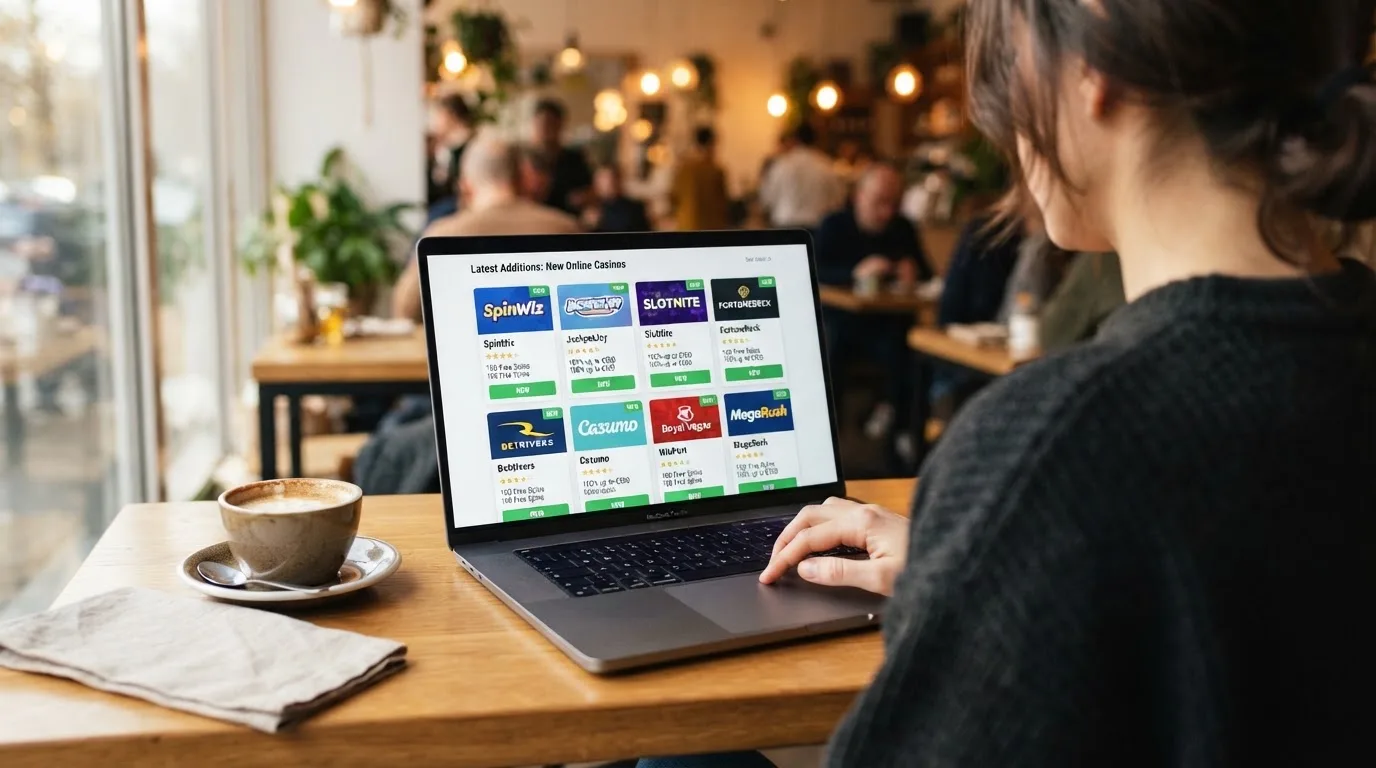
Two practical conclusions follow. First, “new” in this context does not mean unlicensed — a debut site that wants a British customer must already hold a Commission licence at launch, and the register is the test of whether it does. Second, the debut class is a small subset of a register that already lists over a thousand domains. Most licensed brands are not new, and most new sites are not going to disrupt the established names overnight.
The register is searchable online and downloadable as a CSV or Excel file, which is what the comparison later in this page relies on. A remote casino licence number carries a fixed shape: it starts with the licence holder’s six-digit account number, followed by -R- to mark a remote (online) licence, then a sequence number and a suffix. The format makes licence numbers easy to verify at a glance, even when a brand does not publish its own.
The UK rule that decides what “newest” can legally do
Online casino in Great Britain is governed by the Gambling Act 2005 and, since the Gambling (Licensing and Advertising) Act 2014, any operator taking customers in Great Britain must hold a Gambling Commission licence wherever it is actually based. A Curaçao, Malta or Gibraltar licence on its own is not a substitute; the Commission’s public register is the whole test of whether a brand is licensed to serve British customers.

For a newly launched site, this rule does some heavy lifting before the first spin. Minimum age is 18, and since 7 May 2019 a new account holder’s name, address and date of birth must be verified before the first deposit or any play. The verification is what makes anonymous play impossible at any licensed UK site — a constraint that runs through every other shelf on this page.
Online slots carry a per-game-cycle stake cap, and the cap is age-tiered. From 9 April 2025 the maximum stake for players aged 25 and over is £5 per game cycle; from 21 May 2025 the maximum for 18-24-year-olds is £2. There is no state-set deposit or loss ceiling. Instead, from 31 October 2025 operators must prompt a customer to set a financial limit before accepting the first deposit. Auto-play has been banned since 31 October 2021, a slot spin may not run faster than 2.5 seconds, and “losses disguised as wins” are banned.
A second rule, aimed squarely at the launch offer, is the wagering cap. Since 19 December 2025 wagering requirements on bonuses at any GB-licensed operator are capped at 10x, and mixed-product bonuses — for example a sports bet that unlocks casino spins — are banned. This is the rule a player should weigh before reading any “huge bonus” headline. On a £10 no-deposit bonus, the most any operator can require is £100 of qualifying turnover before withdrawal, and the cap is the same whether the offer is generous or stingy.
Safer-gambling tools a new site must wire up before launch
Every GB-licensed online operator must take part in GAMSTOP, the national online self-exclusion scheme, and that condition has applied since 31 March 2020. A player can self-exclude for six months, one year or five years, and a period cannot be cancelled early. GAMSTOP is what blocks a self-excluded customer from opening a brand-new account at a fresh site — the check sits between sign-up and first deposit.
The other tools a player will meet on day one of a new account are the operator’s own deposit limits, reality checks and time-out options, plus the National Gambling Helpline run by GamCare and the support offered by GambleAware. None of these are optional for a licensed operator.
A second layer of checks runs behind the scenes. Since 28 February 2025, financial vulnerability checks trigger at £150 of net deposits in a rolling 30-day window using publicly available data. Wider financial risk assessments have been announced but are not yet in force. None of this changes the launch offer itself, but it shapes what the offer looks like to the player who takes it up: limits before deposit, checks before withdrawal, and a self-exclusion route that the operator cannot opt out of.
Why a UK-licensed debut site cannot offer anonymous crypto play
Anonymous play is not possible at a UK-licensed casino. Verification of name, address and date of birth is required before the first deposit or any play, and that step rules out anonymous play regardless of the payment method. A player who wants to deposit in Bitcoin or another cryptocurrency will still go through the same checks as anyone else, and the licensed operator will still need to record who the funds came from for anti-money-laundering purposes.
For the player who came to this page looking for “newest crypto casino” or “newest Bitcoin casino”, the honest answer is that the UK launch class does not deliver that experience. A debut UK site may list cryptocurrencies on its cashier page, but the regulatory frame around it is the same as for any other payment method. Offshore sites that do offer anonymous crypto play sit outside the Commission’s remit, and the trade-off is sharper than it looks: no GAMSTOP, no Commission complaints route, no approved alternative dispute resolution, and the risk of the site being disrupted mid-session.
The Commission can issue cease-and-desist notices, refer sites for payment and hosting blocking, and ask search engines to delist them, but it has no ISP-level blocking power. A site taken offline in one round can reappear under a new domain in the next. The reader who values anonymity over protection is choosing a different market; this page describes the licensed one.
Payments and payout speeds at a freshly launched UK site
The payment shelf at a new UK site is in practice a debit card and bank transfer shelf. Credit cards have been banned for gambling across all online and offline products in Great Britain since 14 April 2020 — including credit cards routed through e-wallets, which closes off a route that some readers may have used elsewhere. Debit cards and bank transfers are unaffected by the ban.
Bank transfers within the UK typically move through the Faster Payments Service, which launched in 2008 and is operated by Pay.UK. It runs 24 hours a day, seven days a week, and most payments arrive instantly or within a couple of minutes; a transfer can occasionally take up to two hours. The scheme sets a £1,000,000 per-transaction limit, though individual banks can and do impose lower limits on their own customers. The Bank of England does not participate directly in Faster Payments but oversees the system’s safety and stability and provides final settlement.
A few established wallets do turn up at UK-licensed operators. Apple Pay is developed and operated by Apple Inc., launched on 20 October 2014 initially for US-issued cards, and began supporting UK-issued cards on 14 July 2015. It protects card data through tokenisation — a device-specific tokenised Device Primary Account Number replaces the real card number, and each transaction generates a dynamic security code. In-store, Apple Pay uses near-field communication to talk to contactless terminals; authentication on an iPhone with Face ID is a double-click of the side button, on Touch ID models a double-click of the Home button. A supported card from a participating issuer is required, and Apple Pay is not available in every market.
Apple Pay’s wider regulatory story — a US Consumer Financial Protection Bureau rule finalised in November 2024 bringing large nonbank digital wallet operators under bank-like federal oversight, and a European Commission investigation opened in 2020 into whether Apple has abused its control of iPhone NFC hardware — is not what decides whether a UK casino can take an Apple Pay deposit. The relevant rule for a UK player is the credit-card ban above: as long as the underlying card is a debit card and not a credit card, the deposit is permitted.
AstroPay is a global digital wallet offering online payments, virtual and physical debit cards, and peer-to-peer transfers; it was founded in 2009, is headquartered in Uruguay, and spun off its payment-processing business dLocal as a separate company in 2016. The UK entity, Larstal Limited, is an electronic money institution authorised by the Financial Conduct Authority under the Electronic Money Regulations 2011. AstroPay also operates through an Isle of Man entity licensed by the Isle of Man Financial Services Authority, a Brazilian entity authorised by the Brazilian Central Bank as an electronic currency issuer, and a Danish entity authorised by the Danish Financial Supervisory Authority. Whether AstroPay shows up at a particular UK casino’s cashier is a per-operator choice.
For a player timing a withdrawal, the realistic band at a new UK site is “same day to two working days” once the account is fully verified. Faster Payments gives the rails; verification and the operator’s own processing queue give the delay.
How launch offers and free spins are structured at a newly licensed site
Welcome offers at newly licensed UK sites take a few standard shapes: a small no-deposit bonus credited on sign-up, a deposit match, free spins on a named slot, or some combination of the three. Free spins tend to come attached to a named title, with any winnings converted to bonus money and subject to the same wagering cap.
The 10x wagering cap that took effect on 19 December 2025 is the headline figure to weigh. The Commission did not cap the bonus amount itself; it capped the multiplier. A £20 no-deposit bonus at a 10x cap means at most £200 of qualifying turnover before withdrawal, which is the most a player can be asked to do across an entire session on that bonus. Any offer advertising higher wagering requirements is either offshore, stale, or misstated — a quick reason to walk away.
Mixed-product bonuses are banned. A free bet on sport that unlocks casino spins, or a deposit match that also credits bingo bonus funds, no longer fits the rules at a GB-licensed operator. The bonus itself has to live inside one product. That simplifies comparisons: a casino offer is a casino offer, and the reader is not asked to translate terms between products.
There is no Commission-set cap on a maximum cashout from a no-deposit bonus; the cap, if any, is the operator’s own. A reasonable place to check is the bonus terms page, where a max withdrawal figure should sit beside the wagering requirement.
What mobile and app play looks like at a debut UK site
A newly launched UK casino typically launches on a mobile-first footing, with a responsive web app rather than a native app store listing. The constraint is partly regulatory: a native app distributed through the App Store or Google Play sits inside those platforms’ rules on real-money gaming, and many operators keep the mobile experience inside the phone browser instead.
What that gives the player is the same cashier, the same games and the same GAMSTOP check on a phone screen as on a desktop browser. Slots run at the regulated spin interval of at least 2.5 seconds, reality checks fire on the operator’s chosen cadence, and the same deposit-limit prompt that runs before the first desktop deposit runs before the first mobile deposit. Auto-play is banned, so the player is always one tap per spin.
The practical trade-off at a debut site is polish. A brand-new site may not yet have every provider integrated for mobile, may not yet offer live-dealer tables on a phone browser, and may not have a downloadable app at all. None of those gaps changes the licensing picture or the safer-gambling tools.
Slot and table ranges at debut
A newly licensed UK site typically launches with hundreds, not thousands, of slot titles. The first wave tends to favour a small roster of large providers — Microgaming and NetEnt are the names that turn up most often at launch, both because their integration kits are straightforward and because their titles are familiar to a British audience.
Live dealer tables arrive later for most new sites, because live-dealer integration requires a separate provider relationship and its own technical integration on the operator side. Where a launch site does offer live tables from day one, those tables are usually operated by a third-party live studio under the operator’s licence; the player sees the brand on the lobby and the studio behind the camera.
A debut site may also launch with a small table-games section (blackjack, roulette, sometimes baccarat) that draws from the same providers as the slot catalogue. The catalogue grows over the months after launch as the operator signs additional provider deals. A reader comparing debut sites should expect the catalogue to be smaller than an established operator’s at the same point in time, and should not mistake a thin launch lineup for a permanent ceiling.
What the debut class looks like in practice
The newest class is a thin slice of the wider UK market. The register’s 139 licence holders run over a thousand active domains, and the debut sites form a small subset of those. The wider licensed market is dominated by long-established brands that the register also lists. On 18 September 2026 the register’s snapshot includes:
- 32Red (32red), account 45322, Platinum Gaming Limited, remote casino operating licence 045322-R-324275-019
- Sky Vegas, account 65519, Bonne Terre Gaming Limited, remote casino operating licence 065519-R-339675-002
- Gala Bingo, account 54743, LC International Limited, remote casino operating licence 054743-R-330863-014
- bet365 (Bet365), account 55149, Hillside (UK Gaming) ENC, remote casino operating licence 055149-R-331499-004
- Paddy Power, account 39411, PPB Games Limited, remote casino operating licence 039411-R-319335-010
- Betway, account 39372, Betway Limited, remote casino operating licence 039372-R-319367-029
- William Hill, account 39225, WHG (International) Limited, remote casino operating licence 039225-R-319373-015
- BetVictor, account 39576, BV Gaming Limited, remote casino operating licence 039576-R-319370-028
- 888casino (888casino), account 39028, 888 UK Limited, remote casino operating licence 039028-R-319297-014
- Jackpotjoy, account 38905, Gamesys Operations Limited, remote casino operating licence 038905-R-319430-022
Ladbrokes, Coral and Gala Bingo all sit under LC International Limited, which is one reason the register matters: a brand on the front of a site and the licence account in the small print can belong to different companies.
A new brand launching in the same period will be a separate licence account in the register, and its domain will sit alongside the established names above. The comparison below sets them side by side.
Side-by-side: how the newest UK casino class compares
| Brand | Licence holder and GB remote casino licence | Domain status on the register | Crypto / no-deposit subject support |
|---|---|---|---|
| 32Red | Platinum Gaming Limited, 045322-R-324275-019 | Active | — |
| Sky Vegas | Bonne Terre Gaming Limited, 065519-R-339675-002 | Active | — |
| Gala Bingo | LC International Limited, 054743-R-330863-014 | Active | — |
| bet365 | Hillside (UK Gaming) ENC, 055149-R-331499-004 | Active | — |
| Paddy Power | PPB Games Limited, 039411-R-319335-010 | Active | — |
| Betway | Betway Limited, 039372-R-319367-029 | Active | — |
| William Hill | WHG (International) Limited, 039225-R-319373-015 | Active | — |
| BetVictor | BV Gaming Limited, 039576-R-319370-028 | Active | — |
| 888casino | 888 UK Limited, 039028-R-319297-014 | Active | — |
| Jackpotjoy | Gamesys Operations Limited, 038905-R-319430-022 | Active | — |
Every entry on the register is Active, which is the only status that matters for a player deciding whether to sign up. White-label entries would be flagged separately in the source CSV; the column above deliberately reflects that distinction. The subject-support column carries the no-data marker because none of the operators in this set have a published no-deposit bonus in the register snapshot, which is itself the answer a reader comparing launch offers needs to take on board: the register tells the reader the brand is licensed, not what the brand is offering.
What the comparison actually shows
Ten active GB remote casino licences, all on the same register snapshot, all from established operators. The newer launches would join this table as additional rows; none of them is the table itself, because the table is built from what the register carries today. A reader comparing a freshly launched site against an established one will see the same licence format, the same domain status and the same column for what the brand supports — the differences live in the brand itself, not in the register.
The single useful signal this table carries is the licence format. Every GB remote casino operating licence in the UK takes the shape six-digit account-R-sequence-suffix, and the leading six digits repeat the licence holder’s account number. That format is the reader’s fastest check: if a brand cannot produce a licence number in that shape, it is not licensed for the British market, regardless of any other claim it makes.
Worked example: how long to clear a £10 no-deposit bonus at the 10x cap
A £10 no-deposit bonus at the 10x wagering cap that took effect on 19 December 2025 requires £100 of qualifying turnover before withdrawal. At a typical slot stake of £1 per spin, that is 100 spins. A regulated spin must run at least 2.5 seconds, so 100 spins take at least 250 seconds — around four minutes of pure spinning, before any reality-check interruption or any slot that does not let the player stake the full £1.
Doubling the bonus doubles the required turnover in the same proportion. A £20 no-deposit bonus at the 10x cap requires £200 of qualifying turnover, which at the same stake is 200 spins and at the regulated minimum spin interval is around eight minutes of continuous play. The cap scales linearly with the bonus amount; it does not scale with the player’s stake, because stake is the player’s choice.
The honest read of those numbers is that a £10 no-deposit bonus at the 10x cap is small enough to clear quickly, which is what most launch offers in this class look like. The dishonest read is that the bonus is “free money”: every £10 of bonus carries £100 of required play before it can be withdrawn, and the house edge on the slot runs through the whole £100. A player who treats the offer as a five-minute test drive has the right frame; a player who treats it as a path to a payout has the wrong one.
The band a player should keep in mind: at the 10x cap, the smallest no-deposit bonuses in this class clear in a handful of minutes at a £1 stake, and the largest at a few times that, all other things being equal. The exact figure depends on the operator’s stake cap on the slot, the slot’s own spin interval and any game restrictions in the bonus terms. The wagering cap itself is fixed at 10x across the whole market since 19 December 2025.
What a player actually decides between
The choice in front of a reader is rarely “new versus old”. It is more often “this launch offer versus the next launch offer”, with the established names as the benchmark. The register tells the reader the brand is licensed. The bonus terms tell the reader what the offer actually costs. The catalogue and the payment shelf tell the reader what the rest of the experience looks like.
For a player who values anonymity, the UK launch class is not the right market at all. The mandatory identity check sits before any play, and no GB-licensed operator offers anonymous crypto play. The trade-off there is between the regulated market’s protections (GAMSTOP, Commission complaints, ADR) and an offshore site’s lighter sign-up flow, and the trade-off runs in the reader’s direction rather than the page’s.
For a player who values a small, well-understood offer with a clear ceiling on the time it takes to clear, the UK launch class is the right place to be. The 10x cap, the GAMSTOP link and the per-cycle stake caps are all in the reader’s favour; the catalogue being smaller than at an established brand is the cost. The comparison below is the tool for weighing that trade-off across the brands that hold a GB licence today.
Player protection beyond GAMSTOP
GAMSTOP is the headline self-exclusion route, and it has been a mandatory condition of every online licence since 31 March 2020. Self-exclusion periods run six months, one year or five years, and a player cannot cancel a period early. A self-excluded player who tries to open an account at a fresh brand will be stopped at the GAMSTOP check, regardless of how new the brand is.
The other routes a player has on hand are operator-side: deposit limits, time-outs, reality checks, and the operator’s own self-exclusion from the brand. These are not optional at a licensed operator. The deposit-limit prompt must fire before the first deposit (from 31 October 2025), the reality check must fire on a cadence the operator sets, and time-out must be available from the account page. None of this is unique to a debut site.
External support is available from GamCare, which runs the National Gambling Helpline, and from GambleAware. A player who wants to read the Commission’s own safer-gambling materials will find them on the gamblingcommission.gov.uk site alongside the register.
Tax, winnings and what the launch offer does not change
Players pay no tax on gambling winnings in the UK. The tax that changed in 2026 is on the operator side: Remote Gaming Duty was raised from 21% to 40% from 1 April 2026. That is a model rather than a per-brand figure, and the reader should check with HMRC for the current rate that applies to a specific operator’s situation.
The operator-side tax does not change a player’s bottom line on a £10 no-deposit bonus. The wagering cap, the stake caps, the spin interval and the reality checks all still apply. What it can change is the operator’s promotional budget: a higher duty rate can push a brand to trim a launch offer or shorten its free-spins window. A reader who watches a launch offer change between one month and the next should not assume the brand is being stingier; the duty rate is one of the moving parts behind the headline.
Frequently asked questions
How soon after launch can a new UK casino legally offer a no-deposit bonus?
A new UK casino cannot accept a single British customer — for any bonus, deposit or play — until it holds an active Gambling Commission remote casino operating licence. The Commission’s public register is the test of whether the licence is in place; the licence must be active on the register before the bonus goes live, so the offer is effectively gated by the licence status rather than by the brand’s launch date.
Is a newly launched casino’s Gambling Commission licence checkable before signing up?
Yes. The Gambling Commission’s public register is searchable online and downloadable as a CSV or Excel file, and every remote casino operating licence appears in the format six-digit account-R-sequence-suffix. The leading six digits repeat the licence holder’s account number, and the register records the status (Active, Inactive or White Label) of every domain the licence runs.
What is a typical no-deposit bonus amount at a newly launched UK site?
No-deposit bonuses in the UK launch class tend to be small — a token amount credited on sign-up rather than a headline-grabbing figure. The Commission caps the wagering multiplier at 10x but does not cap the bonus amount, so the offer’s headline is set by the operator; a player should expect a small bonus with a clear ceiling on time to clear rather than a large one with deep terms.
Does a new UK casino’s no-deposit bonus still carry the 10x wagering cap?
Yes. Since 19 December 2025 every bonus at a GB-licensed operator carries a wagering requirement capped at 10x, and mixed-product bonuses are banned. A £10 no-deposit bonus at the 10x cap requires £100 of qualifying turnover before withdrawal; a £20 bonus requires £200. Any offer advertising higher multipliers is either offshore, stale, or misstated.
How many game titles does a newly launched UK casino typically carry at debut?
A new UK site typically launches with hundreds of slot titles rather than thousands, with a small roster of large providers — Microgaming and NetEnt are the names that most often appear in the launch lineup. Live dealer tables frequently arrive later, and the catalogue grows as the operator signs additional provider deals in the months after launch.
Can a new UK casino site’s no-deposit offer be claimed on mobile as well as desktop?
Yes, on a mobile browser. The same sign-up flow, the same GAMSTOP check and the same bonus terms apply whether the player is on a phone or on a desktop. Native apps are less common at UK-licensed operators because the App Store and Google Play impose their own rules on real-money gaming; a responsive web app is the usual mobile route at launch.