
Understanding UK casino licensing: a guide for players in 2026
 Available in GB
The honest answer to the question is short and not the answer most search results give: in Great Britain, only a Gambling Commission licence lets a casino lawfully accept UK depositors. Everything else on an international casino site — the bigger bonus headline, the longer game list, the looser stake cap — is what a player trades away in return, and most of it is protection the page below names explicitly. The point of this 2026 review is not to send anyone to a specific offshore brand. It is to make the choice legible, and to show what each Gambling Commission rule actually does on a regulated site.

Last checked on 23 September 2026 against the Gambling Commission’s public register of gambling businesses.
Table of Contents
- Player wellbeing and the protections that disappear abroad
- The licensed shortlist — ten active Gambling Commission remote casinos
- How the UK online casino landscape actually fits together
- What the bonus turnover cap actually changes
- Legality, taxation and what the operator does for HMRC
- What changes between a regulated and an international site in practice
- Picking the right brand for the right reason
- Frequently asked questions
Player wellbeing and the protections that disappear abroad
A UK player landing on an international casino site is reading a page written for a different regulator, or for none at all. Several of the protections that follow from a Gambling Commission licence simply do not exist there, and the consequences surface in ways the player only notices when one of them is needed. This section runs through what a licensed site is required to do, so the next sections have something concrete to compare against.
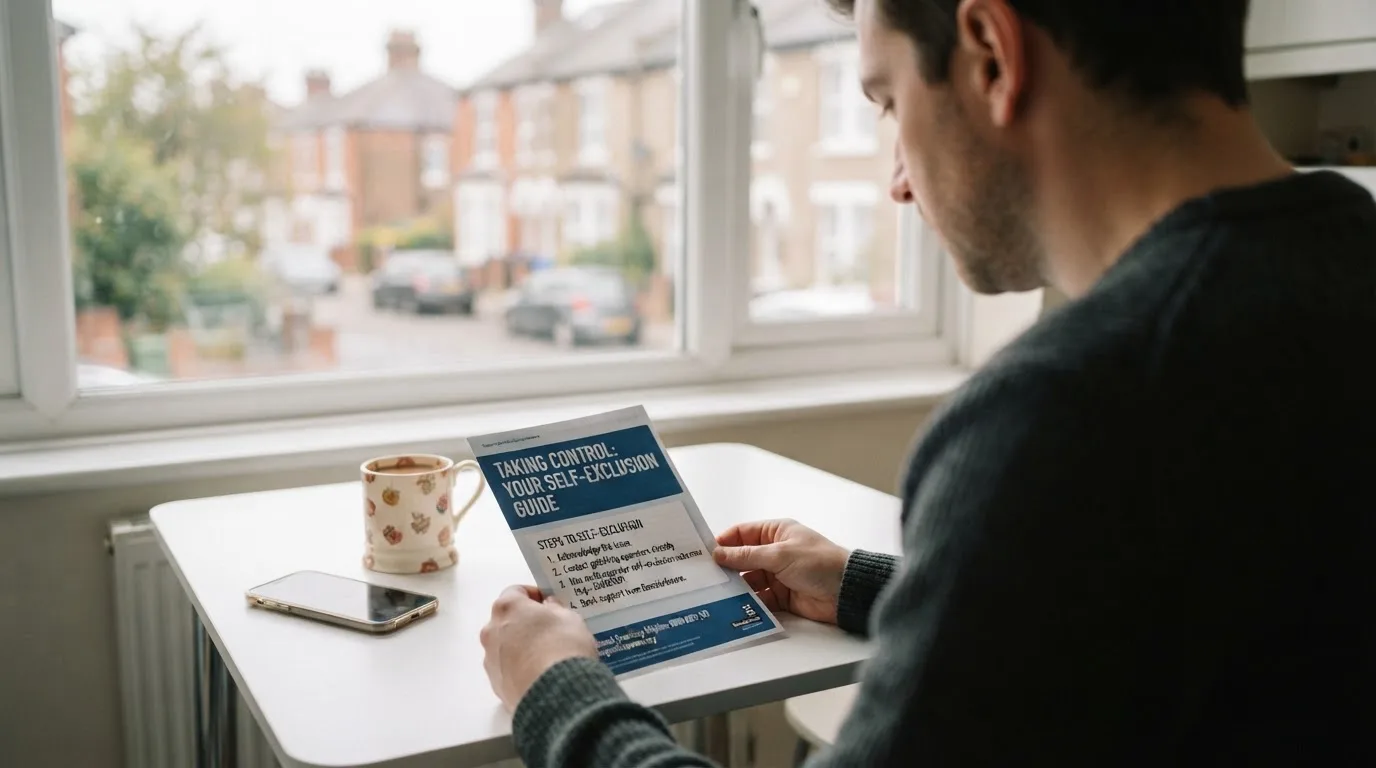
GAMSTOP self-exclusion
Every Gambling Commission licensed online operator must take part in GAMSTOP. A player who signs up to GAMSTOP for six months, one year or five years is barred from opening a new account, depositing or gambling on any participating site. The exclusion cannot be cancelled early; the clock runs its course. Since 31 March 2020 GAMSTOP has been a condition of every remote casino licence the Commission issues.
An international site sits outside that arrangement. The same player, on the same device, can open an account with a Curaçao, Maltese or Isle of Man licensed brand the morning after registering with GAMSTOP, because there is no shared exclusion database for the Commission to hook into. The exclusion tool the player meant to set up simply does not reach them. For anyone who has signed up to GAMSTOP to control a habit, that is the first and most consequential loss.
Slot stake limits
| Player age | Maximum stake | In force from |
|---|---|---|
| 18–24 | £2 per spin | 21 May 2025 |
| 25 and over | £5 per spin | 9 April 2025 |

A site licensed outside Great Britain is free to set its own stake ceiling. The same slot, on the same browser, can take a £20 or £50 click — and the volatility does not change to absorb it. The arithmetic in the section on bonus turnover shows why a higher ceiling is not a bonus for the player: a £5 stake over 5,000 spins does what a £50 stake over 500 spins does not, which is to give the game’s house edge enough time to mean something.
Verification before the first deposit
Name, address and date of birth have to be verified before the first deposit or any real-money play on a licensed site, a rule in force since 7 May 2019. The check is matched against public data and, in some cases, against credit reference agencies. Anonymous play is not an option the operator can offer if it wants to keep its licence.
International sites vary. Some run a comparable check because their own regulator demands it; some ask for an email and a password and accept a deposit the same afternoon. The reader who cares about anonymity has reason to look abroad. The reader who has been the victim of account takeover, or who wants a regulator to lean on if a balance goes missing, has the opposite reason to stay close to home.
Reality checks, auto-play bans and slot speed
Since 31 October 2021 a licensed slot may not auto-play, may not run faster than one spin every 2.5 seconds, and may not present a losing spin as a win in sound or on-screen feedback. A pop-up reality check appears at fixed intervals so the player sees elapsed time. None of these rules follow a player to an international site. The slot runs at full speed, with sound effects tuned to celebrate a 0.3x return, and the player decides whether to take a break.
Wagering requirement cap
Since 19 December 2025 a wagering requirement on any bonus at a GB licensed operator is capped at 10x the bonus amount. The section on bonus turnover works through what that ceiling means in practice. Mixed-product bonuses — “bet on football, get 50 free spins” — are banned in the same reform package. A casino licensed outside the Commission can still attach a 35x or 50x multiplier, or carry on with cross-product offers, because the rule is the Commission’s, not the market’s.
Credit card ban and the payment picture
Credit cards have been banned for gambling across all online and offline products in Great Britain since 14 April 2020, including credit cards routed through e-wallets. Debit cards and bank transfers were not affected. The same ban does not extend to offshore operators; several international sites accept credit card deposits from UK cardholders because the rule does not bind them. For a player who has chosen to lock their credit card away from gambling, the unlicensed site is the path around that lock.
What GAMSTOP, stake caps and verification add up to
Taken together these are the conditions of being allowed to take a UK deposit at all. A player who values self-exclusion that actually works, slot stakes a regulator has calibrated to harm reduction, and a complaints route that ends at an approved alternative dispute resolution provider has a strong reason to keep their play inside the Gambling Commission’s perimeter. The international casino is not a wider choice; it is the same games under a different rule book, and most of the rules a British player is used to simply do not apply.
The licensed shortlist — ten active Gambling Commission remote casinos
The ranking is a side-by-side comparison of ten brands that hold an active remote casino operating licence from the Gambling Commission, taken from the Commission’s public register on 18 September 2026. It is a snapshot of who is licensed, not a recommendation of where to play. Several brands sit under one corporate licence, which is why Ladbrokes, Coral and Gala Bingo share an account number elsewhere; on this page the ten brands are reviewed as the reader meets them, not as one corporate group.
How the list was built
The register is the only test of whether a brand holds a Commission licence. On 18 September 2026 it listed 139 businesses holding an active remote casino operating licence, and the associated domain list held 1,065 active and 361 white-label website entries — a white-label site trades under another company’s licence, so its presence on the register is evidence of the host licence, not of an independent one. The brands below are a curated sample of that register, picked to show the spread of corporate owners and to make one technical point: most “different” casino brands a UK player sees in advertising share a single Gambling Commission account.
The licence number on the register has a fixed shape: six digits (the licence holder’s account number), the letter “R” marking a remote online licence, another set of digits, and a suffix. So 060629-R-337532-004 means account 60629, remote licence, with the suffix attached by the Commission. The account number is the one to check when two brands seem to share a licence.
The comparison at a glance
| Brand | Licence holder (GB remote casino licence) | Status | Apple Pay | Bank transfer | AstroPay |
|---|---|---|---|---|---|
| MrQ | Tek Fox Ltd · 060629-R-337532-004 | Active | — | — | — |
| bet365 | Hillside (UK Gaming) ENC · 055149-R-331499-004 | Active | — | — | — |
| PokerStars | Stars Interactive Limited · 039108-R-319334-026 | Active | — | — | — |
| Paddy Power | PPB Games Limited · 039411-R-319335-010 | Active | — | — | — |
| Betfair | PPB Games Limited · 039411-R-319335-010 | Active | — | — | — |
| William Hill | WHG (International) Limited · 039225-R-319373-015 | Active | — | — | — |
| BetVictor | BV Gaming Limited · 039576-R-319370-028 | Active | — | — | — |
| Sky Vegas | Bonne Terre Gaming Limited · 065519-R-339675-002 | Active | — | — | — |
| Virgin Games | Gamesys Operations Limited · 038905-R-319430-022 | White-label | — | — | — |
| Gala Bingo | LC International Limited · 054743-R-330863-014 | Active | — | — | — |
Every row in the payment-method columns carries an em dash because the public register does not record which deposit methods a brand offers, and the page is built only from research that confirms what the register actually says. A reader who needs that level of detail should check the operator’s own payments page; the register is a licence document, not a product catalogue.
Two structural facts carry through the table. First, Paddy Power and Betfair share a single licence (039411-R-319335-010, PPB Games Limited, account 39411). They are two brands run by the same operator, not two independent choices. Second, Virgin Games appears as a white-label domain of Gamesys Operations Limited — a brand trading under another company’s licence rather than holding its own. The Commission treats both as licensed; a player is treated by both as a customer of the host licence.
MrQ
MrQ is an independent operator registered under account 60629, Tek Fox Ltd, with remote casino operating licence 060629-R-337532-004. Tek Fox is a smaller independent holder than most of the better-known brands below, and the licence is current. There is no separate MrQ Ltd or parent company named in the register entry.
The licence is the headline. A small holder with a clean register record is the kind of brand a player worried about corporate changes to terms should look at first, because the operator is the licence holder rather than a marketing brand over the top of one. MrQ sits inside the GAMSTOP perimeter and the stake cap follows; the protections a UK player expects from a licensed site apply in full. The verdict is that this is a registered brand on a current licence, with the protection that brings, and the only reason a reader would look past it is if they specifically want a larger game catalogue or a corporate parent they already use elsewhere.
bet365
bet365 is a key operator in the UK market, registered under account 55149, Hillside (UK Gaming) ENC, with remote casino operating licence 055149-R-331499-004. The “ENC” suffix is an incorporated entity designation; the licence holder is the UK arm of the bet365 group.
The verdict is that bet365 is the brand a UK player ends up at by default if they want one account for casino plus sports plus poker under a single Gambling Commission licence; the trade-off is the platform’s sheer size compared to more focused, smaller-stakes sites.
PokerStars
PokerStars holds remote casino operating licence 039108-R-319334-026 under account 39108, Stars Interactive Limited. The domain Pokerstars.uk is the primary record the Commission tracks, and it is the .uk rather than the .com that the Commission records — a small but consequential distinction, because the .uk domain is the one the Commission has direct jurisdiction over.
The brand is best known for poker, but the licence covers casino products as well, and the casino tab sits on the same wallet. The verdict is that PokerStars is a current UK licence holder with a casino product the Commission regulates; the reason to pick it over a casino-first brand is the cross-vertical product, and the reason to pick something else is that the casino product is not the centre of the brand.
Paddy Power
Paddy Power appears on the register as an active domain of account 39411, PPB Games Limited, under remote casino operating licence 039411-R-319335-010. The licence number matches Betfair’s, as one corporate licence covers both brands, and the register makes that explicit by listing both domains against the same account.
For the reader this means Paddy Power and Betfair are not two independent choices; they are two skins of one operator. Switching between them does not move a player to a different licensee. The verdict is that Paddy Power is a licensed brand on a current licence, identical in regulatory terms to Betfair; the choice between them is product and brand familiarity, not regulation.
Betfair
Betfair appears as an active domain of account 39411, PPB Games Limited, under the same remote casino operating licence 039411-R-319335-010 that covers Paddy Power. The two brands share an account number on the register.
The verdict is that Betfair and Paddy Power are the same operator with different product emphasis — Betfair built around the exchange and sportsbook, Paddy Power around retail and sportsbook — and the Commission’s protections attach at the operator level, so a player who self-excludes at one excludes at the other. The relevant reader choice is between this corporate family and a separately licensed operator like MrQ or bet365.
William Hill
William Hill is registered under account 39225, WHG (International) Limited, with remote casino operating licence 039225-R-319373-015. WHG (International) Limited is the online arm of the William Hill group, distinct from the retail estate that uses a different account.
The brand is the longest-established high-street name on the list. The verdict is that William Hill is a current licence holder with a casino product the Commission regulates; the relevant trade-off against a brand like MrQ or BetVictor is brand familiarity against platform simplicity — the casino product is one product within a broader gambling group rather than the centre of the offer.
BetVictor
BetVictor is registered under account 39576, BV Gaming Limited, with remote casino operating licence 039576-R-319370-028. The licence has the oldest issuance date of any on this page, which means BetVictor has been continuously Commission-licensed through multiple reform packages.
The verdict is that BetVictor is a current licence holder with a casino product the Commission regulates, and the long unbroken licence record is evidence of how the operator handles regulatory change. It stands apart from smaller casino-only brands by being a multi-vertical group.
Sky Vegas
Sky Vegas is registered under account 65519, Bonne Terre Gaming Limited, with remote casino operating licence 065519-R-339675-002. The “Bonne Terre” name is the corporate holder; the brand on the front of the site is Sky Vegas.
Sky Vegas is a casino-first brand on a current licence. The verdict is that this is a casino product without a sportsbook or exchange bolted on, which makes it easier to compare directly with MrQ than with the multi-vertical brands above. The relevant trade-off against MrQ is product catalogue breadth versus platform simplicity.
Virgin Games
Virgin Games is listed on the register as a white-label domain of account 38905, Gamesys Operations Limited, under remote casino operating licence 038905-R-319430-022. A white-label entry means Virgin Games trades under Gamesys Operations Limited’s licence rather than holding its own. The Commission treats this as a licensed brand; a player is treated by the operator as a customer of the host licence.
The verdict is that Virgin Games is a licensed brand through a white-label arrangement, and the protections a player expects from a licensed site attach at the Gamesys level. One caveat for the player is that self-exclusion at one Gamesys-operated brand covers all of them.
Gala Bingo
Gala Bingo operates under account 54743, LC International Limited, with remote casino operating licence 054743-R-330863-014. LC International Limited is the parent of Ladbrokes and Coral as well as Gala Bingo, so this brand sits inside the largest single corporate family on the licensed UK casino market.
The verdict is that Gala Bingo is a licensed brand on a current licence, and the Commission protections attach at the LC International level. The relevant trade-off against MrQ or Sky Vegas is that the bingo product is the centre of the brand and the casino is one product inside a wider gambling group.
How the UK online casino landscape actually fits together
The point of this section is to scale the picture out from the ten brands above to the wider market, so the reader knows what those ten are a sample of and what they are not. The UK licensed online casino market is small in brand count and large in domain count; the international casino market is larger in brand count and almost entirely unlicensed for UK purposes. The two are not really competing because they are not really the same thing — one is regulated access, the other is unregulated access dressed up to look the same.
The shape of the licensed market
On 18 September 2026 the Gambling Commission’s public register held 139 businesses with an active remote casino operating licence, and the associated domain list held 1,065 active and 361 white-label entries. That is the universe a UK player is choosing from when they pick a licensed site. The 139 businesses are the operators; the 1,426 domains are the brand fronts through which those operators reach players. Most of the bigger gambling groups run several domains from a single licence, which is why the brand a reader sees and the operator the Commission regulates are usually different entities.
The register is searchable online and downloadable as CSV or Excel, which means a reader can verify a licence in two minutes without trusting the operator’s marketing. The standard check is to take the licence number from the operator’s footer, paste it into the register search, and confirm the domain and account match. A brand that resists showing its licence number, or shows a number that does not appear on the register, is not what it claims to be.
The shape of the international market
Outside that perimeter, the international casino market runs into the thousands of brands. Malta, Curaçao, the Isle of Man, Gibraltar and Kahnawake each license online casinos under their own regimes, and a brand can hold several licences for different markets at once. None of these licences substitutes for a Gambling Commission licence for the purpose of taking UK depositors, because the 2014 Act requires a Commission licence for any operator taking customers in Great Britain regardless of where it is based.
What the international market does offer that the UK market does not is a wider product spread and looser stake and bonus caps. Slots with higher maximum stakes, table limits above UK norms, and bonus packages with wagering requirements above the 10x ceiling are all available because the regulator in the licensing jurisdiction is not the Commission. The reader trade-off is product breadth against the protections listed in the first section of this page.
The legal position for the player
Providing gambling to people in Great Britain without a Gambling Commission licence is an offence under section 33 of the Gambling Act 2005. The Commission responds with cease-and-desist notices, payment and hosting referrals, and search-engine delisting requests, but it has no power to block sites at ISP level. The penalty is aimed at the operator, not at the player. A UK player who deposits on an unlicensed site commits no offence; what they lose is the protection the licence would have given them — no GAMSTOP, no Commission complaints route, no approved ADR.
For a player who has signed up to GAMSTOP, or who values the complaints route, or who wants a regulator to lean on if a balance goes missing, that is the trade. For a player who has weighed the trade and decided the wider product range is worth it, the international casino site is what is on offer — provided they understand what they are buying.
What the bonus turnover cap actually changes
The bonus wagering cap that took effect on 19 December 2025 is the single most concrete piece of consumer protection to land on the UK licensed market in this cycle, and it is the one piece of arithmetic on this page. A licensed casino can no longer attach a 35x or 50x wagering requirement to a bonus; the ceiling is 10x. An offshore site is not bound by that ceiling, and the difference shows up clearly in the time it takes to clear a bonus of a given size.
The mechanics
A wagering requirement is a multiple of the bonus amount that has to be turned over before the bonus and any winnings from it become withdrawable. A £100 bonus with a 10x requirement means £1,000 of qualifying stakes; the same £100 bonus with a 35x requirement means £3,500. Slots contribute 100% of stake to the requirement at most licensed sites, which is why the calculation below uses slot play as the route through.
The cap is on the multiple, not on the amount. A £500 bonus at 10x is still £5,000 of turnover, which is a long grind on a £5 stake ceiling. The arithmetic is the same shape for any bonus size; the absolute numbers scale with it.
The result, as a band
For a £100 bonus on a GB licensed slot at the £5 stake ceiling: required turnover is £1,000, which is 200 spins at £5 per spin. At a 2.5 second spin interval — the Commission’s minimum gap between spins — that is 500 seconds, or roughly 8 minutes of play. The cost of clearing the bonus is therefore in the 8 to 12 minute band on a £100 bonus, and the time scales linearly: a £200 bonus at the same 10x cap is roughly 16 to 24 minutes, a £50 bonus is 4 to 6 minutes.
For the same £100 bonus on an international slot at a £20 stake and a faster spin rate: required turnover is £1,000 if the bonus still carries a 10x cap, which is 50 spins at £20, or about 2 minutes of play. If the bonus carries a 35x cap — common offshore — turnover rises to £3,500, which is 175 spins at £20, or roughly 7 minutes. The wider the stake, the fewer spins; the higher the multiplier, the longer the grind.
The band the calculation produces is therefore: on a GB licensed slot, clearing a £100 bonus sits in the 8 to 12 minute range; on a typical offshore slot at a £20 stake and 35x wagering, the same bonus moves into the 6 to 8 minute range at a much higher cost per spin. The bonus that looks cheaper at 10x takes longer per pound staked; the bonus that looks faster at 35x costs more per spin. The reader should weight that trade against their own time and bankroll.
What the cap does not change
A 10x cap is not a low cap. A £500 bonus at 10x is still £5,000 of turnover, and on a £5 slot ceiling that is 1,000 spins — over four hours of mechanical play at the Commission’s minimum spin interval. A player who sees a “10x wagering” headline and assumes the bonus is small is misreading it. The cap is on the multiple, not on the time. The arithmetic above is what the cap actually buys.
The cap also does not change game weighting. Slots usually contribute 100% of stake; table games and live casino often contribute less, sometimes 10% or 20%, which means the £1,000 turnover target effectively becomes £5,000 or £10,000 if the player uses the wrong game. A bonus at 10x slots is not the same bonus at 10x live roulette.
Legality, taxation and what the operator does for HMRC
A UK player pays no tax on gambling winnings. That has been the position for decades and is unchanged by any of the reforms discussed on this page. What the operator pays has moved: Remote Gaming Duty rose from 21% to 40% from 1 April 2026, which is the operator’s problem and not the player’s, but it explains why some operators have reduced bonus generosity over the same window. The headline figures on offer pages are not always lower because the casino is being meaner; some of the reduction is the duty working through.
For the player, the practical points are simpler. A Gambling Commission licensed operator reports winnings to the player only on a winnings statement the player can request; the operator does not report to HMRC on the player’s behalf because the player does not owe tax. An offshore operator may or may not provide a statement, and the player has no recourse to the Commission if it does not. Players with complex tax positions — a professional gambler arguing Schedule 6 status, for instance — should not take their reading from a casino review page, and “check with HMRC” is the only honest answer the page can give.
What “GB-licensed” means in practice
GB-licensed, when accuracy matters, means the Gambling Commission issues an operating licence that authorises the operator to take customers in Great Britain. Northern Ireland sits outside the Commission’s remit because the Gambling Act 2005 covers England, Scotland and Wales only. A player in Belfast is in a different legal position from a player in Bristol, and the Commission protections discussed above apply in full to the Bristol player and not at all to the Belfast one — though the Belfast player may find that a licensed operator’s site refuses their registration on the same grounds.
The Commission’s powers are GB-wide for licensing, and its enforcement tools — cease-and-desist, payment referrals, search-engine delisting — operate in the same territory. The Commission has no power to block sites at ISP level, which is the one practical limit on what it can do about an unlicensed international casino marketing to UK customers. The unlicensed brand stays reachable; the reader has to do the checking.
Where the dispute goes if something goes wrong
A licensed operator is required to belong to an approved alternative dispute resolution (ADR) provider, and the Commission will direct unresolved complaints to the provider if the operator’s own process stalls. The ADR is independent of the operator and the regulator, and its decision is binding on the operator though not on the player. An unlicensed operator has no such obligation; the player’s only route is the courts, in whatever jurisdiction the operator is based, and the practical outcome is that a complaint about a missing balance becomes a cross-border legal claim most players do not pursue.
The dispute route is the second-most concrete reason to stay inside the perimeter, after GAMSTOP. It is rarely the reason a player picks a brand, because the dispute route only matters when something has already gone wrong; it is the reason a player who has had something go wrong should know which side of the perimeter they were on.
What changes between a regulated and an international site in practice
This section is the consequence section of the page: what each rule in the first section looks like to a player who has to live with it. The reader who has decided the trade is worth it should know what they are trading away in concrete terms, not in principle.
Speed of withdrawal
A licensed operator is required to process withdrawal requests promptly and within a published timeframe; the practical standard in the UK market is same-day to 24 hours for e-wallets and one to three working days for bank transfers, with the upper end driven by the bank’s processing time rather than the operator. An offshore operator has no such obligation. Withdrawal times of three to seven working days are common, and several international brands publish “up to 14 days” language in their terms. The player who needs a balance quickly has reason to pick the licensed end of the market on this alone.
Game catalogue breadth
The international casino market runs a wider catalogue. Megaways slots with higher maximum stakes, crash games, and live dealer studios from providers who do not hold a UK licence are common offshore and absent from Commission-licensed sites. The Commission’s game testing regime is stricter than several offshore jurisdictions, and some providers skip the UK audit rather than meet it. A player who wants the widest catalogue has to leave the perimeter; a player who wants the catalogue the Commission has tested does not.
The stake cap in practice
The £5 ceiling on slots for players 25 and over, and £2 for 18 to 24, is the single biggest practical difference between a GB licensed slot and the same game offshore. On the same slot, at the same RTP, the offshore player can click £50 where the licensed player clicks £5. The volatility does not change. The player who clicks £50 is taking ten times the volatility exposure per spin, and the time to a meaningful number of spins — which is what smooths variance — is correspondingly shorter.
A reader who treats the stake cap as the Commission telling them how to gamble is misreading it; the cap is the Commission telling the operator what stake they may offer. A reader who wants the higher cap has a clear reason to look abroad, and the section on bonus turnover shows what that cap means in time and money.
Anonymous play and the verification step
GB licensed sites verify name, address and date of birth before the first deposit or any play. The check is automated against public data and, where the data does not match, against credit reference agencies. A player who has been the victim of account takeover may welcome this; a player who values anonymity does not. International sites vary, and several accept an email and a password without further check. The reader’s preference here is the cleanest reason either way.
Payment methods
The Commission does not record payment methods on the public register; the table in the section above uses an em dash for every payment-method cell because the register does not carry that data. What the register does record is the operator and the licence, and what the operator’s own payments page carries is the rest. Debit cards and bank transfers are universal across both licensed and unlicensed brands; credit cards are banned on licensed UK sites since 14 April 2020 and remain available on several offshore brands; e-wallets like AstroPay vary by operator in both directions.
A reader who wants a specific payment method should check the operator’s own page rather than the Commission register, and should treat the absence of a method on the licensed side as a regulatory feature rather than a product gap.
Picking the right brand for the right reason
The final section is the verdict section, because the page has been a comparison and a comparison that refuses to close is one the reader puts down. None of the ten brands above is best in every category, and a ranking that pretended otherwise would not be a comparison; the closing point is that the choice depends on which of the Commission’s protections the reader values most.
For a player who values GAMSTOP and the complaints route
The licensed shortlist is the only option that delivers both. Any of the ten brands above sits inside GAMSTOP and offers a Commission complaints route ending at an approved ADR. The reader who picks between them is picking product and platform rather than regulation.
For a player who wants the widest catalogue and is not in self-exclusion
An international casino licensed in Malta, Curaçao or the Isle of Man is the only place to find the full offshore catalogue. The trade is the protections in the first section of this page; the gain is the products above. The reader should make sure the trade is being made with open eyes.
For a player on a budget who wants the lowest minimum stakes
A GB licensed slot at £5 maximum and £0.10 minimum gives more time on device per pound than any offshore equivalent. The stake cap is a feature for this player, not a constraint.
For a player who wants one account for casino, sports and poker
bet365, PokerStars, William Hill and Paddy Power/Betfair are the multi-vertical brands on the licensed side. The choice between them is product preference rather than regulatory posture.
For a player who wants a casino-only product
MrQ, Sky Vegas and BetVictor are the casino-first brands on the list. The verdict on each is the same in regulatory terms — they all hold current Commission licences — and the practical difference is platform and game catalogue.
For a player who has self-excluded and is looking for a way around it
The honest answer is that there is no way around GAMSTOP that does not also abandon the protections GAMSTOP exists to provide. The international casino that accepts the player after GAMSTOP is the international casino that does not block them on a future decision. The player considering this option is the player the protections above were written for.
Frequently asked questions
What counts as an international casino site for a UK player?
An international casino site is any online casino whose operating licence is issued by a regulator other than the Gambling Commission. Malta, Curaçao, the Isle of Man, Gibraltar and Kahnawake are the most common jurisdictions; a brand may hold several licences at once. The Commission’s public register is the test of whether a UK-facing site is licensed for UK purposes; a site that holds only a Malta or Curaçao licence is an international casino for the purposes of a UK player, regardless of how it markets itself.
Does an international casino need a UK Gambling Commission licence to accept UK players legally?
Yes, since the Gambling (Licensing and Advertising) Act 2014 any operator taking customers in Great Britain needs a Gambling Commission licence wherever it is based. A Malta or Curaçao licence is not a substitute. Providing gambling to people in Great Britain without a Commission licence is an offence under section 33 of the Gambling Act 2005. The offence is the operator’s; the player is not committing one, but the player is also not inside the protection the licence would give them.
What player protections are missing on a site outside UK licensing?
The principal ones are GAMSTOP self-exclusion, the £5 / £2 slot stake cap, the 10x wagering requirement cap on bonuses, the credit card ban, the verification-before-deposit rule, the auto-play ban, the 2.5-second minimum spin interval, and the complaints route to an approved ADR. The full list is in the player wellbeing section of this page. None of these follow a UK player to a site licensed by another regulator; most are simply absent because the regulator has not required them.
Can a UK player still use GAMSTOP if they sign up to an international site?
No. GAMSTOP applies to Gambling Commission licensed operators only. A UK player who has registered with GAMSTOP and then opens an account at an international casino is not stopped by the registration, because there is no shared exclusion database for the Commission to hook into. The exclusion tool the player set up is real for licensed sites; it does not reach the unlicensed ones.
Are international casino sites regulated at all, or entirely unregulated?
Most are regulated by their own licensing jurisdiction, and the regulator varies. The Malta Gaming Authority, Curaçao eGaming, the Isle of Man Gambling Supervision Commission and the Kahnawake Gaming Commission are the larger ones; each runs its own technical standards, complaints process and player fund protection rules. The regulation is real but is not the Gambling Commission’s regulation, and a UK player has no Commission complaints route if a balance goes missing. The page’s standing recommendation is to check the regulator in the footer and to take the regulator as seriously as the brand.
Why might an international site be easier to find than a licensed UK one?
The international casino market runs into the thousands of brands and advertises without the Commission’s marketing rules; the licensed UK market is smaller and tighter on what its operators may say in ads. A UK player searching for “online casino” sees a long tail of international brands above the licensed ones in some search results, because the licensed ones are constrained on the wording they may use and the international ones are not. The first result is not always the regulated one; the register is the test, not the ranking.
Written by the editors at casinoprovidersuk.