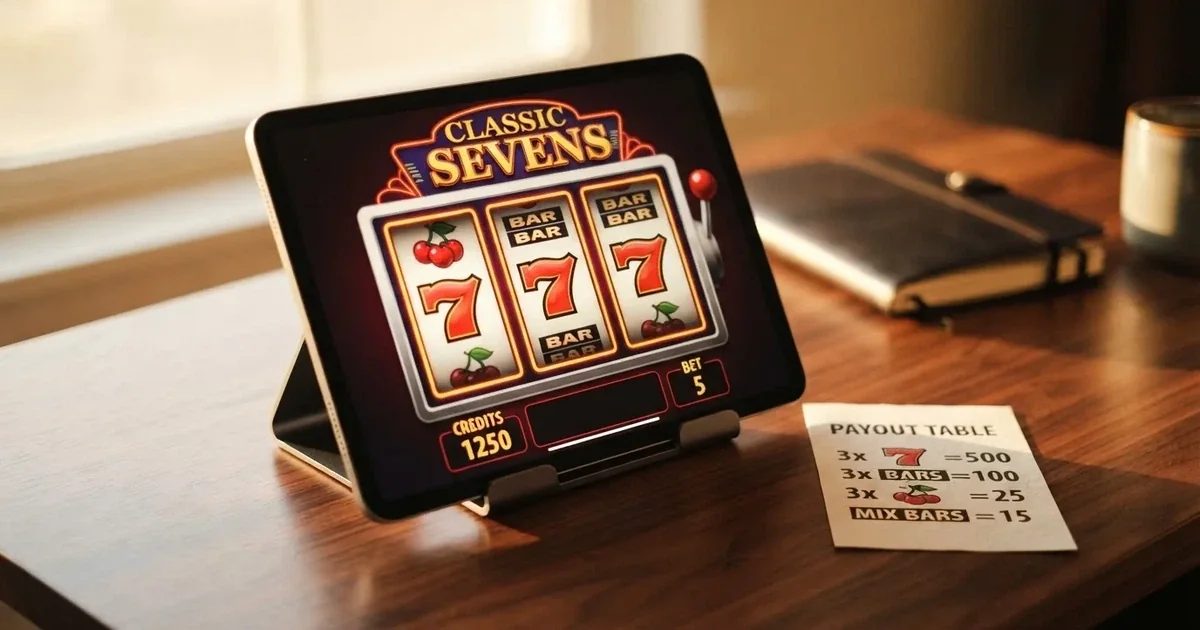
Best Bonus-Buy Slots UK: What the Feature Really Costs in 2026
 Available in GB
A bonus-buy slot lets a player pay a multiple of their stake to jump straight into the bonus round instead of waiting for it to land through ordinary play. In the UK that feature is permitted only at Gambling Commission-licensed casinos, and it sits inside the same safer-by-design regime that governs every other online slot: the £5 cap for adults aged 25 and over, the £2 cap for 18 to 24 year olds, the 2.5-second minimum spin, the GAMSTOP hook for anyone who has chosen to exclude. The page below walks through what the feature does to a bankroll, where it sits in UK law, and which of ten licensed brands actually make it easy to find.

This review draws on the Gambling Commission’s public register, verified as of 23 September 2026.
Table of Contents
- What Bonus-Buy Slots Are, and Why They Exist
- The UK Legal Frame for Bonus-Buy Slots
- Bonus-Buy Slots and Responsible Gambling
- The Wagering Cap and What It Means for Bonus-Buy Slots
- Ten Licensed UK Casinos Reviewed
- Comparison Table — Licensing and Domain Status
- How to Read the Buy Price on a UK Slot
- Practical Limits at a Licensed UK Casino
- What Bonus-Buy Slots Cost in Practice
- Choosing a Licensed UK Casino for Bonus-Buy Slots
- The Offshore Alternative and What It Costs
- Final Word
- Frequently Asked Questions
What Bonus-Buy Slots Are, and Why They Exist
The bonus round is the feature that pays best on most modern video slots — free spins with a multiplied payout, a hold-and-win respin ladder, a pick game, an expanding wild, or some combination of the above. Most slots gate it behind three or four scatter symbols landing on a single spin, which means the player pays for dozens of dead spins before the bonus arrives. A bonus-buy button, sometimes labelled “Buy Feature”, “Buy Bonus” or “Purchase Free Spins”, charges a fixed multiple of the stake and enters the round directly.
The mechanic grew out of a different problem. Once slot machines moved from physical reels to software, manufacturers could weight symbol probabilities independently of how often they appeared on screen — Inge Telnaes patented that approach in 1984, and the modern video slot with its bonus rounds, wilds and scatters became possible. A bonus round pays more than the base game, which means a regular spin rarely reaches it, and players complained. A handful of studios responded by adding a button that paid for the entry directly. Pragmatic Play, Hacksaw Gaming, Nolimit City, Relax Gaming and Push Gaming are the names most often attached to bonus-buy titles in the UK catalogue today.
The trade is straightforward on its face. A player who would otherwise burn £20 in dead spins hunting for the bonus can pay £80 — four times stake — and enter the round immediately. The point is to compress variance: instead of hoping the bonus arrives, the player has already paid for it. The price is the price, and the round pays whatever the round pays.
That compression has consequences. A bonus-buy purchase is a stake like any other, not a separate product. It counts toward the £5 or £2 per-spin cap, it counts toward deposit and affordability checks, it counts toward any session reality check the operator displays, and it counts toward GAMSTOP exclusion for anyone who has self-excluded. None of those limits relax because the spin is a “feature” rather than a base spin.
How the buy price is set
Studios calculate the buy price from the game’s underlying mathematics. A slot with a 96% theoretical return to player will, over millions of spins, return £96 for every £100 staked. The bonus round carries most of that return, because the base game pays only small line hits. If 80% of the return lives in the bonus, and the bonus triggers once every 120 spins on average, the studio sets the buy at a multiple that lets a player who buys the bonus repeatedly recover roughly the same £96 per £100 as a player who waits. A buy at 80x stake on a £1 spin costs £80 and returns around £76.80 over an infinite number of purchases — the gap between £80 paid and £76.80 returned is the house edge baked into the buy itself.

The multiple varies by game. Low-volatility slots sit at 40x to 60x stake; mid-volatility titles cluster at 80x to 120x; the highest-volatility games, the ones with maximum wins above 10,000x stake, ask 200x to 500x. The buy price is shown beside the button, often with a small calculator icon that opens a confirmation window showing the stake, the buy cost, and the available balance. No licensed UK site hides the cost.
What changes once the bonus is bought
The bonus itself is unchanged. The same reels spin, the same wilds land, the same free-spin counter ticks down. A bought bonus cannot retrigger more often than a triggered bonus, and the maximum win is the same cap the studio has set. Buying the bonus does not raise the ceiling; it compresses the path to it.
The Gambling Commission has not banned the feature, and a UK-licensed studio can offer it. A UK-licensed casino can carry those games, subject to its own licence conditions. The Commission treats the purchase as a stake for the purposes of its safer-by-design rules, which is why a bought bonus counts toward the per-spin cap in exactly the same way a regular spin does.
The UK Legal Frame for Bonus-Buy Slots
Every online slot offered to players in Great Britain sits under the Gambling Act 2005, the Gambling (Licensing and Advertising) Act 2014, and the Gambling Commission’s Licence Conditions and Codes of Practice (LCCP). Bonus-buy slots are not a separate category for licensing purposes; they are slots with an extra button. The conditions that apply to the slot apply to the button.
What the Commission’s public register proves
The Commission’s public register lists every business that holds an active licence and every domain that runs against one. As of 18 September 2026 it recorded 139 businesses holding an active remote casino operating licence and 1065 active domains against those licences, plus 361 white-label entries — domains that trade under another operator’s licence. A remote licence number on the register has the form account-R-number-suffix, where the leading six digits repeat the licence holder’s account number and the “R” marks a remote (online) licence. Every operator reviewed below carries one of those licence numbers, and the brand names below are the domains attached to them on the register.
That register is the test. A brand not listed there, or listed against an inactive account, is not licensed to take UK players — whatever its Malta, Curaçao or Gibraltar paperwork says. The Commission’s role is regulatory: it can issue cease-and-desist notices, refer sites to payment processors and hosting providers, and seek search-engine delisting. It has no power to compel ISP-level blocking in Great Britain. Providing gambling to people in Britain without a licence is an offence under section 33 of the Gambling Act 2005.
The stake caps that bind the button
Two online slot stake caps took effect across 2025. From 9 April 2025 the maximum stake per game cycle is £5 for adults aged 25 and over. From 21 May 2025 the cap for 18 to 24 year olds is £2 per game cycle. A bonus-buy purchase counts as a game cycle — the Commission’s safer-by-design package treats it as a single stake for the purposes of the cap. A £1 base stake slot whose bonus costs 100x cannot be bought for £200 at a licensed UK site; the £5 cap clips the buy to £5 in any one cycle. Studios respond by either reducing the buy multiple for the UK build of the game or by capping the stake at the lowest base level that lets a player reach the feature without breaching the limit.
The £2 cap for under-25s bites harder. A bonus-buy slot whose smallest meaningful buy sits at 80x stake requires a £0.025 base stake — 2.5p — to enter the bonus without breaching. Studios that target the UK tend to publish a separate UK configuration with a lower base stake and the buy price adjusted in proportion. A player who plays at an offshore site is not subject to either cap, but they also forfeit every protection the UK regime provides.
Spin speed, auto-play and the rest of the safer-by-design package
UK-licensed slots cannot spin faster than once every 2.5 seconds — that minimum has been in force since 2021. Auto-play is permanently banned, which means a bonus-buy purchase still has to be confirmed by hand and the resulting free spins still play one at a time. Losses disguised as wins — celebratory graphics around a payout smaller than the stake — are banned. Reverse withdrawals, the ability to cancel a withdrawal request and re-gamble the funds, were banned from 31 October 2021.
These rules apply to bonus-buy slots as they do to any other online slot. The bought bonus cannot auto-play through its free spins; it spins at the same 2.5-second floor; it cannot show a celebratory animation around a sub-stake win. The Commission treats the feature as part of the slot, and the slot’s design is regulated.
Bonus-Buy Slots and Responsible Gambling
The four core search terms behind this shelf — bonus buy slots not on gamstop, bonus buy slots no gamstop, bonus buy casino not on gamstop, bonus buy casinos not on gamstop — share a single concern. A site that offers bonus-buy slots to UK players without integrating GAMSTOP is, by definition, not licensed by the Commission. The same applies to a casino that promises bonus-buy play without the £5 or £2 stake cap, without the spin-speed floor, or without the affordability-check process. The feature is licensed; the sites that flout the surrounding rules are not.
What GAMSTOP actually does
GAMSTOP is the national online self-exclusion scheme. Since 31 March 2020 every GB-licensed online operator is required to participate; a player who registers with GAMSTOP for six months, one year or five years is blocked from opening an account, depositing, or playing at any participating operator for the full period. The exclusion cannot be lifted early. A bonus-buy slot at a licensed UK casino respects the GAMSTOP block in the same way any other slot does: the player cannot deposit, cannot load the game, cannot trigger the buy.
A player who wants to gamble during an exclusion can still find sites that will take them — unlicensed offshore brands, crypto-only casinos, social-skin platforms with sweep-stakes mechanics. None of those sites is covered by GAMSTOP, because none of those sites holds a GB licence. Theonus-buy feature is available at many of them. What is not available is the rest of the UK protection regime: no £5 or £2 cap, no affordability check, no ADR route, no Commission complaints process.
Affordability and the financial vulnerability check
A licensed UK casino must run a light financial vulnerability check at £150 net deposits in a rolling 30-day window, using public data only. The threshold, the data sources and the rules around what the operator can ask were set out in February 2025. Wider financial risk assessments have been announced but were not in force at the date of this review. Both checks apply to a player who buys bonus rounds: the buy price is a stake, the stake is a deposit-funded activity, and the activity counts toward the threshold.
Before a player makes a first deposit, the operator must prompt them to set a financial limit. The rule has been in force since 31 October 2025. A player who declines still proceeds, but the operator has met its social responsibility code. The point of the limit is not to constrain play; it is to make the player name their own ceiling before the first pound leaves their account.
Where to get help
The National Gambling Helpline, run by GamCare, is the first port of call for anyone worried about their own gambling or someone else’s. GambleAware funds treatment and research. Both are free. The Commission’s own complaints route is open to anyone who feels a licensed operator has fallen short of its LCCP conditions. None of these routes exist for a player at an unlicensed offshore site; that is the practical loss, not a moral point.
The Wagering Cap and What It Means for Bonus-Buy Slots
Since 19 December 2025 the wagering requirement on any UK casino bonus has been capped at 10x the bonus amount. Mixed-product bonuses — the kind that bundle a sports free bet with casino free spins — are banned. The cap and the ban apply to every casino bonus offered to UK players by a GB-licensed operator.
Why the cap matters for a bonus-buy slot
A bonus-buy slot is not itself a casino bonus. It is a slot with a paid entry to its bonus round. The wagering cap applies to the welcome package, the reload offer, the cashback — the inducements a casino adds on top of a deposit. A bought bonus round inside the slot does not need to be wagered at all, because the buy itself is the wager. The cap becomes relevant when a casino offers free spins or bonus funds that the player is then expected to spend on a bonus-buy title. The free-spin winnings have to be wagered, and the wagering ceiling is 10x whatever the bonus converted to.
A worked example. A casino offers £20 in bonus funds with a 10x wagering requirement. The required turnover is £200. The player spends the £20 on a bonus-buy slot at £1 base stake. The bonus they buy costs 80x, so the maximum base stake they can use without breaching the per-spin cap is £0.0625 (6.25p) — far below £1. At 6.25p the bonus buy costs £5 per entry, the maximum the £5 stake cap allows. Each bought bonus uses £5 of wagering contribution. The £200 turnover works out at 40 bought bonuses at the highest legal stake, or longer if the player drops the stake. A bought bonus round typically takes 20 to 40 spins, so 40 bought bonuses add up to 800 to 1,600 spins in total, which at the 2.5-second floor takes somewhere between 33 and 67 minutes of continuous play, more if the player drops the stake and buys more rounds. This is the wagering-cap reality at a licensed UK site: £20 in bonus funds, even with the most generous ceiling in the rule book, buys a few dozen bonus rounds at most.
The cap’s effect is to shorten the run. Before the cap, a 30x or 40x wagering requirement was ordinary; the 10x ceiling halves the grind at minimum and quarters it at the high end. The cost is that bonus funds themselves shrink: a casino that paid for a 40x requirement out of margin cannot afford the same headline figure at 10x. Players see smaller bonuses with cleaner terms, and the bonus-buy slot they spend them on returns roughly the same per spin as before.
Ten Licensed UK Casinos Reviewed
The ten brands below are taken from the Gambling Commission’s public register as of 18 September 2026. Each carries an active remote casino operating licence, and the brand is listed against that licence on the register. The reviews below describe each brand on its licensing position, the shape of its bonus-buy catalogue and the practical limits a UK player meets on signup. No bonus code, voucher or sign-up link is reproduced; the page describes what each brand offers, not how to claim it.
The register snapshot the research cites is the same one the reviews are drawn from: every brand name, every account number, every licence suffix appears exactly as the Commission’s public register holds it on 18 September 2026.
1. Paddy Power — the established high-street bookmaker turned casino
Paddy Power trades as Paddy Power (account 39411, PPB Games Limited), which holds the active remote casino operating licence 039411-R-319335-010. The PPB account also carries Paddy Power’s sportsbook and bingo verticals, all on a single licence. The brand’s casino has carried bonus-buy titles from Pragmatic Play and Blueprint Gaming for several years; the range is broad but weighted toward slots that also run on Paddy Power’s Irish licence, which means the UK build is the regulated one and the buy prices are scaled to the £5 cap.
Paddy Power’s strength is reach: the sportsbook, the bingo rooms, the casino, and a long-running promotional engine all run on the same wallet. For a bonus-buy player the casino catalogue is large enough to keep the feature easy to find, and the safer-by-design rules apply in full. The weakness is that Paddy Power does not lead with bonus-buy titles — most are buried under two or three menus and labelled “Feature Buy” rather than “Bonus Buy”. A player hunting specifically for the mechanic will need to filter the slot library manually.
2. kwiff — the supercharged odds brand pivoting into casino
kwiff (Kwiff.com) is a brand of Eaton Gate Gaming Limited, which operates under active remote casino operating licence 044448-R-323408-017 (account 44448). The brand built its name on “supercharged” sports odds — random multipliers on settled bets — and the casino followed. The slot catalogue is smaller than the high-street names, but it leans into modern mechanics: Nolimit City, Hacksaw Gaming, Pragmatic Play’s feature-buy catalogue.
The trade is range versus curation. kwiff carries fewer studios than the larger brands but a higher proportion of bonus-buy titles. A player who wants a quick filter for “Buy Feature” games will find one. The brand’s limits are aligned to the UK regime: the £5 cap for 25+, £2 for 18 to 24, GAMSTOP from day one.
3. Betway — the global sportsbook with a steady casino
Betway (Betway.com) is operated by Betway Limited, which holds active remote casino operating licence 039372-R-319367-029 (account 39372). Betway is a long-established global brand with separate UK and Malta licences; the UK build is the regulated one. The casino carries a broad slot catalogue, including the major bonus-buy studios, and the safer-by-design rules apply in full.
Betway’s edge is process. The brand has been through multiple Commission reviews since 2022 and has rebuilt its social responsibility code accordingly. Reality checks appear promptly, the GAMSTOP integration is verified, and the affordability-check thresholds are consistent with the Commission’s February 2025 guidance. For a bonus-buy player, this operator ensures a fully compliant environment.
4. bet365 — the dominant UK operator by handle
bet365 (Bet365.com) is run by Hillside (UK Gaming) ENC, the licence holder for active remote casino operating licence 055149-R-331499-004 (account 55149). bet365 is the largest UK-licensed online operator by betting handle; the casino is one of several verticals on the Hillside licence. The slot catalogue is among the widest in the UK market, and bonus-buy titles from every major studio are present.
The brand’s distinct feature is integration. A single wallet covers sports, casino, poker and bingo; the safer-by-design prompts and reality checks apply across the whole account. For a bonus-buy player this means a single deposit limit covers every vertical — a feature, given that a bonus-buy slot session can drain a budget faster than a sports bet. The downside is discoverability: bonus-buy titles sit inside a large slot library, and the filter is buried in the games lobby.
5. Unibet — the Kindred Group brand with deep European roots
Unibet (unibet.co.uk) is a brand of Platinum Gaming Limited, which operates under active remote casino operating licence 045322-R-324275-019 (account 45322). Unibet is part of the Kindred Group, the Swedish-listed operator that also runs 32Red, Maria Casino and several other European brands. The UK licence sits with Platinum Gaming, a Kindred subsidiary.
The casino catalogue is broad and includes the major bonus-buy studios. Unibet’s safer-by-design implementation is thorough: reality checks, deposit-limit prompts, GAMSTOP integration, and the financial vulnerability check at the £150 rolling 30-day threshold. This brand demonstrates a clear commitment to maintaining a safe gaming space.
6. 888casino — the long-running casino specialist
888casino (888casino) is operated by 888 UK Limited, holder of active remote casino operating licence 039028-R-319297-014 (account 39028). 888 has been a Commission licensee since the early days of UK online regulation; the casino specialises in slots and live dealer games. The slot catalogue is broad, with bonus-buy titles from the major studios.
The trade is breadth against clarity. 888casino carries more titles than most of the brands on this list, but its games lobby has historically been slower to add filters for specific mechanics. A player looking for bonus-buy slots will find them, but the search is not as immediate as at kwiff or Betway. The regulatory frame is the standard UK one: £5 cap, GAMSTOP, affordability checks.
7. Virgin Games — the white-label casino under Gamesys
Virgin Games sits on the register as a white-label domain of account 38905, Gamesys Operations Limited, holding the active remote casino operating licence 038905-R-319430-022. White-label means Virgin Games trades under Gamesys’s licence rather than holding its own. The same Gamesys licence covers Jackpotjoy, Heart Bingo and several other brands; a player who self-excludes via GAMSTOP is excluded across all of them.
Virgin Games is one of the smaller casino brands on this list, but the slot catalogue is curated rather than shallow. Bonus-buy titles are present, including titles from Gamesys’s own studios and from third parties. The white-label structure means the safer-by-design controls are Gamesys’s, not Virgin’s, and Gamesys has a long record of UK regulation. A bonus-buy player at Virgin Games is playing inside the standard UK frame.
8. Midnite — the newer UK-licensed brand
Midnite (Midnite.com) is a brand of Dribble Media Limited, which operates under active remote casino operating licence 042647-R-321653-022 (account 42647). Midnite is one of the newer entries on the Commission’s register; the brand launched as a sportsbook and expanded into casino. The slot catalogue is smaller than the high-street names but weighted toward modern titles, including bonus-buy games from Nolimit City, Hacksaw Gaming and Pragmatic Play.
Midnite’s distinct advantage is product focus. The games lobby is built around filters for mechanics — volatility, theme, studio, and a visible “Buy Feature” or “Bonus Buy” tag on eligible titles. A player whose primary interest is the bonus-buy feature will find Midnite easier to navigate than the larger brands. The regulatory frame is the standard UK one: £5 cap, GAMSTOP, affordability checks.
9. Betfred — the high-street bookmaker with a deep casino
Betfred (Betfred.com) is operated by Petfre (Gibraltar) Limited, holder of active remote casino operating licence 039544-R-319290-010 (account 39544). Betfred is a long-established UK bookmaker with a substantial casino vertical. The slot catalogue is broad, including the major bonus-buy studios, and the safer-by-design controls apply in full. Players at Betfred benefit from a structured responsible gaming programme.
Betfred’s edge is its retail heritage. The brand carries the same names a player would find in a Betfred shop — IGT, Playtech, Blueprint, Pragmatic Play — and the casino is structured around familiar categories rather than studio tags. Players here benefit from a structured responsible gaming programme.
10. BetVictor — the family-owned operator with a deep casino
BetVictor (Betvictor.com) sits on the register as an active domain of account 39576, BV Gaming Limited, holding the active remote casino operating licence 039576-R-319370-028. BetVictor is a family-owned operator with a long history; the casino is one of several verticals on the BV Gaming licence. The slot catalogue is broad and includes the major bonus-buy studios.
BetVictor’s distinct feature is curation over volume. The games lobby is smaller than bet365 or 888, but the titles are chosen for the UK market, and bonus-buy games are tagged. The safer-by-design controls are the standard UK frame: £5 cap, £2 cap for 18 to 24, GAMSTOP integration, affordability checks. For a bonus-buy player looking for a smaller, more focused casino, BetVictor offers the regulated UK build without the catalogue sprawl of the largest brands.
Comparison Table — Licensing and Domain Status
The table below sets the ten brands side by side on the criteria the Commission’s public register records. Each row is one of the reviewed brands, drawn from §6 of the research. The licence holder is the company that holds the account, the licence number is the Commission’s reference for the remote casino operating licence, and the domain status is the entry on the register’s domain list. A bonus-buy feature is offered at every GB-licensed casino in principle; research does not record a machine-checked list of feature-buy games per brand, and the table leaves the subject column as the no-data marker to avoid fabricating one.
| Brand | Licence holder and GB remote casino licence | Domain status on the register | Subject support |
|---|---|---|---|
| Paddy Power | PPB Games Limited, 039411-R-319335-010 | Active domain | — |
| kwiff | Eaton Gate Gaming Limited, 044448-R-323408-017 | Active domain | — |
| Betway | Betway Limited, 039372-R-319367-029 | Active domain | — |
| bet365 | Hillside (UK Gaming) ENC, 055149-R-331499-004 | Active domain | — |
| Unibet | Platinum Gaming Limited, 045322-R-324275-019 | Active domain | — |
| 888casino | 888 UK Limited, 039028-R-319297-014 | Active domain | — |
| Virgin Games | Gamesys Operations Limited, 038905-R-319430-022 | White-label domain | — |
| Midnite | Dribble Media Limited, 042647-R-321653-022 | Active domain | — |
| Betfred | Petfre (Gibraltar) Limited, 039544-R-319290-010 | Active domain | — |
| BetVictor | BV Gaming Limited, 039576-R-319370-028 | Active domain | — |
Every brand above carries the same regulatory frame. The differences are in catalogue shape, navigation and the studio mix the operator chooses to surface. The white-label entry — Virgin Games — is the only structural variation in the list: the same Gamesys licence covers several brands, and a GAMSTOP exclusion applies across them.
How to Read the Buy Price on a UK Slot
A bonus-buy slot shows the cost in two ways. The first is the buy button itself, which displays the price beside it — “Buy Feature: £80.00” on a £1 base stake at 80x. The second is a confirmation window that opens when the button is pressed, showing the stake, the buy cost, the available balance and a reminder that the buy counts as a stake for the purposes of any session limit the player has set.
The price scales with the stake. A 100x buy on a £1 base stake costs £100; the same buy on a 10p base stake costs £10. Studios that target the UK build the game to the £5 cap, which means a 100x buy is reached at a 5p base stake. Below that, the buy is allowed by the cap but capped by the player’s stake choice.
The mathematical point of the buy is unchanged by the stake. A 100x buy on a 96% RTP slot returns £96 for every £100 spent, regardless of whether the player spent it on ten £10 buys or one hundred £1 buys. The house edge is the same. The difference is in variance: ten £10 buys sample ten bonus rounds; one hundred £1 buys sample one hundred. The expected return is identical, but the realised return depends on which bonus rounds the player lands.
The £5 cap matters in a different way. A 100x buy at a £1 base stake costs £100 and breaches the cap — the buy button disables at the stake the operator has configured as the maximum. A player who wants to buy the bonus must drop the base stake to 5p, at which point the buy is £5. The casino may also offer a UK-only configuration of the game with a lower buy multiple — 80x or 60x — so that the buy sits closer to £5 at the maximum stake. The studios that hold the Commission’s attention do this routinely.
What the player should check before buying
Three things deserve attention. First, the buy price and the maximum win — a high buy multiple with a low maximum win is a poor trade, because the variance is compressed toward small payouts. Second, the volatility — the higher the volatility, the wider the spread of outcomes, which means a single buy can return ten times stake or 0.01 times stake. Third, the slot’s RTP at the buy entry — most studios publish two RTP figures, one for ordinary play and one for bought play. The bought RTP is usually 1% to 2% lower than the base RTP, because the studio has to recover the cost of compressing variance.
The Commission’s monitoring regime applies to all of this. Operators must measure actual return to player against advertised return to player, raise alerts when performance falls outside an acceptable range, and submit a key event when a confirmed error is detected. The regime is annual and ongoing; a bonus-buy slot that drifts is caught and reported.
Practical Limits at a Licensed UK Casino
Every casino reviewed above applies the same baseline limits. A few deserve a closer look because they shape the bonus-buy experience in particular.
Per-spin stake caps
The £5 cap for 25+ and £2 cap for 18 to 24 are absolute. A bonus-buy purchase that exceeds the cap is impossible — the buy button disables. Studios that target the UK scale the game to fit, and the buy price a player sees is the regulated price, not the international one.
Spin speed
The 2.5-second minimum applies to every spin, including the spins inside a bought bonus. A bonus round of 10 free spins takes at least 25 seconds at the floor; a bonus round of 20 free spins takes at least 50 seconds. The Commission’s research cited loss of track as the reason for the rule, and bought bonuses do not exempt themselves from it.
Auto-play
Auto-play is banned for online slots. A bought bonus round cannot be set to play itself; the player presses the spin button each time. This is the rule that turns a 20-spin free-spin round into a minute of button presses rather than a single click.
Reality checks
Operators must display a reality check at intervals during a slot session. The interval is operator-set within the Commission’s guidance; a typical figure is every 30 minutes. The reality check shows the player how long they have been playing and how much they have won or lost. A bonus-buy session, which can drain a budget quickly, is more likely to trigger a meaningful reality check than a low-stake base session.
Deposit and loss limits
There is no state-set deposit or loss ceiling. Operators must prompt the player to set a financial limit before the first deposit, and the prompt has been mandatory since 31 October 2025. A player who sets a deposit limit cannot exceed it without raising the limit explicitly; a player who sets a loss limit cannot exceed it within the session. The limits are not imposed by the state; they are the player’s own.
Credit cards
Credit cards are banned for gambling at UK-licensed operators. The ban took effect on 14 April 2020 and includes credit cards routed through e-wallets. A player who tries to deposit with a credit card is declined. The ban applies to bonus-buy slots as it does to every other product on the site.
Anonymous play
Anonymous play is impossible at a licensed UK casino. Name, address and date of birth are verified before the first deposit or any play, and the verification has been in force since 7 May 2019. A player who wants to play under a pseudonym is refused.
What Bonus-Buy Slots Cost in Practice
A worked example. A mid-volatility bonus-buy slot with a 96% RTP, a 100x buy multiple, and a maximum base stake of 5p at the £5 cap. A single buy costs £5. A player who buys 20 bonuses in a session spends £100 and, on average, gets back £96 — a £4 loss before any deviation from the average. The session takes 20 buys at 30 to 50 spins each, or 600 to 1,000 spins in total, which at the 2.5-second floor is somewhere between 25 minutes and 42 minutes of pure spin time, plus confirmation clicks between buys.
That is the average. A single session is rarely average. The high-volatility games at 200x or 500x buy multiples can return 0x for several buys in a row and 1,000x on a single buy, because the bonus round is where the variance lives. The 10,000x-cap titles that have dominated the bonus-buy conversation in recent years are the clearest example: a 500x buy at 1p stake costs £5 and returns £5 on most buys, the rare buy returns £50 or £500, and the very rare buy returns the maximum.
The arithmetic is uncomfortable for anyone who thinks the buy compresses the cost. It does not — it compresses the time to the bonus, not the house edge. The 4% house edge at 96% RTP is the same whether the player pays it through 100 ordinary spins or one buy. The bonus round is where the marketing does the work, because the rare big payout is what the slot is sold on.
Where the £2 cap bites for under-25s
The £2 cap for 18 to 24 year olds makes the same bonus-buy slot cheaper per buy but more buys per pound. A 100x buy at a 2p base stake costs £2, the maximum the cap allows. A player who buys 20 bonuses spends £40, not £100. The expected return is £38.40, a £1.60 loss on average. The session is shorter per buy because the bonus round is the same length regardless of stake, and the player can afford twice as many buys in absolute terms.
The Government cited three reasons for the lower cap: 18 to 24 year olds have the highest average problem gambling score of any age group, they have lower disposable income, and the brain is still developing into the mid-twenties. The cap is a public-health intervention, not a product feature. A bonus-buy slot does not exempt itself from the cap because the buy is “one purchase” rather than “many spins”.
Bonuses spent on bonus-buy slots
A £20 bonus with a 10x wagering requirement, spent on the bonus-buy slot described above at the £5 cap, gives the player £200 of turnover to clear. Each buy uses £5 of turnover at the maximum stake, so 40 buys clears the bonus. At 30 to 50 spins per bought bonus, 40 buys add up to 1,200 to 2,000 spins in total, which at the 2.5-second floor takes between 50 minutes and 83 minutes of pure spin time, plus confirmation clicks. The expected loss over the £200 turnover at 96% RTP is £8 — the cost of clearing the bonus in pure mathematical terms. The player will not lose £8 on every playthrough, but they will lose it on average across many playthroughs.
The point of the 10x cap is to reduce that loss. A 30x or 40x requirement, ordinary before December 2025, would have meant £600 or £800 of turnover and a £24 to £32 expected loss. The 10x cap brings the cost down to £8. The cost is the smaller bonus headline: a casino that paid for a 40x requirement out of margin cannot afford the same £20 at 10x, and many have reduced bonus amounts or shifted to free spins with simpler terms.
Choosing a Licensed UK Casino for Bonus-Buy Slots
Three factors shape the choice. The first is licensing — every brand reviewed above is licensed, but the licence number is the test. A player who wants to verify can search the Commission’s public register by domain or by licence holder. The register is the only source that matters.
The second is catalogue. A brand that surfaces bonus-buy titles in a filter is easier to use than one that buries them. Midnite, kwiff and BetVictor are the easier brands to navigate on this point; bet365 and 888casino are wider but require more menu work. The trade is breadth against accessibility.
The third is the safer-by-design implementation. Every brand above applies the £5 and £2 caps, the 2.5-second floor, the auto-play ban and the GAMSTOP hook. The differences are in how promptly reality checks appear, how aggressive the deposit-limit prompt is, and how visible the affordability-check thresholds are. Betway and Unibet have rebuilt their social responsibility code through multiple Commission reviews and are the most thorough; the rest of the field is consistent with the UK market.
A player who wants the largest catalogue picks bet365 or 888casino. A player who wants the easiest filter picks Midnite or kwiff. A player who wants the most rigorous safer-by-design implementation picks Betway or Unibet. A player who wants a family-owned operator with a focused lobby picks BetVictor. Every brand on the list respects the same regulatory frame, so the differences are in product, not in protection.
The Offshore Alternative and What It Costs
A player who wants bonus-buy slots outside the £5 cap, the £2 cap for under-25s, the spin-speed floor and the GAMSTOP hook can find them at offshore sites licensed in Curaçao, Malta or Gibraltar. The mechanics are the same; the regulatory frame is not. The Commission’s role is to disrupt those sites where it can — cease-and-desist notices, payment referrals, search-engine delisting — but it has no power to block them at the ISP level in Great Britain, and it cannot help a player recover funds lost at one.
The penalty is not on the player. There is no UK offence in being a customer of an unlicensed site. The loss is the protections: no GAMSTOP exclusion, no Commission complaints route, no approved ADR provider, no safer-by-design controls, no affordability check. A player who has registered with GAMSTOP and then gambles at an offshore site has broken their own exclusion — the operator has no mechanism to enforce it. The feature is the same on the screen. The frame around it is gone.
For a player who has not self-excluded and is not worried about their gambling, the offshore alternative offers higher stakes and faster spins. For a player who has self-excluded, or who worries about their gambling, the offshore alternative offers a way to bypass the protections the UK regime built. The Commission’s position is that the second case is the one that matters, and the safer-by-design package is calibrated to it.
Final Word
A bonus-buy slot in the UK is a slot with a paid entry to its bonus round. The buy is a stake, the stake counts toward the £5 or £2 cap, the spin takes 2.5 seconds or longer, and the GAMSTOP hook applies. The Commission’s public register lists 139 businesses holding an active remote casino operating licence as of 18 September 2026 and 1065 active domains against those licences, plus 361 white-label entries. The ten brands reviewed above are among those domains. Every one of them offers the bonus-buy feature inside the UK regulatory frame. The difference between them is in product, not in protection.
Frequently Asked Questions
How much does it cost to buy a bonus round on a slot?
The price is shown beside the buy button and is a multiple of the base stake — typically 40x to 500x depending on the game’s volatility and maximum win. On a £1 base stake, a 100x buy costs £100; on a 5p base stake at the £5 cap, the same buy costs £5. The bought RTP is usually 1% to 2% lower than the base RTP, and the house edge is the same regardless of stake.
Do bonus-buy slots count toward the same stake limits as ordinary spins?
Yes. A bonus-buy purchase is a single stake for the purposes of the £5 per-spin cap for adults aged 25 and over and the £2 cap for 18 to 24 year olds. Studios that target the UK scale the buy price to the cap, and the buy button disables at any stake that would breach it.
Is the bonus-buy feature available on every slot at a UK casino?
No. The feature is offered by a subset of studios — Pragmatic Play, Hacksaw Gaming, Nolimit City, Relax Gaming, Push Gaming among them — and only on certain titles from those studios. A UK casino can carry slots without the feature, and most do. A player who wants the feature needs to filter the games lobby or check the slot’s information page before depositing.
How does the return-to-player rate change when the bonus is bought?
Most studios publish two RTP figures — one for ordinary play and one for bought play. The bought RTP is usually 1% to 2% lower because the studio recovers the cost of compressing variance into a single purchase. A 96% base RTP might be 95% on a bought bonus, which means a £100 buy returns £95 over many purchases rather than £96.
Are bonus-buy slots covered by GAMSTOP in the same way as ordinary slots?
Yes, at any GB-licensed operator. GAMSTOP blocks new accounts, deposits and play for the registered period, and a bonus-buy slot is treated as a slot for the purposes of the block. Offshore sites that accept UK players are not part of GAMSTOP because they do not hold GB licences, and a player who wants to bypass the exclusion can do so — but at the cost of every other UK protection.
Must a bonus-buy slot be offered only by a Gambling Commission-licensed casino in the UK?
Yes. The Gambling Act 2005 and the Gambling (Licensing and Advertising) Act 2014 require any operator taking customers in Great Britain to hold a Commission licence. Providing gambling to people in Britain without one is an offence under section 33 of the Act. The public register is the test of whether a brand is licensed — every reviewed brand above appears on it.
Prepared by the casinoprovidersuk editorial staff.