Funding a UK casino account in 2026: what the methods actually do
 Available in GB
The phrase “best online casino payment methods UK” promises a tidy league table. It does not get one, because the legal and technical floor under any UK-licensed operator flattens the comparison long before the brands appear. A debit card, an e-wallet, a pay-by-mobile top-up or a Faster Payments bank transfer will all get money into a UK Gambling Commission-licensed account. None of them will, on its own, make a payout faster than the operator’s own settlement cycle, and none of them will let a player skip the identity check that runs before the first deposit clears. Once those facts are in place, the choice between brands becomes one of catalogue, withdrawal policy and stake cap — not of payment method.
This page lays out the funding and payout picture for someone comparing ten Gambling Commission-licensed brands as of 23 September 2026, with the public register of gambling businesses as the reference. It explains why credit cards have been off the table since 14 April 2020, why a £5 stake ceiling sits on every 25-and-over slot spin from 9 April 2025, and where the actual difference between brands sits once the payment-method layer is set aside.
Table of Contents
- The UK funding landscape at a glance
- What a Gambling Commission licence actually requires on payments
- Player-protection rails that touch the payment choice
- What speed a payout actually runs at
- How the payment-method picture lines up across the reviewed brands
- What the wagering cap changes for a deposit plan
- The offshore alternative, and what it costs
- Choosing a method for a UK-licensed account
- Frequently asked questions
The UK funding landscape at a glance
| Payment Method | Typical Withdrawal Time | Deposit Only? |
|---|---|---|
| Debit Card | 1-3 working days | No |
| E-wallet | Minutes to hours | No |
| Bank Transfer | Minutes to hours | No |
| Pay-by-mobile | N/A | Yes |
| Paysafecard | N/A | Yes |
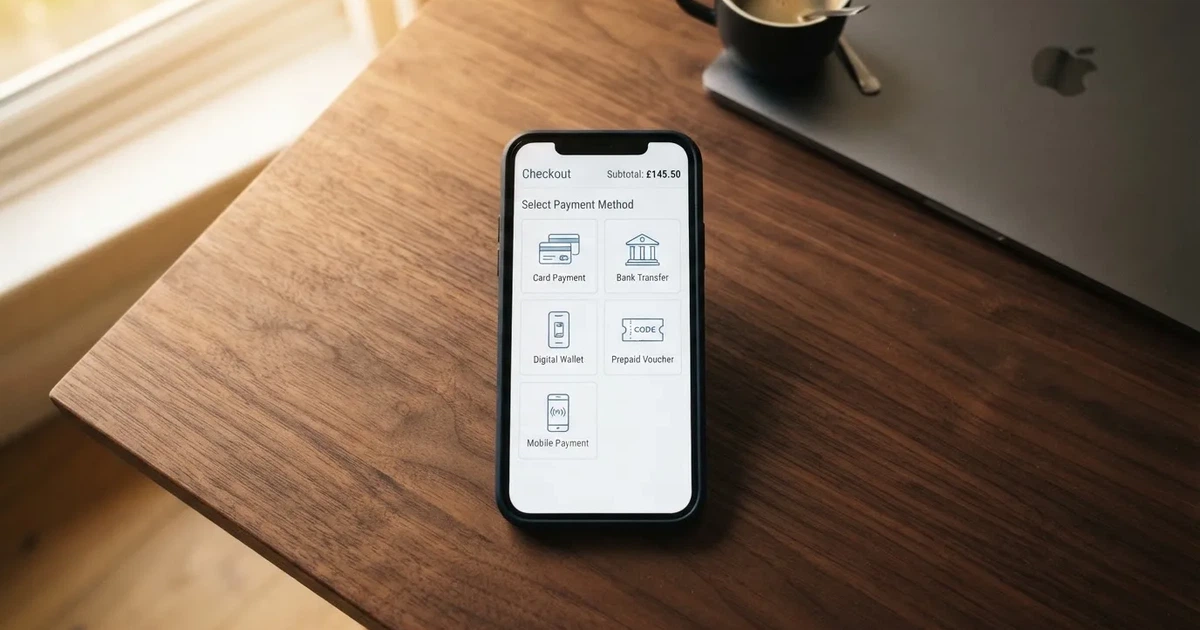
Debit card is the default. Visa and Mastercard debit, alongside the major UK challenger banks, settle deposits in seconds and let the player withdraw back to the same card. The catch is in the wording — these are debit cards only. From 14 April 2020 the Gambling Commission banned the use of credit cards for any gambling transaction in Great Britain, online or offline, with the narrow exception of non-remote lotteries paid face-to-face. A card routed through an e-wallet is still caught by the rule: a credit-funded PayPal balance cannot be used to deposit at a UK-licensed casino, and the operator is required to reject the attempt.

E-wallets — PayPal, Skrill, Neteller, AstroPay — add a layer between the bank and the casino. Deposits from a bank-funded wallet are usually instant and do not need the player to hand card details to the operator. Withdrawals go back to the wallet and from there to a bank account, with the wallet’s own settlement rules applying on top. AstroPay’s UK entity, Larstal Limited, holds electronic money institution authorisation from the Financial Conduct Authority under the Electronic Money Regulations 2011, which is the UK standard for firms holding customer funds in this layer.
Pay-by-mobile — typically billed through a single-digit-amount deposit added to the monthly phone bill or taken from pay-as-you-go credit — is offered by most UK-licensed brands as a low-friction entry point. It is deposit-only at nearly every operator: a withdrawal cannot be sent back to a phone bill, and the player has to nominate a bank-side method for the payout.
Bank transfer runs through the UK’s Faster Payments Service, launched in 2008 and operated by Pay.UK. Faster Payments operates 24 hours a day, seven days a week, and most payments arrive instantly or within a couple of minutes; the scheme’s published limit is £1,000,000 per transaction, though individual banks set their own ceilings below that. The Bank of England is not a direct participant but oversees the system’s safety and stability and provides final settlement. For casino purposes, bank transfer is the slowest deposit rail but the most universally accepted on the withdrawal side: every UK-licensed operator will pay out by bank transfer to a verified account in the customer’s name.
Two further rails sit at the edges. Apple Pay, launched on 20 October 2014 and supporting UK-issued cards from 14 July 2015, is offered at the deposit stage by some UK-licensed brands for players using Apple devices, with the actual card data replaced by a device-specific tokenised Device Primary Account Number and a dynamic security code for each transaction; the underlying funding instrument is still a debit card, so the credit-card ban applies in the same way. Paysafecard, the prepaid voucher, is accepted at many UK-licensed brands as a deposit method and is popular with players who want to keep gambling spend off a bank statement; it is deposit-only at the operator level, so payouts still go back to a bank account.
What a Gambling Commission licence actually requires on payments
A remote casino operating licence number on the public register has the form account-R-number-suffix — the leading six digits repeat the licence holder’s account number and the “R” marks a remote, online licence. On 18 September 2026 the register listed 139 businesses holding an active remote casino operating licence; the same register’s domain list held 1,065 active and 361 white-label website entries. A white-label site trades under another company’s licence, which is why Virgin Games and Jackpotjoy both appear against account 38905, Gamesys Operations Limited, and the same remote casino licence 038905-R-319430-022.

Three rules attach to that licence and shape every payment decision:
Identity comes before the first deposit. Since 7 May 2019 every UK-licensed operator has had to verify a customer’s name, address and date of birth before accepting a deposit or any play. The verification pulls from public data and from documents the player supplies; a deposit that fails the check is rejected, and the funds returned. This is not a marketing prompt — it is a licence condition, and the rule applies whichever payment method the player chooses.
Source-of-funds checks sit behind identity. From 28 February 2025 a lighter-touch financial vulnerability check runs once a customer has deposited a net £150 in a rolling 30-day window, using public data only. A heavier financial risk assessment has been announced but is not yet in force as of 23 September 2026. When the heavier check lands, it can ask for payslips, bank statements or evidence of the source of a deposit — which is why the payment method chosen at sign-up tends to be the one the operator will want to see again at withdrawal.
Winnings and deposits travel the same rails. Anti-money-laundering rules require that withdrawals go back to the same payment method used for deposit, up to the amount deposited, before any balance is paid elsewhere. The corollary is that a pay-by-mobile deposit forces a bank-side withdrawal, and an e-wallet deposit may force the rest of the payout back to that wallet. This is the rule that closes off “deposit with one card, withdraw to another” routing at the operator level.
The credit-card ban in context
The ban on credit cards for gambling, in force from 14 April 2020, was a response to evidence the Commission had gathered before the change. In 2018 the Commission estimated that around 800,000 UK consumers used credit cards to gamble, and that 22% of online gamblers using credit cards were classed as problem gamblers. The rule closes that path at the operator, at the card-issuer and at any intermediary — a deposit funded from a credit balance in a PayPal or Skrill wallet is treated as a credit-card deposit for these purposes.
The practical consequence is that “which card should I use” reduces to “which debit card should I use”. A Visa Debit or Mastercard Debit on a UK current account, in the customer’s own name, will be accepted. A prepaid card issued by a non-bank e-money institution is generally accepted where the operator supports it; the rule still asks that the source of the funds can be evidenced.
Player-protection rails that touch the payment choice
The same licensing regime attaches four protections to the payment flow, and they shape what a UK-licensed operator can and cannot offer.
GAMSTOP is mandatory
Every Gambling Commission-licensed online operator has been required to take part in GAMSTOP since 31 March 2020. GAMSTOP is the national online self-exclusion scheme: a player registers once and chooses a six-month, one-year or five-year exclusion, which cannot be cancelled early. Every licensed operator checks new sign-ups against GAMSTOP and refuses service to anyone listed. This is why anonymous play is not available at a UK-licensed site — a payment method alone never opens an account, because the GAMSTOP check runs at registration, before the deposit rail is touched.
Financial limits are prompted, not imposed
There is no state-set deposit or loss ceiling at UK-licensed casinos. From 31 October 2025 every operator must, before accepting a first deposit, prompt the customer to set a financial limit and refuse to proceed until one is set. The figure is the player’s choice; the obligation to ask is the operator’s. The 10x wagering cap that took effect on 19 December 2025 sits alongside this: a bonus with a wagering multiple above 10 cannot lawfully be offered at a UK-licensed casino, and any “mixed-product” bonus (a sports free bet that hands out casino spins) is banned outright.
Slot stakes are capped per spin
From 9 April 2025 the maximum stake on an online slot spin for players aged 25 and over is £5 per game cycle; from 21 May 2025 the same cap is £2 for players aged 18-24. A spin may not be faster than 2.5 seconds and auto-play is banned. The stake cap is not a payment-method rule, but it is the number a deposit plan has to clear: a £150 deposit on a £5-cap slot will not stretch across 200 spins at maximum stake, because most slots do not return enough on each spin to keep the stake rolling.
Where help is reached
The National Gambling Helpline (run by GamCare) and GambleAware are the two support bodies named in the Commission’s social responsibility code. Both are reachable from every UK-licensed operator’s responsible-gambling page, which is itself a licence condition. These are not part of the payment flow, but they are the route a player follows when a payment decision — how much, how often, which method — has gone wrong.
What speed a payout actually runs at
A withdrawal at a UK-licensed casino passes through three gates before the funds reach the customer.
Verification. The identity check that ran at sign-up is checked again at withdrawal, this time against the payment destination. A bank account in a different name from the registered player is rejected; a card that has been reissued since sign-up is reconciled. This is the part that creates the most delay in practice, because it is the only gate the operator fully controls.
Internal processing. Once verification is clear, the operator’s payments team releases the funds. Most UK-licensed brands commit to a published processing window — 24 hours, 48 hours, “up to three working days”. This is the figure that varies most between brands and is the one a comparison should hang on.
Method settlement. After release, the funds travel along the rail chosen for withdrawal. E-wallets and Faster Payments bank transfers arrive within minutes to a couple of hours once they leave the operator. Debit card payouts typically take 1–3 working days, because the card network sits between the operator and the customer’s bank. Pay-by-mobile has no withdrawal leg at all — the funds have to come off by another method.
The first two gates are where brands differ. The third is fixed by the rail. A Skrill withdrawal at a slow-processing operator will still be slower than a debit card withdrawal at a fast-processing one, because the operator’s queue sits ahead of the rail.
What ID verification actually requires
Verification pulls from public databases and from the documents a player supplies. The minimum set, across most UK-licensed operators, is a UK driving licence or passport for identity and a recent utility bill or council-tax letter for address. Source-of-funds evidence — payslips, bank statements, a P60 — is requested once the lighter-touch financial vulnerability check trips at £150 net deposits in a rolling 30 days. The heavier financial risk assessment, announced but not in force as of 23 September 2026, will widen the evidence request when it lands.
A common trap is the mismatch between deposit and withdrawal names. A joint account in two names cannot receive a withdrawal to one named player. A card issued to a spouse, a parent or a child cannot be used to fund an account in someone else’s name. The rule is flat, and the operator applies it without discretion.
How the payment-method picture lines up across the reviewed brands
The ten brands below are taken from the Gambling Commission’s public register. Every one of them holds a remote casino operating licence and offers debit card, at least one e-wallet and bank transfer on the deposit side. The table lays out the licensing and register position for each; the notes that follow cover where each brand sits against the rest of the comparison.
| Brand | Licence holder and GB remote casino licence | Domain status on the register | Payment-method support |
|---|---|---|---|
| Virgin Games | Gamesys Operations Limited — 038905-R-319430-022 | White-label domain of account 38905 | — |
| Betfred | Petfre (Gibraltar) Limited — 039544-R-319290-010 | Active domain of account 39544 | — |
| Betfair | PPB Games Limited — 039411-R-319335-010 | Active domain of account 39411 | — |
| Sky Vegas | Bonne Terre Gaming Limited — 065519-R-339675-002 | Active domain of account 65519 | — |
| Gala Bingo | LC International Limited — 054743-R-330863-014 | Active domain of account 54743 | — |
| 32Red | Platinum Gaming Limited — 045322-R-324275-019 | Active domain of account 45322 | — |
| Casumo | Recro Limited — 061549-R-336718-002 | Active domain of account 61549 | — |
| Midnite | Dribble Media Limited — 042647-R-321653-022 | Active domain of account 42647 | — |
| PokerStars | Stars Interactive Limited — 039108-R-319334-026 | Active domain of account 39108 | — |
| Jackpotjoy | Gamesys Operations Limited — 038905-R-319430-022 | Active domain of account 38905 | — |
Two licence holders run more than one of these brands. Gamesys Operations Limited runs both Virgin Games (as a white-label domain) and Jackpotjoy (as an active domain) on the same remote casino licence. LC International Limited runs Gala Bingo alongside a wider set of UK-facing brands outside this list. The brand on the storefront is not the same thing as the licence holder behind it.
Virgin Games
Virgin Games runs on Gamesys Operations Limited’s licence and is listed on the public register as a white-label domain. That means Virgin Games trades under Gamesys’s licence rather than holding its own, which is normal for a brand layered onto a platform. The deposit rails follow the platform’s defaults — debit card, PayPal, Apple Pay on supported Apple devices, pay-by-mobile and bank transfer. Withdrawals go back through the same rails, with the operator’s standard processing window applying. The choice of method at this brand is, in practice, the choice of method on the Gamesys platform.
Betfred
Betfred is listed as an active domain of Petfre (Gibraltar) Limited, which holds the licence. The brand’s high-street retail roots shape the deposit rails more than most — bank transfer and debit card are both well-supported, the e-wallet list is shorter than at pure-play brands, and the withdrawal policy is set to clear the bulk of payouts through Faster Payments. A player who wants a recognisable UK bookmaker’s payment flow will find one here.
Betfair
Betfair is an active domain of PPB Games Limited, the same group that runs the Paddy Power and Sky Betting & Gaming brands under separate licences. The combined operator runs a payment platform built for high transaction volume: debit card, multiple e-wallets, Apple Pay on supported devices and bank transfer are all in. The processing window on withdrawals is one of the tighter ones among UK-licensed brands, which is where the comparison with slower-paying competitors tends to land.
Sky Vegas
Sky Vegas is an active domain of Bonne Terre Gaming Limited. The deposit picture is a standard UK-licensed spread — debit card, PayPal, Apple Pay on Apple devices, pay-by-mobile at modest single-deposit caps, and bank transfer. Withdrawals settle through the same rails, with the operator’s internal processing window the main variable. As with the other brands, the payment-method comparison only matters once the operator’s queue clears.
Gala Bingo
Gala Bingo sits on LC International Limited’s licence alongside the wider Entain group’s UK-facing brands. The deposit and withdrawal rails follow the group’s platform standard, which is one of the wider UK-licensed spreads. The brand’s bingo-first catalogue shapes the typical deposit size — smaller, more frequent top-ups — and pay-by-mobile is more heavily used here than at the slots-first brands. The withdrawal side still funnels through bank transfer or debit card once the operator’s processing window clears.
32Red
32Red (32red) is an active domain of Platinum Gaming Limited, part of the Kindred Group. The brand’s payment platform is built for longer-tenure players: debit card, e-wallets and bank transfer are all supported, with the processing window tight for verified accounts. A player coming from a non-UK-licensed operator will find the ID-check hurdle heavier here than at offshore brands — but that hurdle is the licence condition, not 32Red’s choice.
Casumo
Casumo is an active domain of Recro Limited, on a comparatively recent remote casino licence. The deposit rails are the modern UK-licensed set: debit card, PayPal, Apple Pay, Trustly and bank transfer, with pay-by-mobile at modest caps. The withdrawal policy is built around same-day or next-day processing once verification is clear, which is where the brand tends to differentiate against slower-paying competitors.
Midnite
Midnite is an active domain of Dribble Media Limited. The brand’s deposit and withdrawal picture is the standard UK-licensed set, with debit card and bank transfer as the fallback rails and e-wallets on top. Midnite runs a tighter game catalogue than the older UK-licensed brands, which shapes typical deposit size more than the choice of method does.
PokerStars
PokerStars is an active domain of Stars Interactive Limited, the UK-facing arm of the international PokerStars group. The deposit and withdrawal rails follow a platform built around high transaction volume across poker and casino: debit card, multiple e-wallets, Apple Pay on Apple devices and bank transfer are all in. Withdrawal processing on the casino side is the main variable, with the operator’s queue ahead of the rail.
Jackpotjoy
Jackpotjoy is an active domain of account 38905, the same Gamesys Operations Limited licence as Virgin Games. The two brands share a payment platform, so the deposit and withdrawal picture is the same as at Virgin Games — debit card, PayPal, Apple Pay on supported Apple devices, pay-by-mobile and bank transfer, with the operator’s processing window applying on the withdrawal side.
What the wagering cap changes for a deposit plan
From 19 December 2025 the Gambling Commission capped wagering requirements on casino bonuses at 10x the bonus amount and banned mixed-product bonuses. The cap is a ceiling on what an offer can demand from the player, not a floor; it does not bind the size of the bonus itself.
For a £100 bonus at the 10x cap, the required turnover is £1,000. At a £5 stake per spin (the cap for players aged 25 and over) and a typical slot spin duration of around 5 seconds, that is 200 spins — a little over 16 minutes of pure spinning time if every spin hits the stake cap and runs at full speed. In practice, slots do not return enough on every spin to keep the stake rolling, so the actual time to clear £1,000 of turnover sits well above 16 minutes. The reader should treat the figure as a lower bound — a best-case time to clear the bonus if nothing else slows it down.
The cap bites hardest on the offers that, before 19 December 2025, demanded 30x or 40x turnover on a bonus of the same size. A £100 bonus at 40x would have required £4,000 of turnover — 800 spins at the £5 stake cap, over an hour of uninterrupted spinning in the best case. That figure is now off the table at every UK-licensed brand. A player who only looks at bonus size and not at the wagering multiple is reading an offer at half its real cost. The cap gives the rest of the comparison room to focus on processing speed, catalogue and stake cap rather than on a wagering multiple that is now, by rule, the same ceiling everywhere.
The offshore alternative, and what it costs
The same comparison can be drawn against operators licensed outside Great Britain — Curaçao, Malta, the Isle of Man — which accept UK customers and offer payment methods the UK-licensed set does not, including credit cards (where the issuer permits) and a wider range of cryptocurrencies. Section 33 of the Gambling Act 2005 makes it an offence to provide gambling to people in Great Britain without a Gambling Commission licence; the Commission’s enforcement against offshore sites takes the form of cease-and-desist notices, search-engine delisting referrals, and payment and hosting referrals, but the Commission has no ISP-blocking power. No penalty is aimed at the player.
What the player loses on an unlicensed site is the layer of protection the UK licence attaches. There is no GAMSTOP, because GAMSTOP is a condition of the UK licence and not a public utility. There is no Commission complaints route and no approved ADR for disputes. The 10x wagering cap, the £5 stake ceiling, the financial vulnerability checks and the mandatory identity verification all sit on the UK licence and do not follow the player offshore. The deposit may be quicker and the bonus larger, but the protection is gone.
For a player comparing offers, the practical question is what the extra flexibility is worth against the loss of the Commission’s safety net. The answer depends on what the player is funding and how the player plans to spend it; it is not a comparison this page can close for anyone but itself.
Choosing a method for a UK-licensed account
Three rules of thumb hold across the ten brands above.
Pick the rail by withdrawal, not by deposit. A deposit rail that does not support withdrawals — pay-by-mobile, Paysafecard — forces the payout to another method, which adds a step and a delay. A player who wants the cleanest end-to-end flow should choose a method that works in both directions, which leaves debit card, e-wallet and bank transfer.
Match the name on the method to the name on the account. A joint account, a card issued to a family member, or an e-wallet in another name will fail the source-of-funds check at withdrawal. The cleanest setup is a debit card or bank account in the player’s own name, used for both deposit and withdrawal.
Treat the bonus as a turnover problem, not a balance problem. A 10x wagering cap means a £100 bonus needs £1,000 of slot turnover at the £5 stake cap to clear. The actual time is longer than the arithmetic suggests, and the figure is the same at every UK-licensed brand from 19 December 2025. A player comparing offers should compare bonus size at a fixed wagering multiple, not the headline bonus in isolation.
The rest of the comparison is brand-by-brand: catalogue, withdrawal processing speed, mobile app quality, customer support reachability. The payment-method layer is set.
Frequently asked questions
Are credit cards still allowed for UK online casino deposits?
No. From 14 April 2020 the Gambling Commission banned credit cards for any gambling transaction in Great Britain, online or offline, with the narrow exception of non-remote lotteries paid face-to-face. Debit cards and bank transfers are unaffected, but a credit-funded e-wallet balance is treated as a credit-card deposit for these purposes and will be rejected.
Which casino payment methods are generally considered safest?
Every payment method that ends in a UK-licensed operator is subject to the same identity check, source-of-funds check and GAMSTOP screening. Within that, methods that keep the player’s card details off the operator’s site — e-wallets like PayPal and Skrill, plus Apple Pay’s tokenisation layer — add a separation between the bank and the casino. The Commission’s 2018 evidence tied credit-card gambling to higher rates of problem gambling, which is what drove the 2020 ban.
Does Paysafecard work as a deposit method at UK-licensed casinos?
Yes, at most UK-licensed brands. Paysafecard is a prepaid voucher bought at retail with cash, and a UK-licensed operator that accepts it will treat it as a deposit-only rail. Withdrawals cannot go back to a Paysafecard and have to be nominated to a bank account or debit card in the player’s own name, which is why the deposit-only nature of the rail matters at withdrawal.
Do all casino payment methods settle withdrawals at the same speed?
No. The rail determines how fast the funds travel once the operator releases them: e-wallets and Faster Payments bank transfers arrive within minutes to a couple of hours, while debit card payouts typically take one to three working days through the card network. The bigger variable, though, is the operator’s own processing window ahead of the rail — a fast rail at a slow-processing operator can be slower than a slow rail at a fast-processing one.
Is ID verification required before a first deposit regardless of payment method?
Yes. Since 7 May 2019 every UK-licensed operator has had to verify a customer’s name, address and date of birth before accepting a first deposit or any play, and the check applies whichever payment method the player chooses. The check pulls from public data and from documents the player supplies; a deposit that fails verification is rejected. A source-of-funds check sits behind the identity check and trips at £150 net deposits in a rolling 30 days from 28 February 2025.
Published by the casinoprovidersuk team.