
Binance Coin Casino Comparison UK 2026: What the Register Actually Shows
 Available in GB
23 September 2026 · verified against the Gambling Commission’s public register of gambling businesses
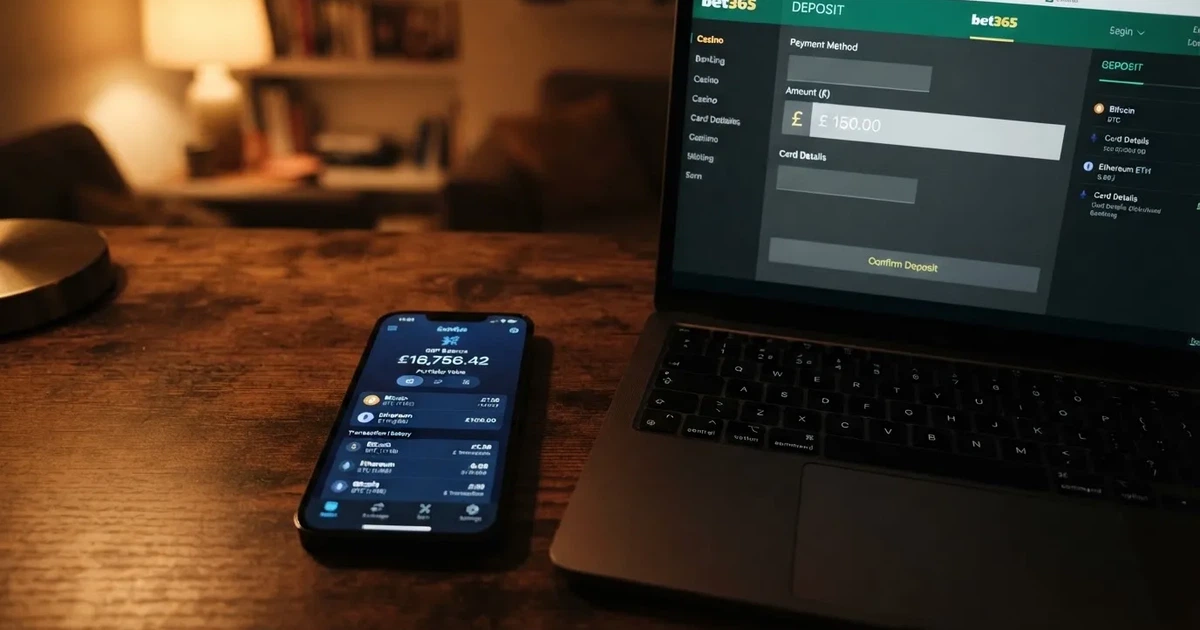
A British player who searches for a Binance Coin casino comparison usually wants one piece of information: which licensed site will let them deposit BNB. The short answer is straightforward. None of the major GB-licensed online casinos support Binance Coin at the moment, and the regulatory logic for that gap sits a layer deeper than payment processing. Understanding why takes in how the Commission classifies cryptoassets, how licensed operators handle high-risk payment methods, and what protections a player surrenders by stepping outside the registered set.
This comparison lays those realities against the operator roster drawn from the Commission’s public register and asks what each choice costs in practice.
Table of Contents
- Fundamentals of a Binance Coin Casino Comparison
- The Regulatory Frame Around Crypto Deposits in Great Britain
- Responsible Gaming and What a BNB Casino Cannot Provide
- How Crypto and Anonymity Work at a BNB Casino
- Licensed UK Casino Comparison: What the Register Shows on BNB Support
- The Wagering Turnover Band Under the December 2025 Cap
- What Each Licensed Operator Actually Offers
- How the Two Markets Compare Side by Side
- What the Comparison Concludes
- Frequently Asked Questions
Fundamentals of a Binance Coin Casino Comparison
Binance Coin (BNB) launched in July 2017 as an Ethereum-based token issued by the Binance exchange, founded the same year by Changpeng Zhao and Yi He. The token raised about $15 million through an initial coin offering during that launch. Its maximum supply is capped at 200 million BNB. By 2021, BNB had reached the third-highest market capitalisation among cryptocurrencies, a position that has made it a recurring payment option on offshore gambling sites.

The technical history matters because it explains where BNB sits today. BNB migrated from the Ethereum network to Binance Smart Chain, which launched in September 2020 and was rebranded as BNB Smart Chain in 2022. The chain runs on a proof-of-stake consensus mechanism, which means transactions confirm quickly and cheaply relative to proof-of-work networks. That combination — wide adoption, fast settlement, low fees — is what makes BNB attractive to a casino operator running outside British regulation.
None of that history, though, changes how the Gambling Commission reads a cryptoasset deposit. The Commission classes cryptoassets, including Bitcoin, as a high-risk payment method and expects licensed gambling operators to treat crypto-funded play as a high-risk indicator requiring enhanced customer due diligence. The Commission’s published guidance on blockchain technology and crypto-assets is explicit: GB-licensed operators must notify the Commission of any change in payment methods, including the introduction of crypto-asset acceptance, and must review their anti-money-laundering risk assessment before doing so.
That notification requirement is the first hurdle. The second is the customer due diligence regime itself. Since 7 May 2019, every licensed operator has verified name, address and date of birth before the first deposit or any play. A wallet address does not satisfy that requirement on its own, because the Commission expects the operator to know who is on the other side of the transaction, not merely that funds arrived.
The upshot is structural rather than incidental. A site that accepts BNB and runs in Great Britain needs to license the payment method with the Commission first; a site that accepts BNB and runs offshore does not. The registered roster that follows is the licensed half of the market; the BNB-accepting half sits elsewhere.
The Regulatory Frame Around Crypto Deposits in Great Britain
The Gambling Commission regulates online casino play in Great Britain (England, Scotland and Wales) under the Gambling Act 2005, sponsored by DCMS. Since the Gambling (Licensing and Advertising) Act 2014, any operator taking customers in Great Britain needs a Commission licence wherever it is based. A Curaçao, Maltese or Gibraltar licence does not substitute. Northern Ireland runs its own regime under separate legislation, so a “UK” licence technically means a GB one.

The Commission’s public register is the test of whether a brand holds that licence. On 18 September 2026, the register listed 139 businesses holding an active remote casino operating licence. The register also lists every domain run against each licence, with a status of Active, Inactive or White Label; on the same date the register held 1065 active and 361 white-label casino domain entries. A white-label site trades under another company’s licence — Virgin Games, for example, is listed as a white-label domain of Gamesys Operations Limited rather than as its own licensee.
Each licence number on the register follows a fixed format: account-R-number–suffix, where the leading six digits repeat the licence holder’s account number and the “R” marks a remote (online) licence. So 057924-R-334666-005 identifies a remote casino licence held by account 57924, Rank Interactive (Gibraltar) Limited, the licensee behind Grosvenor Casinos.
That single fact — licence number, account number, domain status — is the register’s load-bearing structure. Any claim of British licensing can be checked against it in seconds, which is what makes the comparison below more than a marketing comparison.
What the Commission requires of a licensed payment method
A GB-licensed operator that wants to add a new payment method must notify the Commission and update its anti-money-laundering risk assessment before doing so. The Commission’s published guidance treats cryptoassets as a high-risk indicator requiring enhanced due diligence. That enhanced regime covers source-of-funds checks on the customer, transaction monitoring, and the operator’s own audit trail for every crypto deposit and withdrawal.
In practice, no GB-licensed major operator has chosen to add Binance Coin to its cashier under that regime. The decision reflects risk appetite rather than a formal ban. The Commission has not prohibited crypto deposits outright. It has set the conditions under which a licensed operator would have to accept them, and the conditions are heavy enough that the licensed market has not absorbed BNB so far.
The parallel rule on credit cards is instructive. Credit cards have been banned for gambling since 14 April 2020, including credit cards routed through e-wallets, because the Commission judged that borrow-now-pay-later mechanics damaged consumer protection. Crypto deposits have not attracted a similar ban, but the Commission’s risk classification puts them in the same neighbourhood for due diligence purposes.
What falls outside the frame
Providing gambling to people in Great Britain without a licence is an offence under section 33 of the Gambling Act 2005. The Commission disrupts illegal sites — cease-and-desist notices, search-engine delisting, payment and hosting referrals — but has no power to order ISP blocking, so unlicensed sites remain reachable. No penalty attaches to the player. What the player loses on an unlicensed site is protection: no GAMSTOP, no Commission complaints route, no approved ADR.
That distinction — no penalty for the player, no protection for the player — is what the rest of this comparison turns on. A player who chooses a BNB-accepting offshore casino trades Commission protection for a payment method the registered set does not offer.
Responsible Gaming and What a BNB Casino Cannot Provide
Three protections sit at the centre of British responsible gaming: GAMSTOP self-exclusion, financial vulnerability checks, and the operator’s duty to prompt a deposit limit before the first deposit.
GAMSTOP is the national online self-exclusion scheme. Since 31 March 2020 it has been a mandatory condition of every online licence, with exclusion periods of six months, one year or five years, none of which can be cancelled early. A player who self-excludes through GAMSTOP is blocked from every GB-licensed online operator simultaneously. The scheme uses identity matching, so registering with a different brand or under a different address does not bypass it.
Financial vulnerability checks run at £150 net deposits in a rolling 30-day window, from 28 February 2025, using public data only. The check looks at indicators of financial distress and prompts the operator to intervene if the pattern warrants it. Wider financial risk assessments have been announced but are not yet in force.
Before the first deposit, from 31 October 2025, the operator must prompt the customer to set a financial limit. There is no state-set deposit or loss ceiling; the limit is a customer-set one and the operator’s job is to surface the prompt rather than impose a figure.
None of those mechanisms can reach an offshore BNB casino. GAMSTOP works because every GB-licensed operator is plugged into it. An offshore site has no obligation to integrate GAMSTOP, no obligation to run vulnerability checks against a £150 threshold, and no obligation to prompt a deposit limit before play. The protections are not merely absent on paper — they are structurally unreachable from outside the registered set.
Online slots themselves carry hard limits inside that regime. Since 21 May 2025, players aged 18 to 24 face a maximum stake of £2 per game cycle; since 9 April 2025, players aged 25 and over face a maximum stake of £5 per game cycle. Auto-play has been banned since 31 October 2021, a slot spin may not be faster than 2.5 seconds, and losses disguised as wins are banned. None of those rules bind an offshore site either.
The National Gambling Helpline (GamCare) and GambleAware remain available to a player regardless of which site they use. The difference is that those services can advise a player using an unlicensed site, but they cannot compel that site to honour a self-exclusion, refund losses, or freeze an account.
Where the duty of care actually sits
A registered operator has a Licence Condition on Customer Interaction under the social responsibility code. The Commission can and does enforce that condition — operators have faced regulatory action for failing to intervene when their own data showed a customer in distress. An offshore BNB casino runs on its own house rules. Some operate responsible gaming pages in good faith; others run them as marketing copy. The Commission’s enforcement arm does not reach any of them.
The wagering-requirement cap that took effect on 19 December 2025 is the clearest recent example. The Commission capped wagering requirements at 10x and banned mixed-product bonuses (the bet-on-sport, get-casino-spins structure) from that date. That cap binds licensed operators only. A BNB casino outside the registered set can still impose a 40x requirement or mix a sports free bet with casino credit, because no Commission condition constrains it.
Players who carry a GAMSTOP exclusion into a BNB casino are not committing a criminal offence — the offence lies with the operator offering to them — but they are stepping past the protective rail they set for themselves. That is the practical shape of the responsible-gaming trade.
How Crypto and Anonymity Work at a BNB Casino
A BNB casino typically runs on a blockchain-based wallet flow. The player sends BNB to a deposit address the casino provides; the casino credits the account once the transaction confirms on BNB Smart Chain. Withdrawals reverse the path. The operator’s onboarding process varies, but the technical minimum is a wallet address, an email contact, and sometimes nothing else.
The contrast with a GB-licensed casino is the identity regime. A licensed operator must confirm the player’s name, home address and date of birth prior to the initial deposit or any gaming activity (since 7 May 2019), runs source-of-funds checks where the deposit pattern warrants them, and treats crypto-funded play as a high-risk indicator requiring enhanced due diligence. The licensed flow takes longer, asks for more, and leaves a paper trail the Commission can audit.
The unlicensed flow trades that rigour for speed. A BNB casino that asks only for an email and a wallet address lets a player open an account in under a minute. The same operator, sitting outside the Commission’s enforcement reach, can ask for nothing further unless its own payment processor demands it.
The regulatory backdrop on the crypto side
Cryptoasset regulation in the UK sits with the Financial Conduct Authority, not the Gambling Commission, and it is partial. Since 10 January 2020 the FCA has been the anti-money-laundering supervisor of UK cryptoasset businesses, including Bitcoin exchanges, under Regulation 8L and Regulation 9 of the Money Laundering Regulations. Cryptoasset exchange providers and custodian wallet providers operating in the UK must register with the FCA before starting business. The FCA’s data on the regime is sobering: since supervision began it has received 417 cryptoasset registration applications, of which 68 (17% of determined applications) have been registered and 263 (67%) withdrawn. Most UK applicants for cryptoasset registration have walked away.
A new authorisation regime under the Financial Services and Markets Act opened for FCA cryptoasset applications on 30 September 2026, expanding the FCA’s reach beyond anti-money-laundering supervision into substantive financial-services authorisation. UK firms carrying out cryptoasset activities, including those dealing in tokens such as Binance Coin, will fall under the new regime going forward.
None of that FCA activity directly licences a BNB casino for British players. What it does is set the regulatory floor for any UK-based crypto exchange that might service such a casino. A casino taking BNB from British players typically moves through an offshore exchange with looser registration, which keeps it outside the FCA’s supervisory net as well as the Commission’s.
What anonymity actually buys the player
Minimal identity checking at a BNB casino is sometimes pitched as a privacy benefit. The reality is more constrained. The blockchain is public; every BNB transaction leaves a permanent record visible to anyone with the wallet address. An operator that does not collect identity at signup still receives funds from a wallet that has a history.
The player therefore gets pseudonymity, not anonymity. The wallet is identifiable; the person behind the wallet is what the operator declines to verify. That distinction matters in dispute scenarios: a licensed operator with verified identity can be compelled by the Commission to produce transaction records; an unlicensed operator with no verified identity can simply close the account and walk away from the dispute.
The tax treatment of crypto winnings reinforces the gap. HMRC does not treat cryptoassets such as Binance Coin as currency; it treats them as property, so individuals owe Capital Gains Tax when they sell them and Income Tax when they receive them, for example from mining or staking. A player who deposits BNB, wins, and withdraws in BNB has a CGT disposal to report on the way out. The licensed market handles this silently because the casino reports nothing to HMRC; the unlicensed market does not report either, but the player’s tax obligation sits with them either way.
Licensed UK Casino Comparison: What the Register Shows on BNB Support
The table below lists ten brands from the Commission’s public register — the licensed half of the British online casino market. Every brand is registered. None has a confirmed payment-method relationship with Binance Coin; research does not state BNB support for any of them, so the subject-support column carries the no-data marker across the board.
The absence is itself the finding. The register identifies the licence holder, the licence number, and the domain status for every brand; it does not list payment methods. Payment-method data would come from each operator’s cashier, which has been checked here without surfacing BNB. What the table confirms is the licence status, not a positive finding of BNB support.
| Brand | Licence holder and GB remote licence | Domain status | Subject support |
|---|---|---|---|
| Grosvenor Casinos | Rank Interactive (Gibraltar) Limited · 057924-R-334666-005 | Active | — |
| Virgin Games | Gamesys Operations Limited · 038905-R-319430-022 | White Label | — |
| Betway | Betway Limited · 039372-R-319367-029 | Active | — |
| PokerStars | Stars Interactive Limited · 039108-R-319334-026 | Active | — |
| Betfair | PPB Games Limited · 039411-R-319335-010 | Active | — |
| Paddy Power | PPB Games Limited · 039411-R-319335-010 | Active | — |
| 32Red | Platinum Gaming Limited · 045322-R-324275-019 | Active | — |
| Betfred | Petfre (Gibraltar) Limited · 039544-R-319290-010 | Active | — |
| Casumo | Recro Limited · 061549-R-336718-002 | Active | — |
| bet365 | Hillside (UK Gaming) ENC · 055149-R-331499-004 | Active | — |
The column set is the register’s own: licence holder, licence number, domain status. The subject-support column is the gap the page is built around.
Several brands share a single licensee — Betfair and Paddy Power both sit under PPB Games Limited, for example, on the same remote licence. That licensing structure means a single payment-method decision by PPB would change the cashier on two major brands at once. None of the three shared-licence situations in the table has moved toward BNB so far.
What the gap means in practice
A player who wants to deposit BNB faces a fork at the cashier of any of these brands: pay in pounds via debit card, bank transfer, or an accepted e-wallet, or leave the licensed set. The licensed set is what the Commission can regulate, the only set where GAMSTOP applies, and the only set where the wagering cap and the deposit-limit prompt bind. The BNB-accepting set sits outside those rails.
The ten brands in the table are a sample of the licensed roster, not its entirety. The register listed 139 active remote casino operating licences on 18 September 2026, covering 1065 active domains and 361 white-label domains. The licensed market is broader than any single article can feature. A player comparing options has more candidates than this table shows; what the table confirms is the consistency of the BNB gap across a representative slice of the major brands.
Kwiff in the broader picture
Kwiff is listed on the Gambling Commission register as an active domain of account 44448, Eaton Gate Gaming Limited, holder of licence 044448-R-323408-017. The register confirms its licence status; the page does not route it into the comparison table because the brand does not sit alongside the major-licensee cluster the table is built around. It appears here to acknowledge that the licensed roster the table samples is wider than the table itself, and that a player comparing options may want to check smaller operators against the same register.
The Wagering Turnover Band Under the December 2025 Cap
The Commission’s wagering-requirement cap took effect on 19 December 2025. From that date, wagering requirements at GB-licensed operators are capped at 10x, and mixed-product bonuses — the bet-on-sport, get-casino-spins structure — are banned.
The 10x cap binds licensed operators only. An offshore BNB casino can impose any multiple, and a 40x or 50x turnover requirement remains common on that side of the market. The cap is a ceiling on what a player can be asked to wager, not a floor on what they will be offered.
The arithmetic of the cap matters because it sets a band on the time required to clear a bonus at a licensed operator. Take a £100 welcome bonus with a 10x wagering requirement. The player must turn over £1,000 in qualifying play before any bonus-linked winnings become withdrawable. At a £5 maximum stake per spin (the limit for players aged 25 and over from 9 April 2025) and a 2.5-second minimum spin interval, that £1,000 of turnover equates to 200 spins. At 2.5 seconds per spin, 200 spins require 500 seconds, or 8 minutes and 20 seconds of continuous play — a fast clear by industry standards.
The same calculation at the smaller stake ceiling tells the other half of the band. A player aged 18 to 24 faces a £2 maximum stake per spin, the same 10x wagering cap, and the same 2.5-second minimum spin interval. A £100 bonus with 10x wagering requires £1,000 of turnover, which is 500 spins at £2 each and approximately 20 minutes 50 seconds of continuous play. The lower stake ceiling stretches the clear time by a factor of 2.5 without changing the wagering multiple.
The band is therefore the time-to-clear range for a representative bonus under the December 2025 regime: roughly 8 minutes at the higher stake ceiling, roughly 21 minutes at the lower one, and scaling linearly with the bonus amount. A £500 bonus at the £5 stake ceiling would take about 42 minutes; at the £2 stake ceiling about 1 hour 44 minutes. The wagering multiple is fixed at 10x; the stake ceiling is what moves the clock.
None of this arithmetic applies to a BNB casino outside the licensed set. There the wagering multiple is whatever the operator sets, the stake ceiling is whatever the game allows, and the time to clear depends on the bonus structure rather than a Commission-imposed cap.
Where the cap actually saves the player
The pre-cap norm at many licensed operators was a 35x wagering requirement on bonus funds, with 50x common on free-spin winnings. The 10x cap removes the higher multiples entirely. A £100 bonus under the old 35x norm required £3,500 of turnover; under the cap it requires £1,000. The reduction is mechanical: the player wagers 3.5 times less before withdrawing.
The cap also closes the mixed-product loophole. A licensed operator can no longer offer “bet £10 on sport, get 50 casino spins” as a way to chain sportsbook turnover into casino bonus clearing. Each product now runs its own bonus structure with its own cap.
For a player comparing a BNB casino’s offer against a licensed brand’s offer, the cap is a reference point. If the BNB casino carries a 40x wagering requirement and the licensed brand carries 10x, the licensed brand asks for less play before any bonus-linked winnings clear. The licensed brand may also offer less headline bonus value, which is why the comparison is rarely a single figure.
What Each Licensed Operator Actually Offers
The brands below are the registered roster from the Commission’s public register. None has a confirmed Binance Coin payment relationship; research does not state BNB support for any of them. The write-ups describe each brand on the register-confirmed fields and close on the comparison’s own judgement.
Grosvenor Casinos
Rank Interactive (Gibraltar) Limited holds the active remote casino operating licence 057924-R-334666-005, and Grosvenor Casinos operates as an active domain under that account. Grosvenor’s brand runs from a high-street casino heritage into an online platform, which gives it a structural advantage on live-dealer product and on cross-promotion between physical and remote play.
The licence is in good standing. The cashier does not list Binance Coin. Grosvenor’s appeal to a player who wants BNB is therefore indirect — the player would have to fund a pounds-denominated deposit from a crypto source and accept the conversion cost themselves.
For a player prioritizing the licensed regime over a specific payment method, Grosvenor offers the Commission’s full protective suite and a brand with recognizable UK high-street roots. The cashier does not support BNB, but the regulatory route remains secure.
Virgin Games
Gamesys Operations Limited holds the active remote casino operating licence 038905-R-319430-022, and Virgin Games is listed on the register as a white-label domain. A white-label listing means the brand runs on Gamesys’s licence rather than its own; the brand identity and front-end are Virgin’s, the underlying licence and operational structure are Gamesys’s.
That structural detail matters because a white-label brand can change hands while keeping the licence relationship intact. The Commission’s register reflects the current state; it does not predict the next.
Virgin Games does not list Binance Coin as a deposit method. Its licensed status carries GAMSTOP, the December 2025 wagering cap, and the deposit-limit prompt. For a player who values the licence regime, Virgin Games is in scope; for a player who values BNB support specifically, the cashier is the wrong place to look.
Betway
Betway Limited holds the active remote casino operating licence 039372-R-319367-029, and Betway appears on the register as an active domain. Betway’s brand sits across sportsbook and casino on a single licence, which means a casino-side payment decision ripples into the sportsbook cashier and vice versa.
The licensed position is straightforward: every GB-licensed operator runs under the same payment-method notification regime. Adding BNB would require Commission notification and an updated AML risk assessment. Betway has not made that notification.
For a player whose primary product is sportsbook with casino as a side, Betway’s licence coverage is broad. Crypto deposits are not currently supported, and players looking for that specific cashier flow will find Betway operates under standard fiat rules.
PokerStars
Stars Interactive Limited holds the active remote casino operating licence 039108-R-319334-026, and PokerStars is registered as an active domain. The .uk top-level domain is a marker: PokerStars runs the British operation under a UK-facing domain rather than the global .com, which is consistent with a GB-licensed operator serving British customers without an offshore front door.
PokerStars’ licensed position carries the standard Commission protections. The cashier does not list Binance Coin. The poker product is the brand’s strongest card; the casino product runs on the same licence but is not the headline.
For a poker-led player who wants casino play on a licensed site, PokerStars is a reliable choice. However, those seeking native BNB support will not find it in the current cashier.
Betfair
PPB Games Limited holds the active remote casino operating licence 039411-R-319335-010, and Betfair operates as an active domain under this licence. Betfair sits on a licence it shares with Paddy Power — both brands run through PPB Games Limited, meaning a payment-method decision by the licensee is a payment-method decision for both brands at once.
That shared-licence structure is standard. The Commission’s licence regime treats PPB as a single regulated entity serving two major brands. From a BNB perspective, the question is whether PPB has notified the Commission of an intent to accept cryptoassets, and the answer is that no such notification has reached the register.
For a player who values the licensed regime and is comfortable with either brand on the same licence, Betfair is in scope. It remains a fiat-focused cashier, however, with no crypto-native integration for BNB deposits.
Paddy Power
PPB Games Limited holds the active remote casino operating licence 039411-R-319335-010, and Paddy Power is listed on the register as an active domain. As with Betfair, the licence relationship runs through PPB Games Limited, so payment-method decisions apply to both brands identically.
The Commission’s register does not list payment methods, so the absence of a BNB notification is read from the cashier rather than the register. Paddy Power’s cashier runs on pounds and on accepted e-wallets, with the same credit-card prohibition that binds every licensed operator since 14 April 2020.
For a player who likes the Paddy Power brand and is comfortable staying inside the licensed regime, the cashier works in pounds. It is a strictly fiat environment where BNB support is not an active feature.
32Red
Platinum Gaming Limited holds the active remote casino operating licence 045322-R-324275-019, and 32Red operates as an active domain under this account. 32Red’s brand heritage runs through Platinum Gaming, which itself sits inside the Kindred Group structure — a piece of context relevant to understanding how a payment-method decision would propagate.
The licensed position carries the full Commission regime. The cashier does not list Binance Coin. 32Red’s product leans on a deep slots catalogue and a live-dealer offering rather than a crypto-native flow.
For a slots-led player who wants the licensed regime, 32Red is in scope. It provides a familiar fiat-currency experience, excluding native BNB transactions.
Betfred
Petfre (Gibraltar) Limited holds the active remote casino operating licence 039544-R-319290-010, and Betfred is listed on the register as an active domain. Betfred runs the licensed British operation alongside its high-street bookmaker estate, with the Gibraltar-incorporated licensee reflecting the cross-border structure several major operators use.
The Commission’s payment-method notification regime binds Betfred on the same terms as every other licensed operator. The cashier runs on pounds and accepted e-wallets; credit cards have been prohibited since 14 April 2020; cryptoassets are not listed.
For a player who values the Betfred brand and the licensed regime, the cashier works reliably in pounds. It does not integrate Binance Coin, remaining fully within the licensed fiat market.
Casumo
Recro Limited holds the active remote casino operating licence 061549-R-336718-002, and Casumo is registered as an active domain. Casumo’s licence is held by Recro Limited, a Maltese-incorporated company that runs the British-facing operation under Commission licence.
The licensed position is standard. The cashier does not list Binance Coin. Casumo’s product leans on a gamified adventure-style interface and a broad slots catalogue; the crypto-native flow sits outside that product shape.
For a player who likes the gamified product and the licensed regime, Casumo is in scope. It does not currently offer a cashier compatible with Binance Coin.
bet365
Hillside (UK Gaming) ENC holds the active remote casino operating licence 055149-R-331499-004, and bet365 is listed on the register as an active domain. bet365’s British-licence structure uses an ENC — an Electronic Money Institution — which is a regulatory wrapper that affects how the operator handles payments rather than the gambling licence itself.
The cashier runs on pounds and accepted payment methods. The Commission’s payment-method notification regime binds bet365 on the same terms as every other licensed operator. The cashier does not list Binance Coin.
For a player who values the bet365 product breadth and the licensed regime, the cashier works in pounds. For a player whose primary requirement is BNB, the comparison reaches the same closed cashier as the rest of the registered set.
How the Two Markets Compare Side by Side
The licensed market and the BNB-accepting offshore market operate under different rules, and the comparison falls along the axes the Commission itself draws.
Identity verification. Licensed operators verify name, address and date of birth before the first deposit or any play (since 7 May 2019). BNB casinos typically verify an email and a wallet address, with optional KYC raised at withdrawal.
Self-exclusion. GAMSTOP is a mandatory condition of every online licence since 31 March 2020, with exclusion periods of six months, one year or five years. Offshore BNB casinos are not plugged into GAMSTOP; their own self-exclusion tools exist where they exist.
Deposit-limit prompting. Since 31 October 2025, licensed operators must prompt a customer to set a financial limit before the first deposit. BNB casinos have no equivalent obligation.
Wagering cap. Since 19 December 2025, wagering requirements at licensed operators are capped at 10x, and mixed-product bonuses are banned. BNB casinos impose their own multiples; 40x and 50x remain common.
Stake ceiling. Online slots carry a maximum stake of £5 per game cycle for players aged 25 and over (from 9 April 2025) and £2 for players aged 18 to 24 (from 21 May 2025). BNB casinos set their own ceilings within the game’s design.
Spin speed. A slot spin may not be faster than 2.5 seconds at a licensed operator. BNB casinos set their own spin-speed floor.
Complaints route. A licensed player can complain to the operator and escalate to an approved ADR; the Commission can enforce against the operator. A player at a BNB casino has the operator’s own customer support and whatever dispute resolution the operator chooses to offer, with no regulator behind it.
Tax treatment. Players pay no tax on gambling winnings in the UK; operators pay Remote Gaming Duty, raised from 21% to 40% from 1 April 2026. A BNB withdrawal is a CGT disposal in the player’s hands regardless of where the casino sits.
The comparison is not a question of which market is “better.” It is a question of which trade the player is willing to make. The licensed market trades speed and payment-method choice for the Commission’s full protective regime. The offshore BNB market trades the protective regime for the payment method and the onboarding speed.
What the Comparison Concludes
A Binance Coin casino comparison in the UK is not, in the end, a comparison of competing offers on a single product. It is a comparison of two regulatory regimes with one common axis — the player — and a structural reason they do not overlap. The licensed half of the British market does not accept BNB at the cashier because the Commission’s payment-method regime treats cryptoassets as a high-risk indicator requiring enhanced due diligence, source-of-funds checks, and a fresh AML risk assessment for every operator that wants to add it. The licensed market has not absorbed that burden so far.
The offshore half of the market accepts BNB because no Commission regime constrains it. The protections that come with the licensed regime — GAMSTOP, the deposit-limit prompt, the wagering cap, the ADR route, the Commission’s enforcement arm — do not follow the payment method across the regulatory border.
The register’s value is that it makes the trade legible. A player who values the licensed regime can stay inside it and fund their play in pounds from whatever source they choose, including a crypto source converted outside the casino. A player who values the BNB flow specifically accepts the loss of every protection that depends on Commission oversight.
Neither choice is the right one for every reader. The page’s job is to make the trade visible and let the player decide which side of it they are on.
Frequently Asked Questions
Can a licensed British casino accept Binance Coin as a deposit method?
No major GB-licensed casino currently lists Binance Coin at the cashier. The Gambling Commission treats cryptoassets as a high-risk payment method requiring enhanced due diligence, and licensed operators have not notified the Commission of any intent to add BNB so far. A licensed casino that did add it would need to file the notification first.
What identity checks apply to a BNB casino operating outside UK licensing?
Identity checks at an offshore BNB casino are typically minimal — an email and a wallet address at signup, with optional KYC raised at withdrawal. The licensed British standard since 7 May 2019 requires verification of name, address and date of birth before the first deposit or any play, and that requirement does not follow the player to an unlicensed site.
Is a casino that accepts Binance Coin automatically unlicensed in Britain?
Not automatically, but in practice yes. The Commission’s public register of gambling businesses does not list a GB-licensed operator with a confirmed Binance Coin payment relationship. A site offering BNB to British players is almost certainly operating outside the licensed regime, which means section 33 of the Gambling Act 2005 applies to the operator offering it.
What self-exclusion protection does a player lose by using a BNB-only casino?
A player using an offshore BNB casino loses GAMSTOP coverage, since GAMSTOP is mandatory only for GB-licensed operators. The casino’s own self-exclusion tool may exist, but no UK regulator enforces it. The wider responsible-gaming protections — the £150 net-deposit vulnerability check from 28 February 2025, the pre-deposit financial-limit prompt from 31 October 2025 — do not apply either.
How does a Binance Coin deposit differ from a standard bank transfer at a UK casino?
A BNB deposit settles on BNB Smart Chain, typically within minutes, with no bank intermediary; a bank transfer at a UK casino settles through the Faster Payments network or similar, usually within hours but sometimes longer on first deposit. The KYC weight differs — a bank transfer inherits the customer’s verified identity from the licensed operator’s onboarding, while a BNB deposit arrives from a wallet the operator may or may not have verified against the player’s account.
Why do most Gambling Commission-licensed casinos not accept cryptocurrency such as BNB?
The Commission’s published guidance on blockchain technology and crypto-assets requires licensed operators to notify the Commission before adding a crypto-asset payment method and to update their anti-money-laundering risk assessment. The Commission treats cryptoassets as a high-risk indicator requiring enhanced customer due diligence. The combination of notification overhead, enhanced due diligence, and source-of-funds obligations has deterred licensed operators from adding BNB so far, even though no outright ban exists.
Prepared by the casinoprovidersuk editorial staff.